Comparative efficacy and tolerability of currently approved incretin mimetics: A systematic analysis of placebo-controlled clinical trials
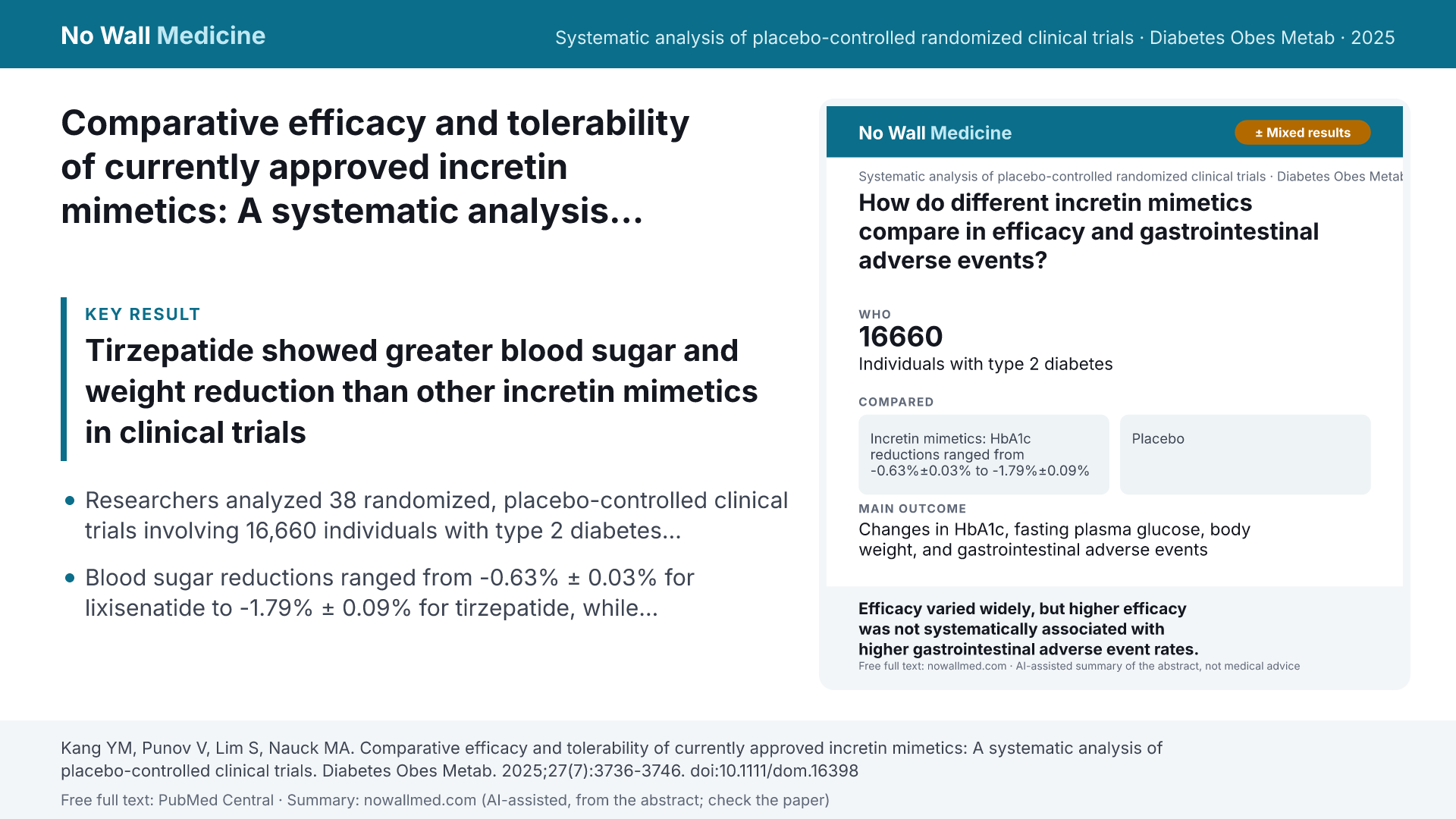
Key result: Tirzepatide showed greater blood sugar and weight reduction than other incretin mimetics in clinical trials
Systematic analysis of placebo-controlled randomized clinical trialsMixed results
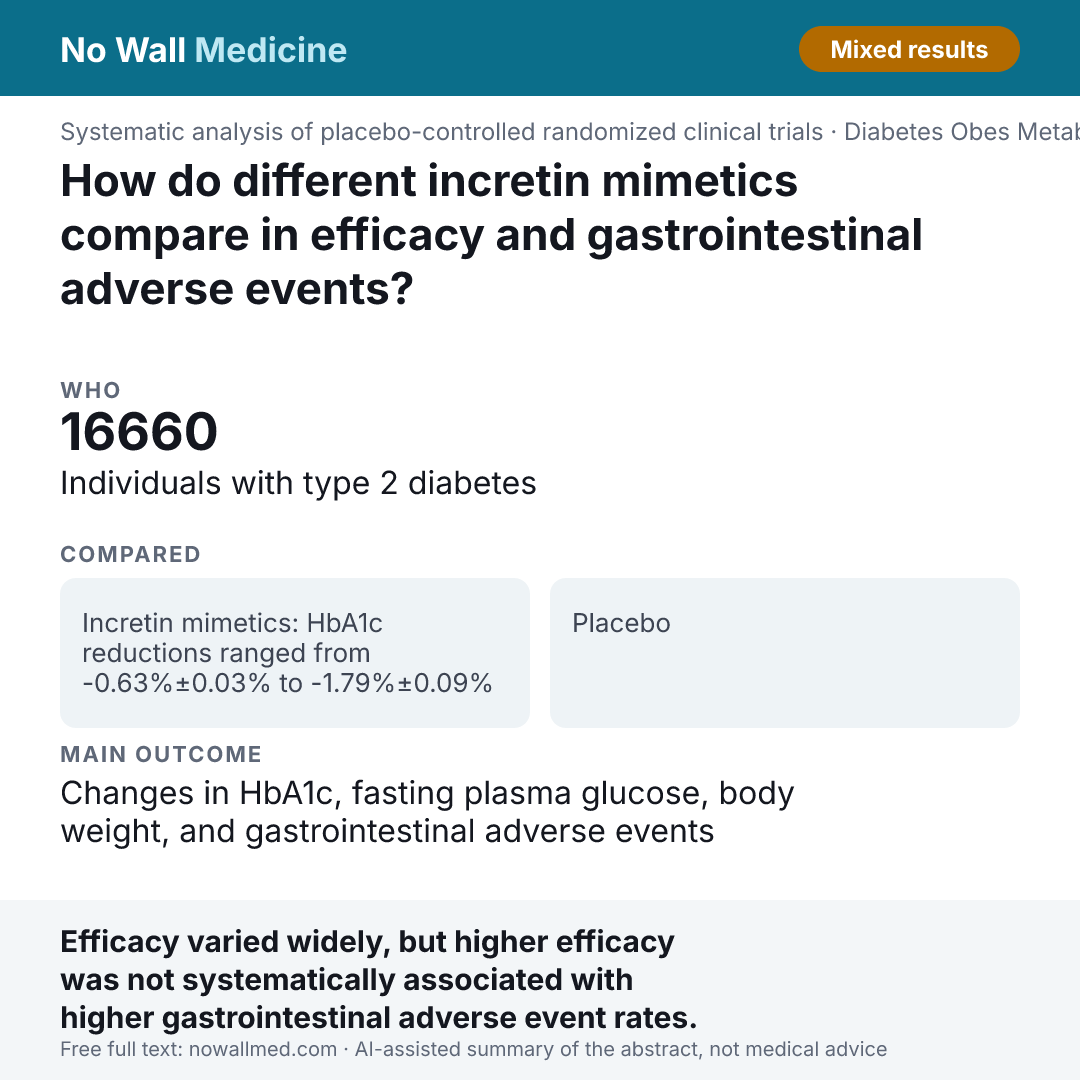
How do different incretin mimetics compare in efficacy and gastrointestinal adverse events?
Who
16660
Individuals with type 2 diabetes
Compared
Incretin mimetics: HbA1c reductions ranged from -0.63%±0.03% to -1.79%±0.09%
Placebo
Main outcome
Changes in HbA1c, fasting plasma glucose, body weight, and gastrointestinal adverse events
Bottom line: Efficacy varied widely, but higher efficacy was not systematically associated with higher gastrointestinal adverse event rates.
Diabetes Obes Metab · 2025-04-11 · Save PNG
Key points
- Researchers analyzed 38 randomized, placebo-controlled clinical trials involving 16,660 individuals with type 2 diabetes to compare different incretin mimetics.
- Blood sugar reductions ranged from -0.63% ± 0.03% for lixisenatide to -1.79% ± 0.09% for tirzepatide, while weight reductions ranged from -0.75 ± 0.10 kg to -9.65 ± 0.56 kg.
- Larger therapeutic efficacy was not systematically associated with higher rates of gastrointestinal side effects like nausea, vomiting, or diarrhea.
Discussion prompts
- Would these patients look like yours? Who was left out?
- Is the main outcome one that matters to patients?
- Is the difference large enough to change what you do?
Cite: Kang YM, Punov V, Lim S, Nauck MA. Comparative efficacy and tolerability of currently approved incretin mimetics: A systematic analysis of placebo-controlled clinical trials. Diabetes Obes Metab. 2025;27(7):3736-3746. doi:10.1111/dom.16398
Free full text: PubMed Central · Summary and visual abstract: nowallmed.com/a/comparative-efficacy-and-tolerability-of-currently-approved-incretin-hmwv6a/ (AI-assisted from the abstract; check the paper before relying on it).