Balanced crystalloid fluids were associated with lower rates of delayed graft function in kidney transplant recipients
Comparative efficacy of balanced crystalloids versus 0.9% saline on delayed graft function and perioperative outcomes in kidney transplantation: a meta-analysis of randomised controlled trials
Meta-analysis of 11 randomized controlled trialsBenefit found
Do balanced crystalloids versus 0.9% saline reduce delayed graft function in kidney transplantation?
Who
1717
Adult participants undergoing kidney transplantation
Compared
Balanced crystalloids
0.9% saline
Main outcome
Incidence of delayed graft function
Result: risk ratio 0.82 (95% CI: 0.69 to 0.98)
Bottom line: Balanced crystalloid intravenous fluid therapy reduced delayed graft function incidence compared with 0.9% saline in kidney transplantation.
Limitation: Effects on vasopressor requirements, length of hospital stay, and serum creatinine were uncertain.
Br J Anaesth · 2024-09-13Download image
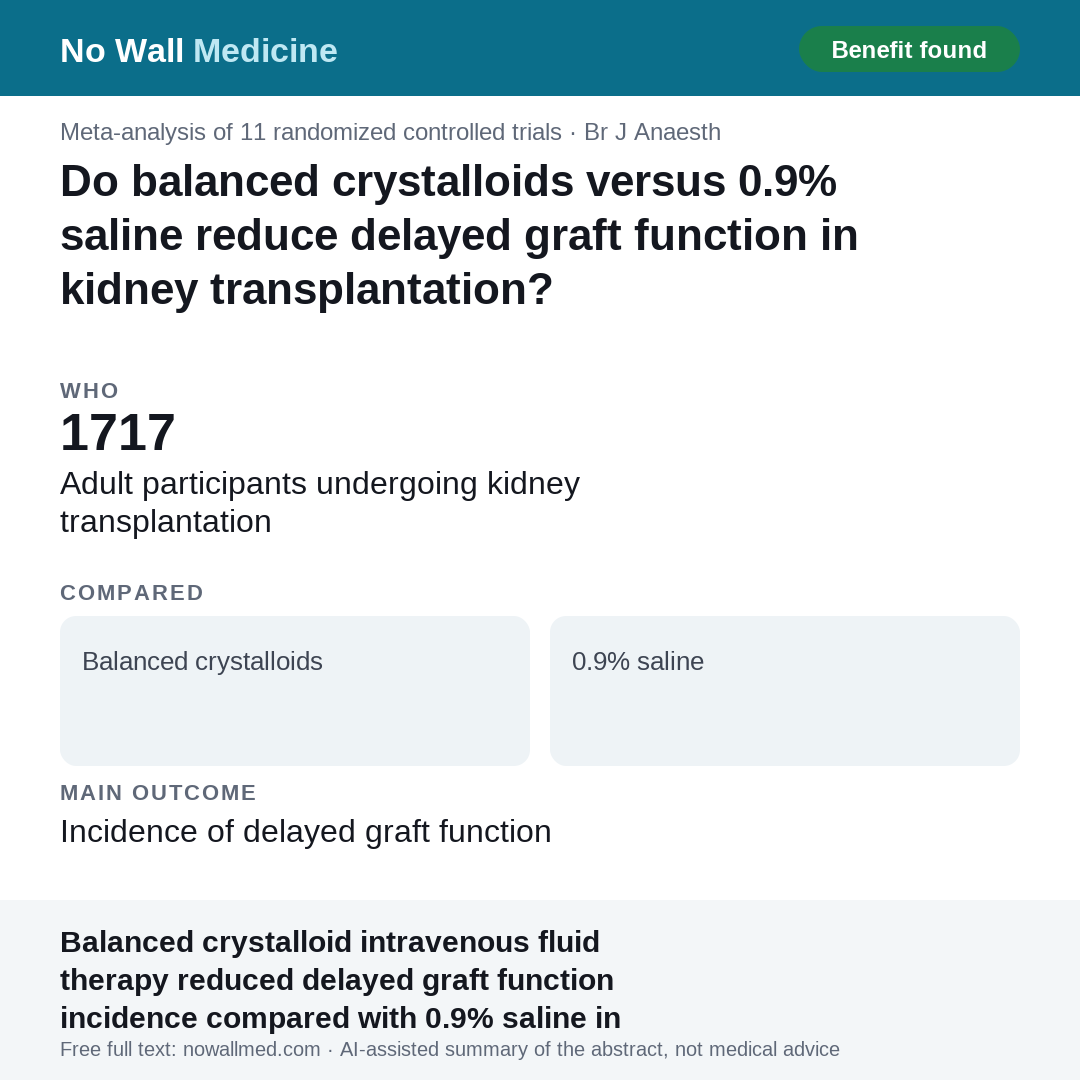
Clinical question: Do balanced crystalloids versus 0.9% saline reduce delayed graft function in kidney transplantation?
Why it matters: It is unclear how the choice between balanced crystalloids and 0.9% saline affects the incidence of delayed graft function, which is when a transplanted kidney does not work immediately.
Key points
- Researchers analyzed 11 randomized controlled trials involving 1717 adult participants receiving either intravenous balanced fluids or 0.9% saline during surgery.
- The use of balanced fluids was associated with a lower incidence of delayed graft function compared to 0.9% saline (RR 0.82, 95% CI: 0.69 to 0.98, P=0.01).
- Balanced crystalloids were associated with higher postoperative serum pH, higher serum bicarbonate, and lower serum chloride concentration, but effects on hospital stay and vasopressor requirements were uncertain.
Headline and key points written with AI from the paper’s abstract, with every number checked against it. Read the paper before relying on them.
Was this summary helpful?
Subject terms
Cite this article
Chang T, Shih MC, Wu YL, Wu TT, Yang JT, Wu CY. Comparative efficacy of balanced crystalloids versus 0.9% saline on delayed graft function and perioperative outcomes in kidney transplantation: a meta-analysis of randomised controlled trials. Br J Anaesth. 2024. doi:10.1016/j.bja.2024.08.008
Spotted a mistake? Suggest a correction
Top studies every Monday
The week’s key trials and guidelines in your specialties, plus any topics you follow. By email, free.
Get the weekly digest