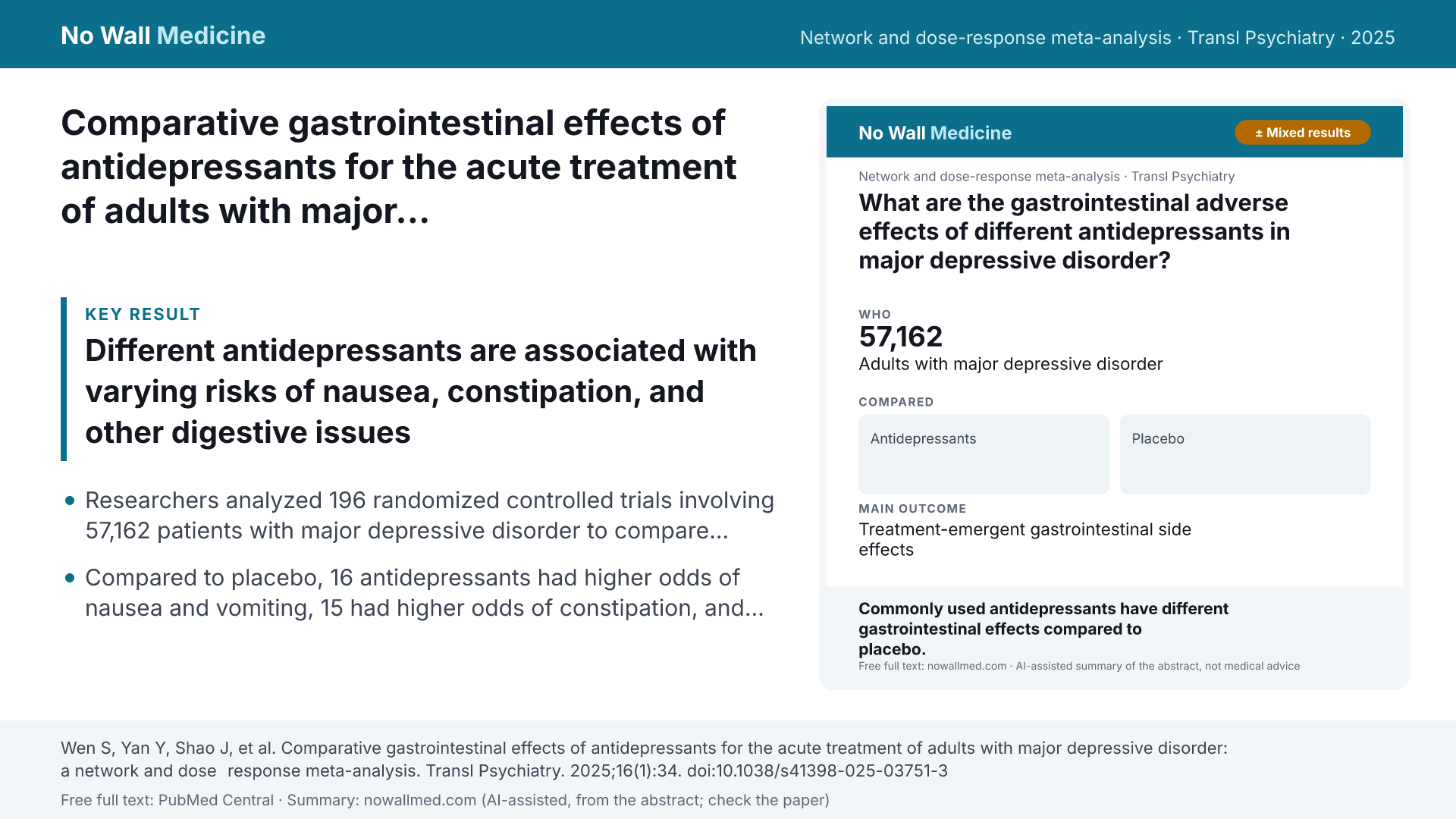
Different antidepressants are associated with varying risks of nausea, constipation, and other digestive issues
Comparative gastrointestinal effects of antidepressants for the acute treatment of adults with major depressive disorder: a network and dose‒response meta-analysis
Network and dose-response meta-analysisMixed results
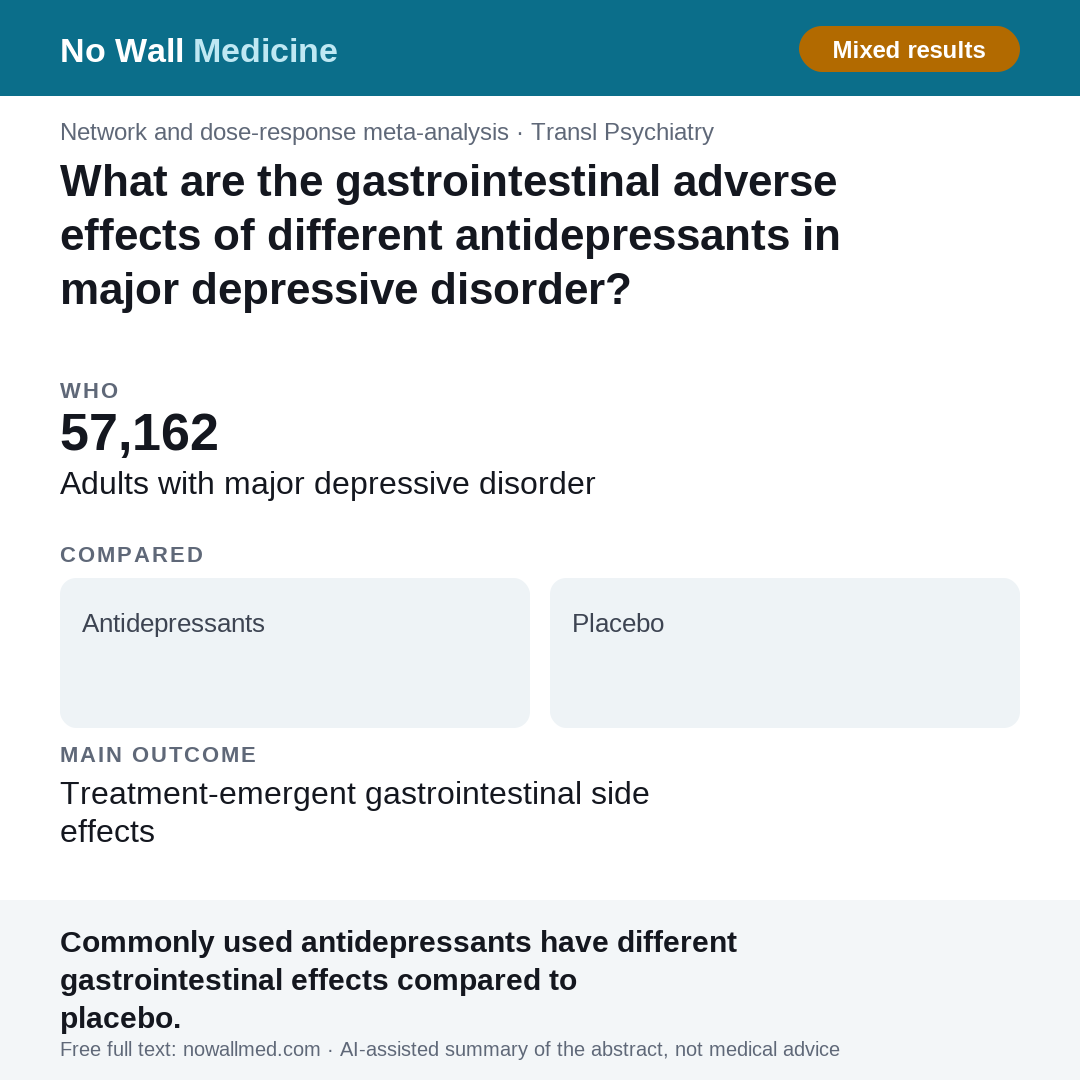
What are the gastrointestinal adverse effects of different antidepressants in major depressive disorder?
Who
57,162
Adults with major depressive disorder
Compared
Antidepressants
Placebo
Main outcome
Treatment-emergent gastrointestinal side effects
Bottom line: Commonly used antidepressants have different gastrointestinal effects compared to placebo.
Transl Psychiatry · 2025-11-25Download image
Clinical question: What are the gastrointestinal adverse effects of different antidepressants in major depressive disorder?
Why it matters: Existing evidence on how different antidepressant medications specifically affect the digestive system needed to be enhanced to better understand their varying side effect profiles.
Key points
- Researchers analyzed 196 randomized controlled trials involving 57,162 patients with major depressive disorder to compare the gastrointestinal side effects of 21 antidepressants.
- Compared to placebo, 16 antidepressants had higher odds of nausea and vomiting, 15 had higher odds of constipation, and 8 had higher odds of diarrhea.
- Specific medications like duloxetine, levomilnacipran, and vilazodone were associated with higher risks of nausea and vomiting, while trazodone and mirtazapine tended to be better tolerated.
Headline and key points written with AI from the paper’s abstract, with every number checked against it. Read the paper before relying on them.
Was this summary helpful?
Subject terms
Cite this article
Wen S, Yan Y, Shao J, et al. Comparative gastrointestinal effects of antidepressants for the acute treatment of adults with major depressive disorder: a network and dose‒response meta-analysis. Transl Psychiatry. 2025. doi:10.1038/s41398-025-03751-3
Spotted a mistake? Suggest a correction