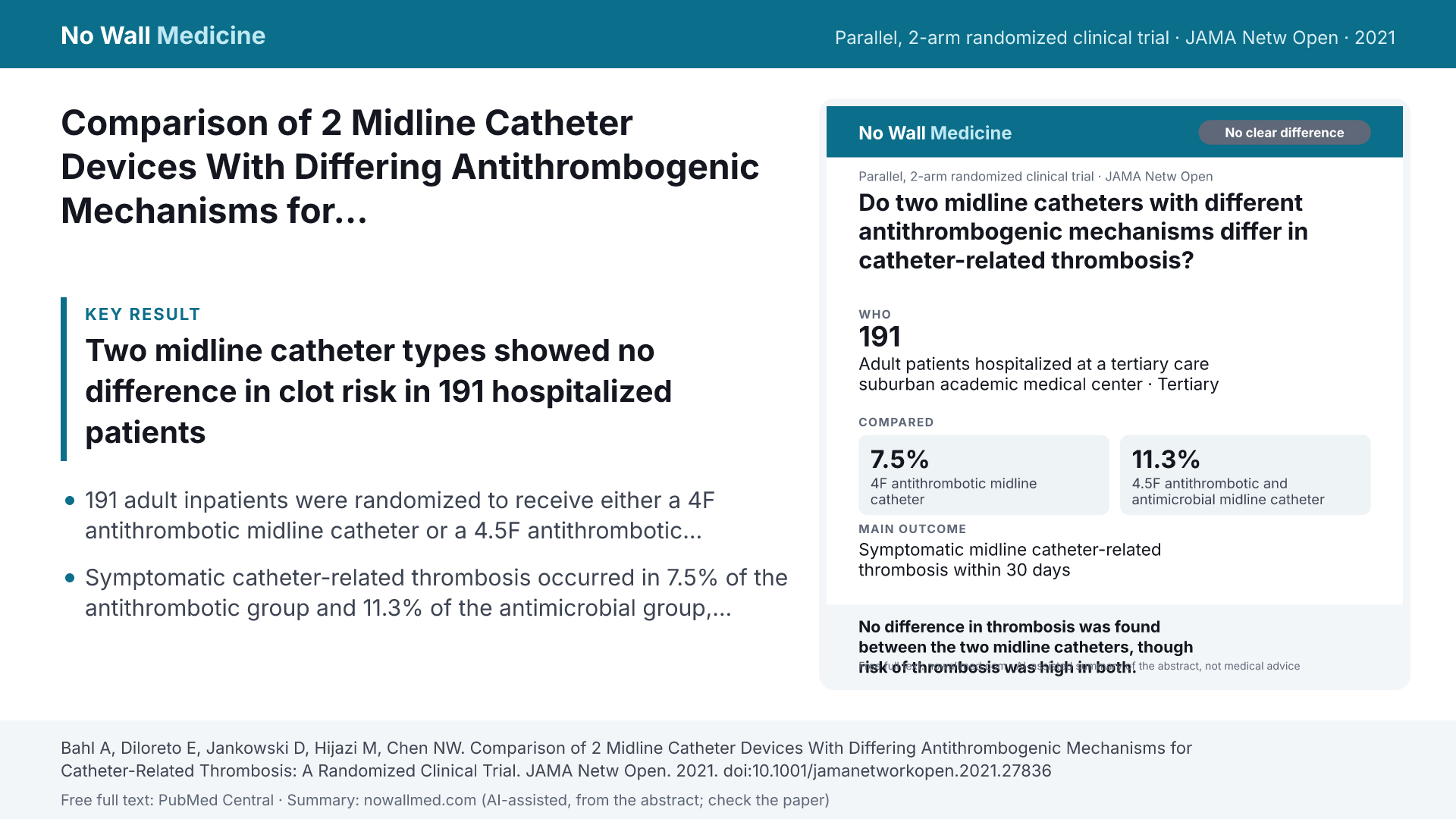
Comparison of 2 Midline Catheter Devices With Differing Antithrombogenic Mechanisms for Catheter-Related Thrombosis: A Randomized Clinical Trial
Key result: Two midline catheter types showed no difference in clot risk in 191 hospitalized patients
Key points
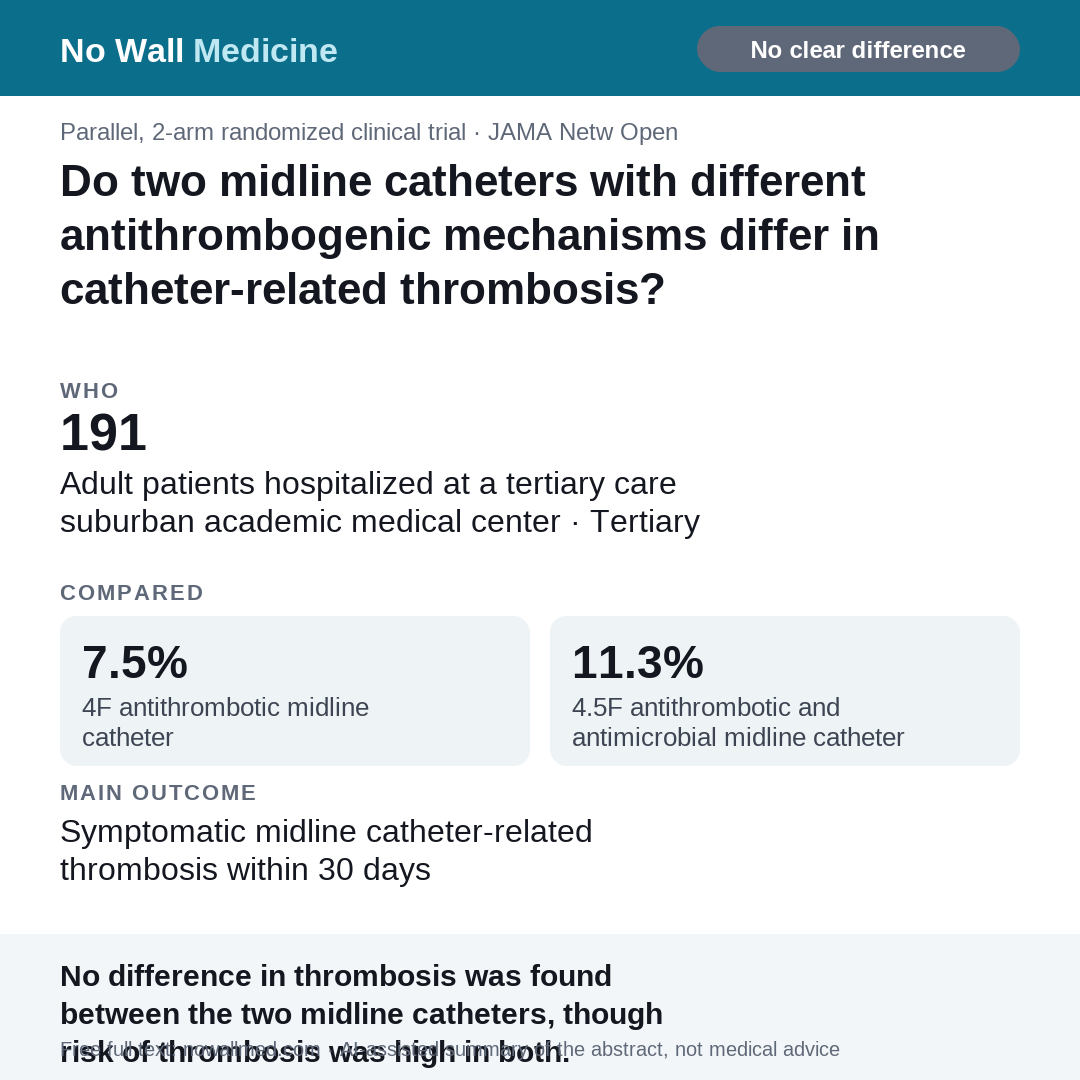
- 191 adult inpatients were randomized to receive either a 4F antithrombotic midline catheter or a 4.5F antithrombotic and antimicrobial midline catheter.
- Symptomatic catheter-related thrombosis occurred in 7.5% of the antithrombotic group and 11.3% of the antimicrobial group, a difference that was not statistically significant.
- No catheter-associated bloodstream infections occurred in either group, and premature catheter failure rates were similar at 23.4% and 20.6%.
Why it matters: Data regarding upper extremity midline catheter-related thrombosis are sparse, with some evidence indicating that these devices have a high rate of clotting.
Discussion prompts
- Would these patients look like yours? Who was left out?
- Is the main outcome one that matters to patients?
- Is the difference large enough to change what you do?
Cite: Bahl A, Diloreto E, Jankowski D, Hijazi M, Chen NW. Comparison of 2 Midline Catheter Devices With Differing Antithrombogenic Mechanisms for Catheter-Related Thrombosis: A Randomized Clinical Trial. JAMA Netw Open. 2021. doi:10.1001/jamanetworkopen.2021.27836
Free full text: PubMed Central · Summary and visual abstract: nowallmed.com/a/comparison-of-2-midline-catheter-devices-with-differing-1ibtboz/ (AI-assisted from the abstract; check the paper before relying on it).