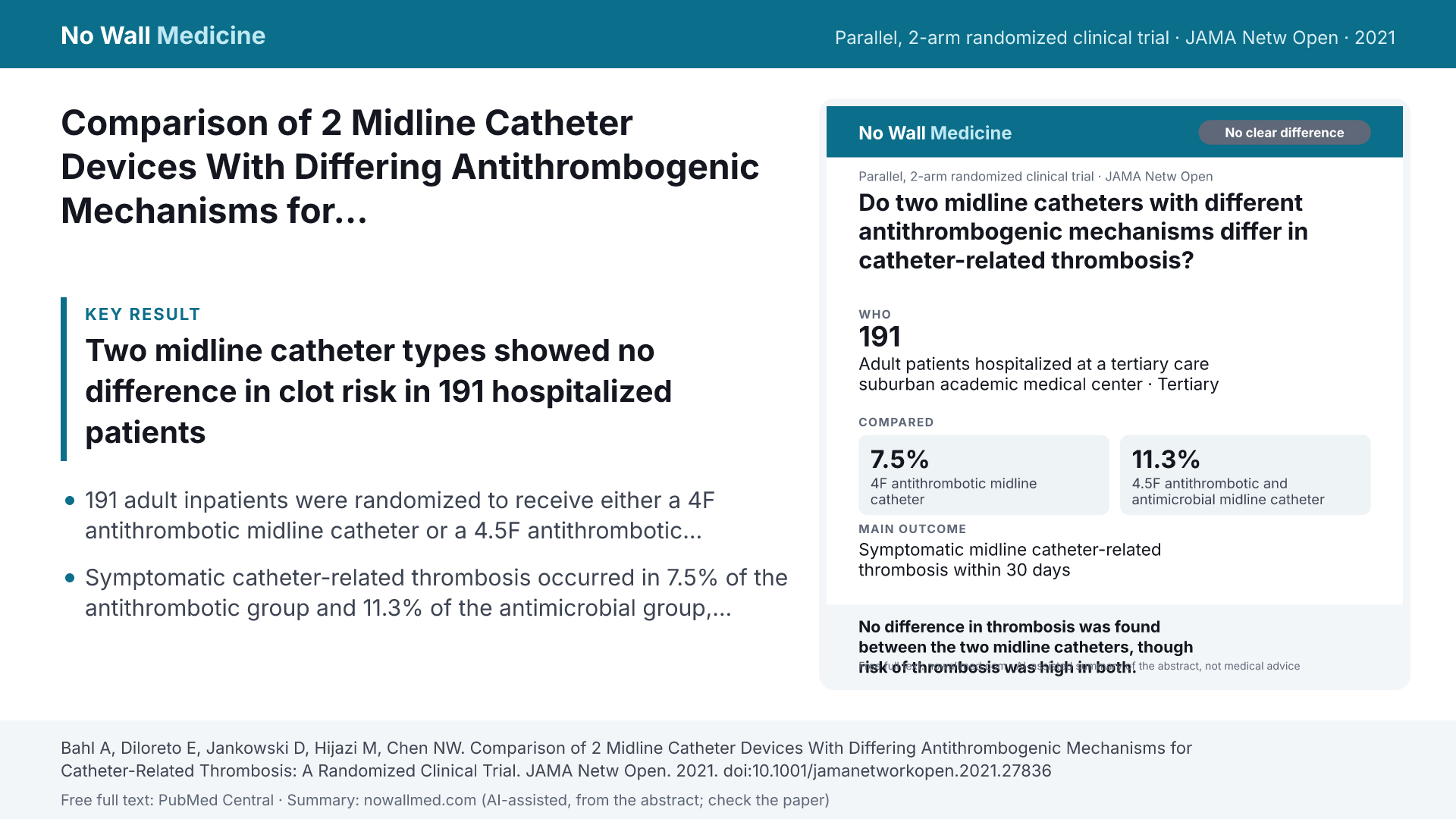
Two midline catheter types showed no difference in clot risk in 191 hospitalized patients
Comparison of 2 Midline Catheter Devices With Differing Antithrombogenic Mechanisms for Catheter-Related Thrombosis: A Randomized Clinical Trial
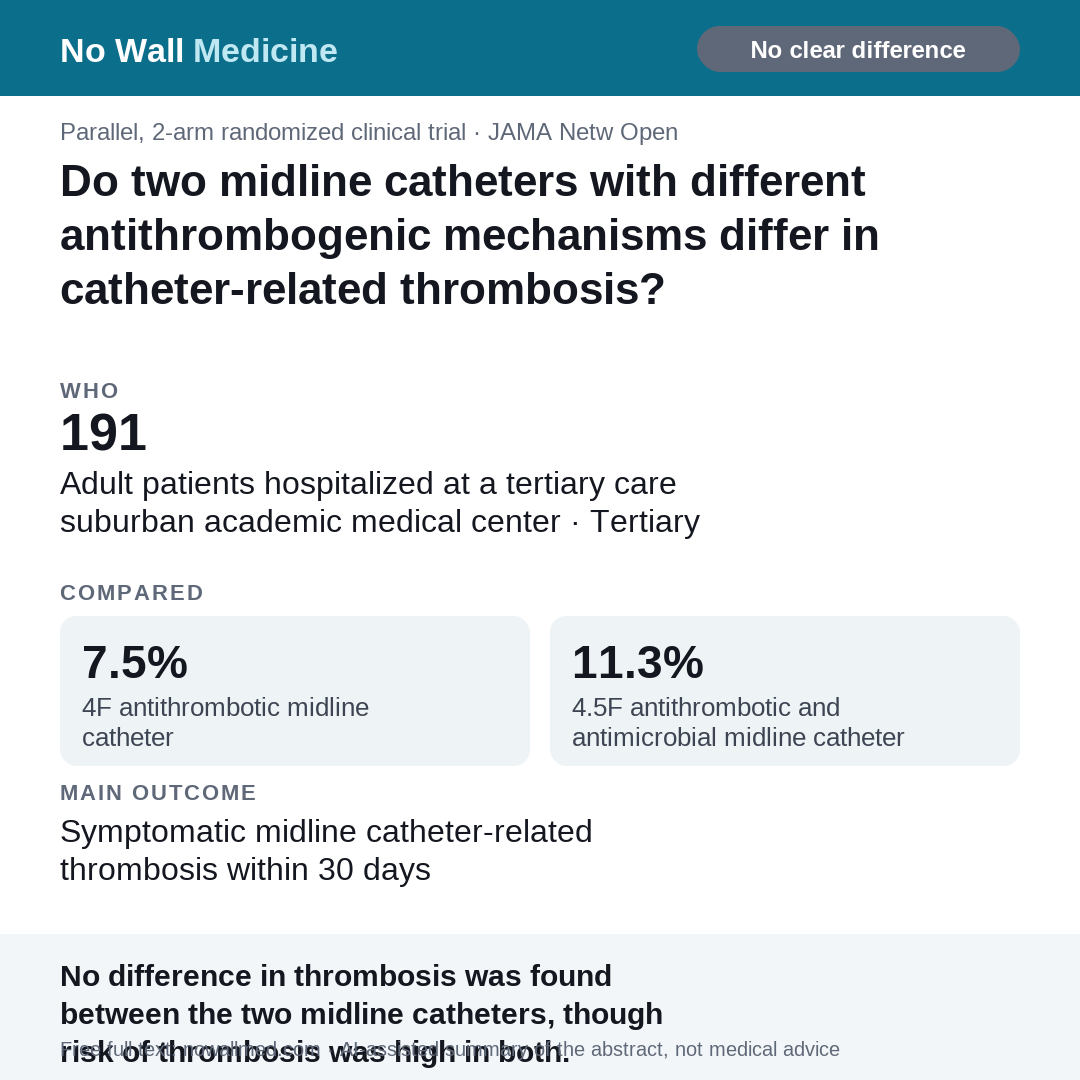
Parallel, 2-arm randomized clinical trialNo clear difference
Do two midline catheters with different antithrombogenic mechanisms differ in catheter-related thrombosis?
Who
191
Adult patients hospitalized at a tertiary care suburban academic medical center · Tertiary care suburban academic medical center
Compared
7.5%4F antithrombotic midline catheter
11.3%4.5F antithrombotic and antimicrobial midline catheter
Main outcome
Symptomatic midline catheter-related thrombosis within 30 days
Bottom line: No difference in thrombosis was found between the two midline catheters, though risk of thrombosis was high in both.
JAMA Netw Open · 2021-10-01Download image
Clinical question: Do two midline catheters with different antithrombogenic mechanisms differ in catheter-related thrombosis?
Why it matters: Data regarding upper extremity midline catheter-related thrombosis are sparse, with some evidence indicating that these devices have a high rate of clotting.
Key points
- 191 adult inpatients were randomized to receive either a 4F antithrombotic midline catheter or a 4.5F antithrombotic and antimicrobial midline catheter.
- Symptomatic catheter-related thrombosis occurred in 7.5% of the antithrombotic group and 11.3% of the antimicrobial group, a difference that was not statistically significant.
- No catheter-associated bloodstream infections occurred in either group, and premature catheter failure rates were similar at 23.4% and 20.6%.
Headline and key points written with AI from the paper’s abstract, with every number checked against it. Read the paper before relying on them.
Was this summary helpful?
Subject terms
Headline, design, result, key points, caveat and citation as plain text.
Cite this article
Bahl A, Diloreto E, Jankowski D, Hijazi M, Chen NW. Comparison of 2 Midline Catheter Devices With Differing Antithrombogenic Mechanisms for Catheter-Related Thrombosis: A Randomized Clinical Trial. JAMA Netw Open. 2021. doi:10.1001/jamanetworkopen.2021.27836
Spotted a mistake? Suggest a correction