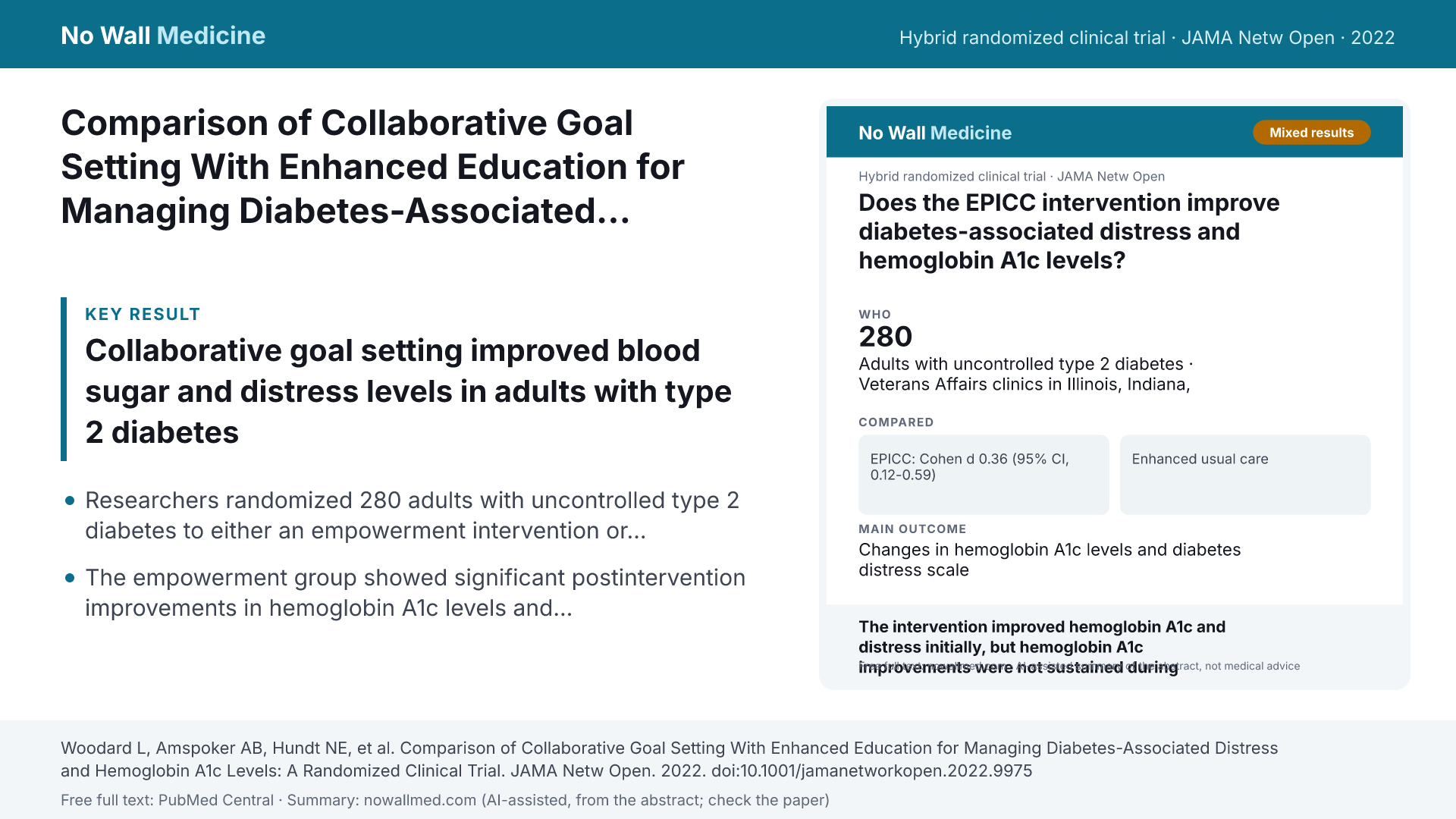
Comparison of Collaborative Goal Setting With Enhanced Education for Managing Diabetes-Associated Distress and Hemoglobin A1c Levels: A Randomized Clinical Trial
Key result: Collaborative goal setting improved blood sugar and distress levels in adults with type 2 diabetes
Key points
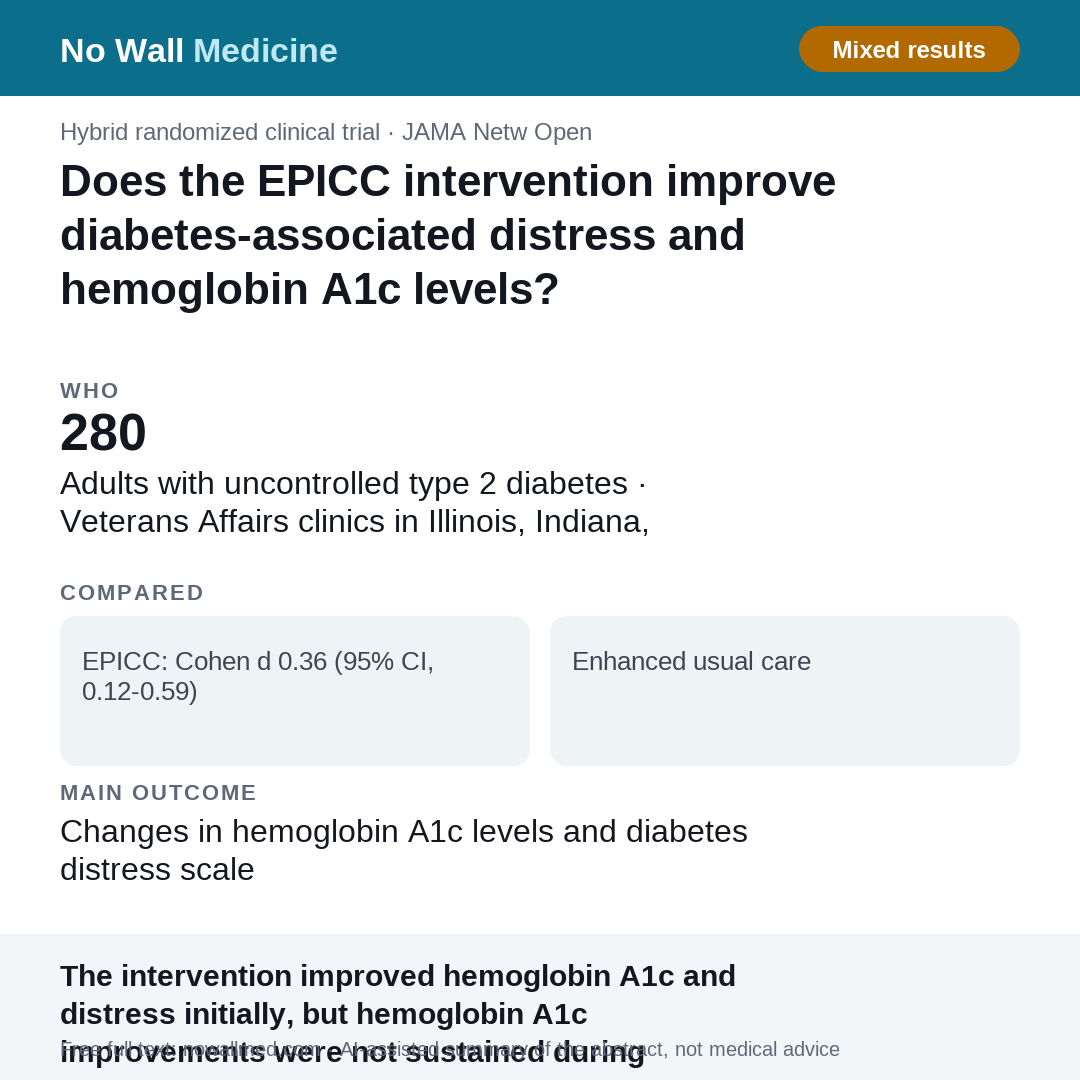
- Researchers randomized 280 adults with uncontrolled type 2 diabetes to either an empowerment intervention or enhanced diabetes education.
- The empowerment group showed significant postintervention improvements in hemoglobin A1c levels and diabetes-associated distress compared to the education group.
- During the 6-month maintenance period, improvements in hemoglobin A1c levels were no longer significant, though distress score differences remained.
Why it matters: It is unknown if an empowerment-based approach using collaborative goal setting and motivational interviewing can effectively manage diabetes-associated distress and blood sugar levels.
Discussion prompts
- Would these patients look like yours? Who was left out?
- Is the main outcome one that matters to patients?
- Is the difference large enough to change what you do?
Cite: Woodard L, Amspoker AB, Hundt NE, et al. Comparison of Collaborative Goal Setting With Enhanced Education for Managing Diabetes-Associated Distress and Hemoglobin A1c Levels: A Randomized Clinical Trial. JAMA Netw Open. 2022. doi:10.1001/jamanetworkopen.2022.9975
Free full text: PubMed Central · Summary and visual abstract: nowallmed.com/a/comparison-of-collaborative-goal-setting-with-enhanced-education-for-1h9v68k/ (AI-assisted from the abstract; check the paper before relying on it).