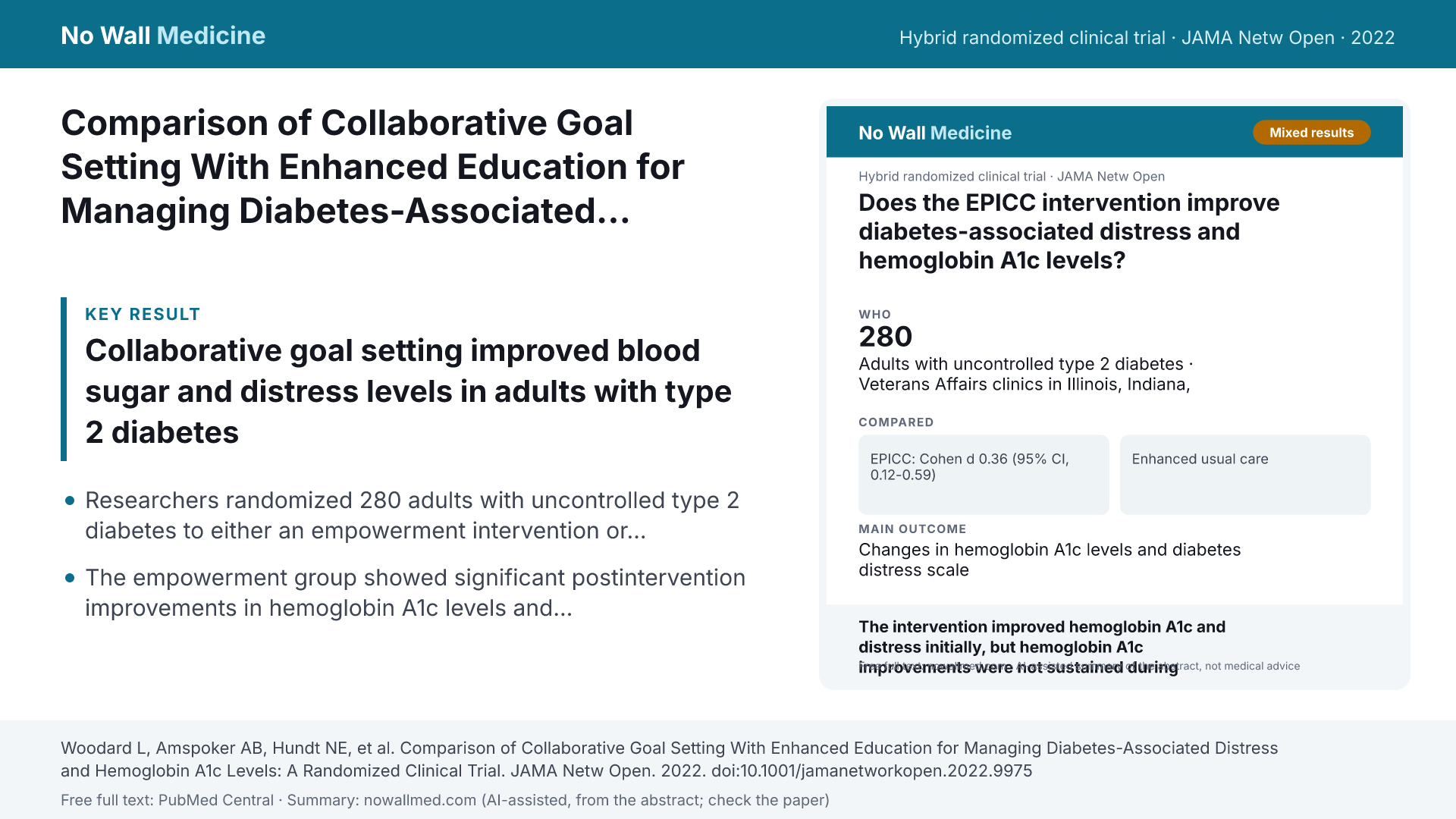
Collaborative goal setting improved blood sugar and distress levels in adults with type 2 diabetes
Comparison of Collaborative Goal Setting With Enhanced Education for Managing Diabetes-Associated Distress and Hemoglobin A1c Levels: A Randomized Clinical Trial
Hybrid randomized clinical trialMixed results
Does the EPICC intervention improve diabetes-associated distress and hemoglobin A1c levels?
Who
280
Adults with uncontrolled type 2 diabetes · Veterans Affairs clinics in Illinois, Indiana, and Texas
Compared
EPICC: Cohen d 0.36 (95% CI, 0.12-0.59)
Enhanced usual care
Main outcome
Changes in hemoglobin A1c levels and diabetes distress scale
Result: Cohen d 0.36 (95% CI, 0.12-0.59) for hemoglobin A1c
Bottom line: The intervention improved hemoglobin A1c and distress initially, but hemoglobin A1c improvements were not sustained during maintenance.
JAMA Netw Open · 2022-05-02Download image
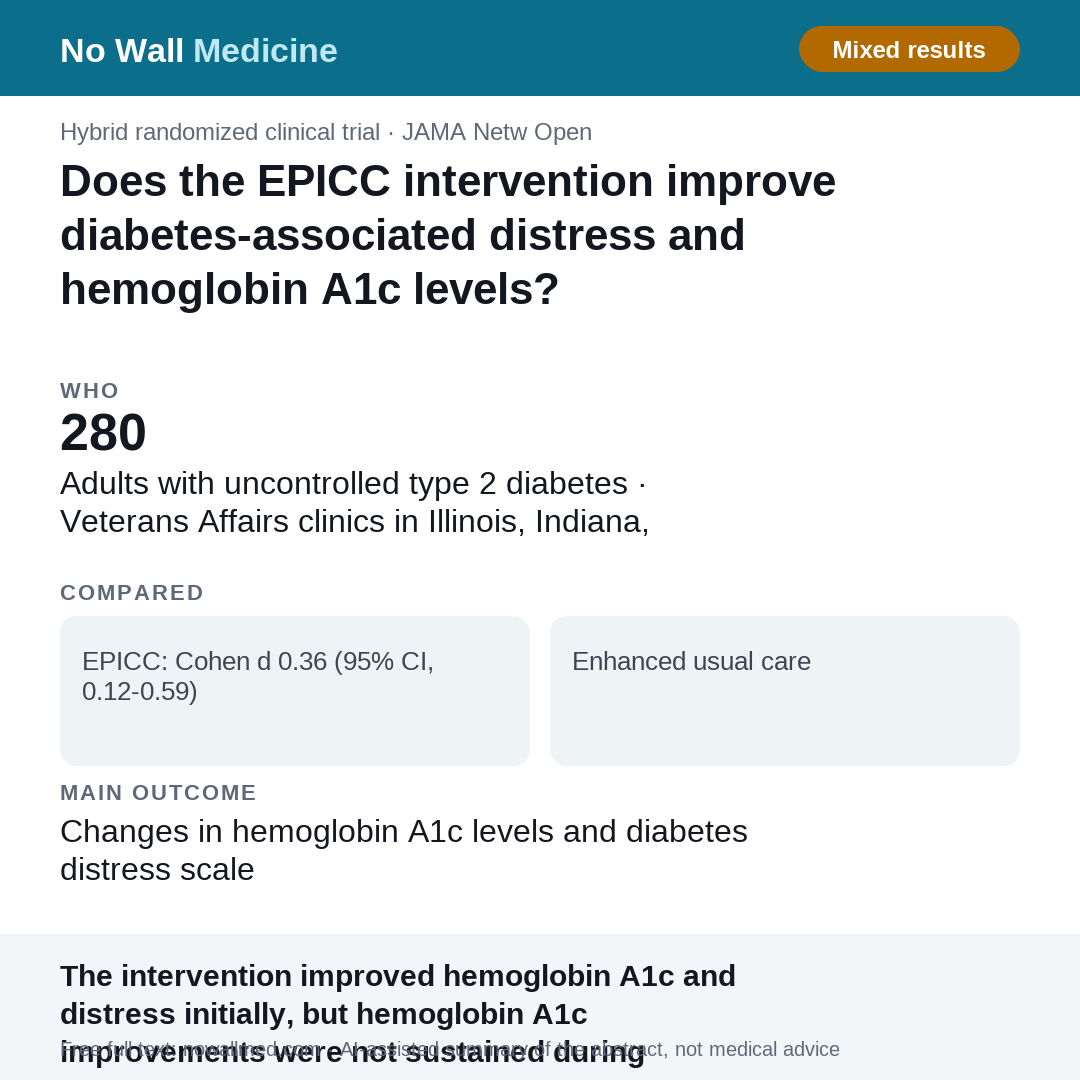
Clinical question: Does the EPICC intervention improve diabetes-associated distress and hemoglobin A1c levels?
Why it matters: It is unknown if an empowerment-based approach using collaborative goal setting and motivational interviewing can effectively manage diabetes-associated distress and blood sugar levels.
Key points
- Researchers randomized 280 adults with uncontrolled type 2 diabetes to either an empowerment intervention or enhanced diabetes education.
- The empowerment group showed significant postintervention improvements in hemoglobin A1c levels and diabetes-associated distress compared to the education group.
- During the 6-month maintenance period, improvements in hemoglobin A1c levels were no longer significant, though distress score differences remained.
Headline and key points written with AI from the paper’s abstract, with every number checked against it. Read the paper before relying on them.
Was this summary helpful?
Subject terms
Cite this article
Woodard L, Amspoker AB, Hundt NE, et al. Comparison of Collaborative Goal Setting With Enhanced Education for Managing Diabetes-Associated Distress and Hemoglobin A1c Levels: A Randomized Clinical Trial. JAMA Netw Open. 2022. doi:10.1001/jamanetworkopen.2022.9975
Spotted a mistake? Suggest a correction