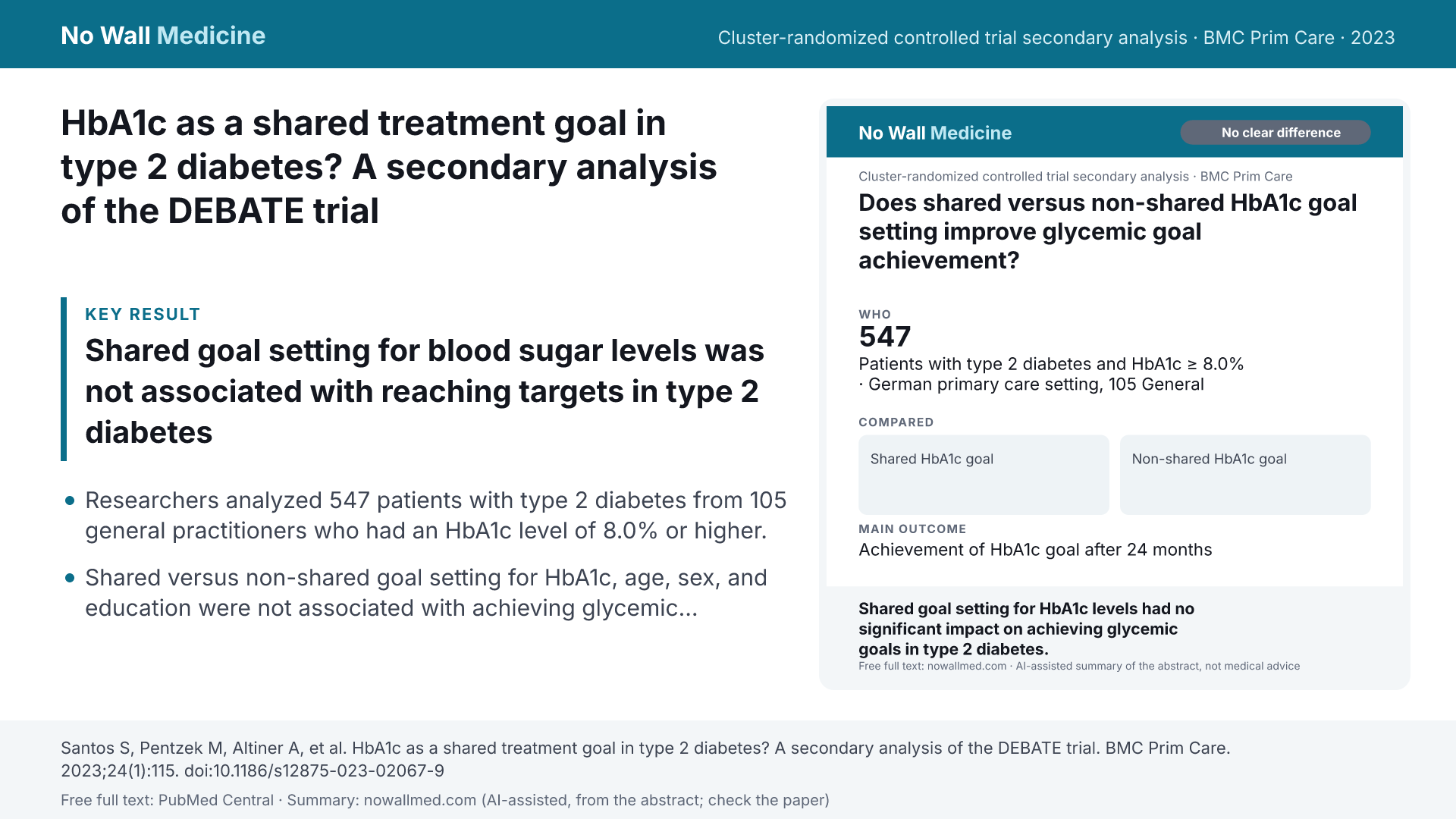
Shared goal setting for blood sugar levels was not associated with reaching targets in type 2 diabetes
HbA1c as a shared treatment goal in type 2 diabetes? A secondary analysis of the DEBATE trial
Cluster-randomized controlled trial secondary analysisNo clear difference
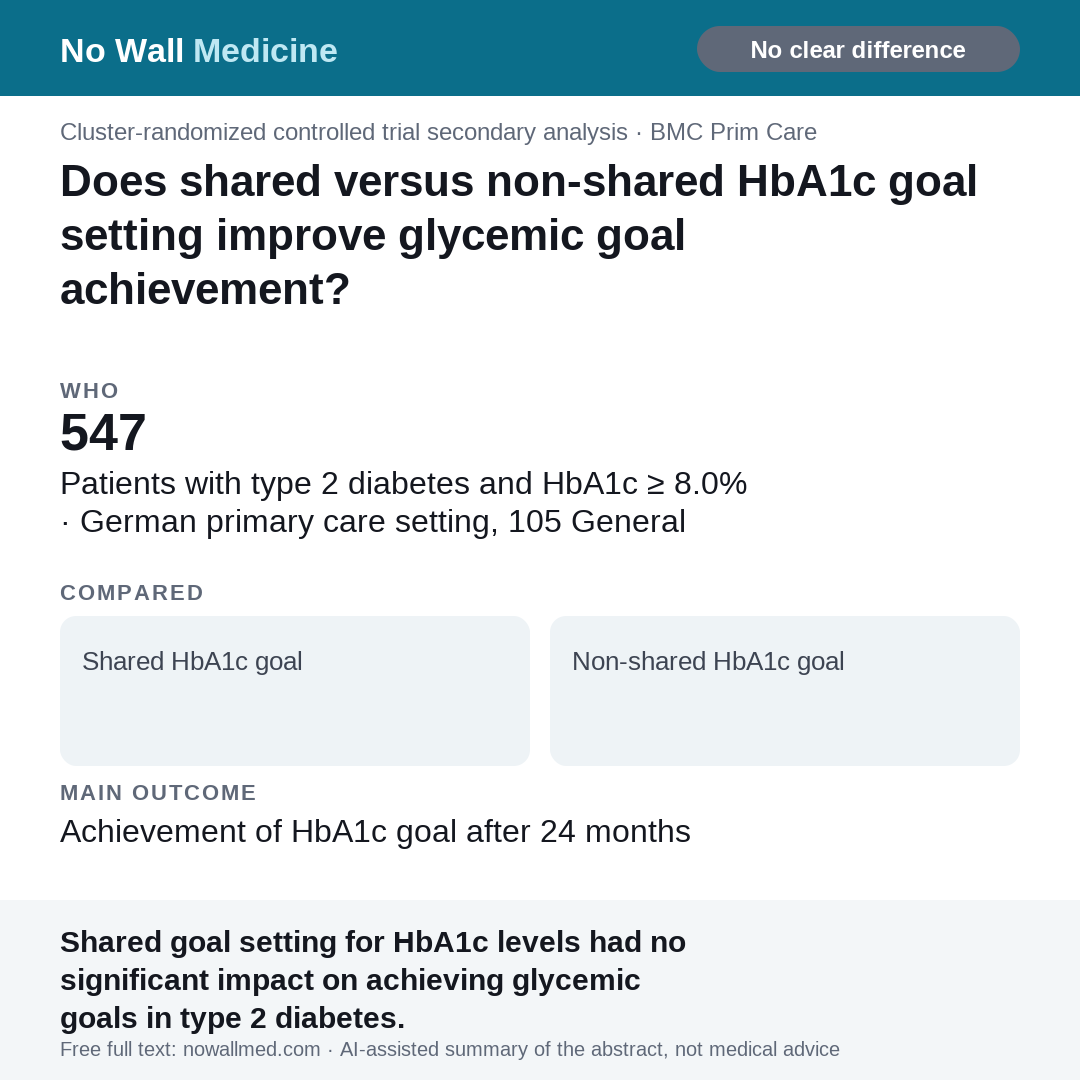
Does shared versus non-shared HbA1c goal setting improve glycemic goal achievement?
Who
547
Patients with type 2 diabetes and HbA1c ≥ 8.0% · German primary care setting, 105 General Practitioners
Compared
Shared HbA1c goal
Non-shared HbA1c goal
Main outcome
Achievement of HbA1c goal after 24 months
Bottom line: Shared goal setting for HbA1c levels had no significant impact on achieving glycemic goals in type 2 diabetes.
Limitation: Shared goal setting on patient-related clinical outcomes within shared decision making may not have been fully captured.
BMC Prim Care · 2023-05-13Download image
Clinical question: Does shared versus non-shared HbA1c goal setting improve glycemic goal achievement?
Why it matters: It is unknown if using shared decision making to set HbA1c treatment goals helps patients with type 2 diabetes reach their blood sugar targets.
Key points
- Researchers analyzed 547 patients with type 2 diabetes from 105 general practitioners who had an HbA1c level of 8.0% or higher.
- Shared versus non-shared goal setting for HbA1c, age, sex, and education were not associated with achieving glycemic goals after 24 months.
- Living without a partner was associated with a higher risk of missing the HbA1c goal with an odds ratio of 1.89.
Headline and key points written with AI from the paper’s abstract, with every number checked against it. Read the paper before relying on them.
Was this summary helpful?
Subject terms
Cite this article
Santos S, Pentzek M, Altiner A, et al. HbA1c as a shared treatment goal in type 2 diabetes? A secondary analysis of the DEBATE trial. BMC Prim Care. 2023. doi:10.1186/s12875-023-02067-9
Spotted a mistake? Suggest a correction