Comparison of Outcomes in Superior Canal Dehiscence Surgery Using Either Transmastoid or Middle Fossa Surgical Approaches: A Systematic Review and Meta-Analysis
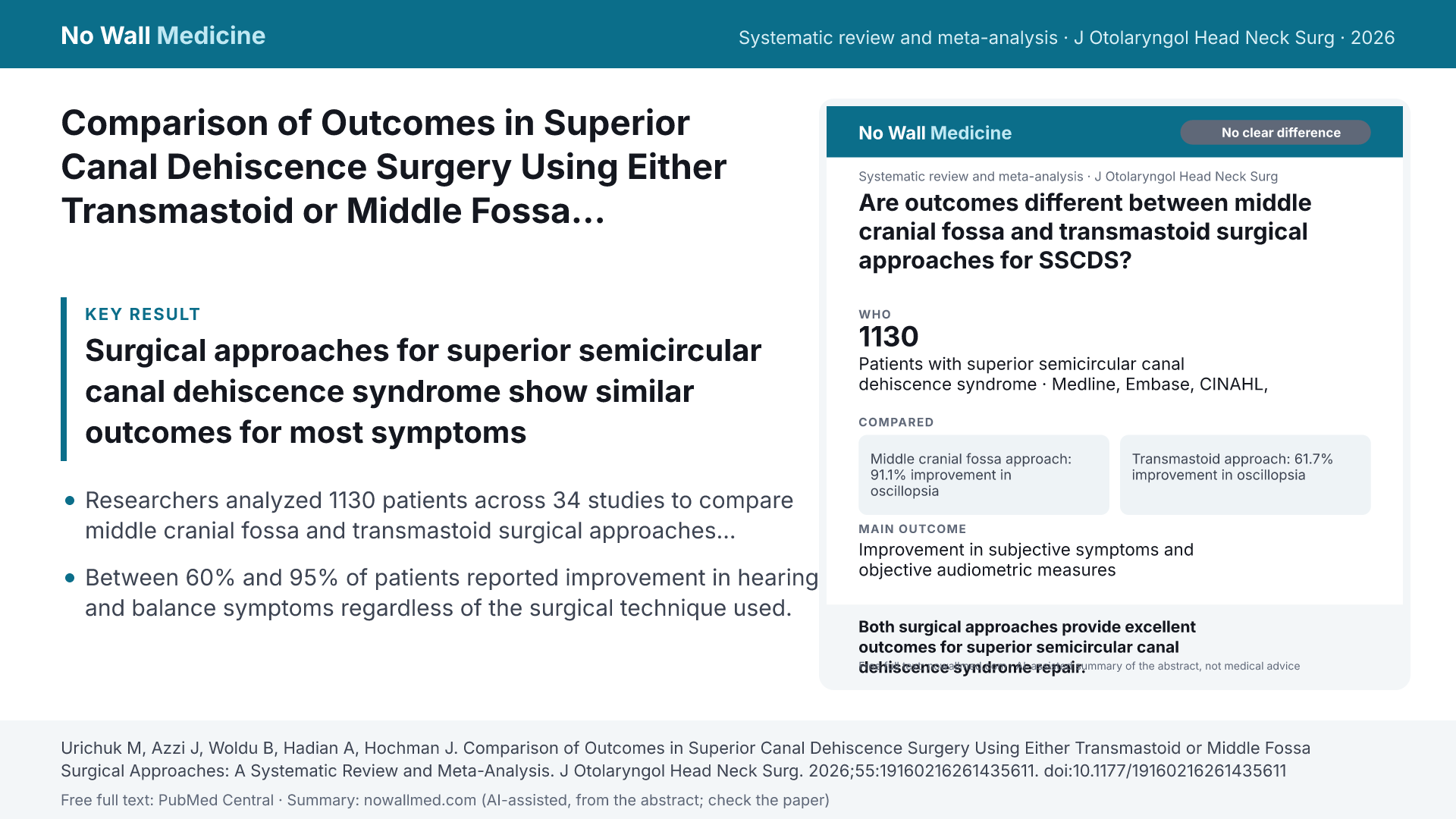
Key result: Surgical approaches for superior semicircular canal dehiscence syndrome show similar outcomes for most symptoms
Systematic review and meta-analysisNo clear difference
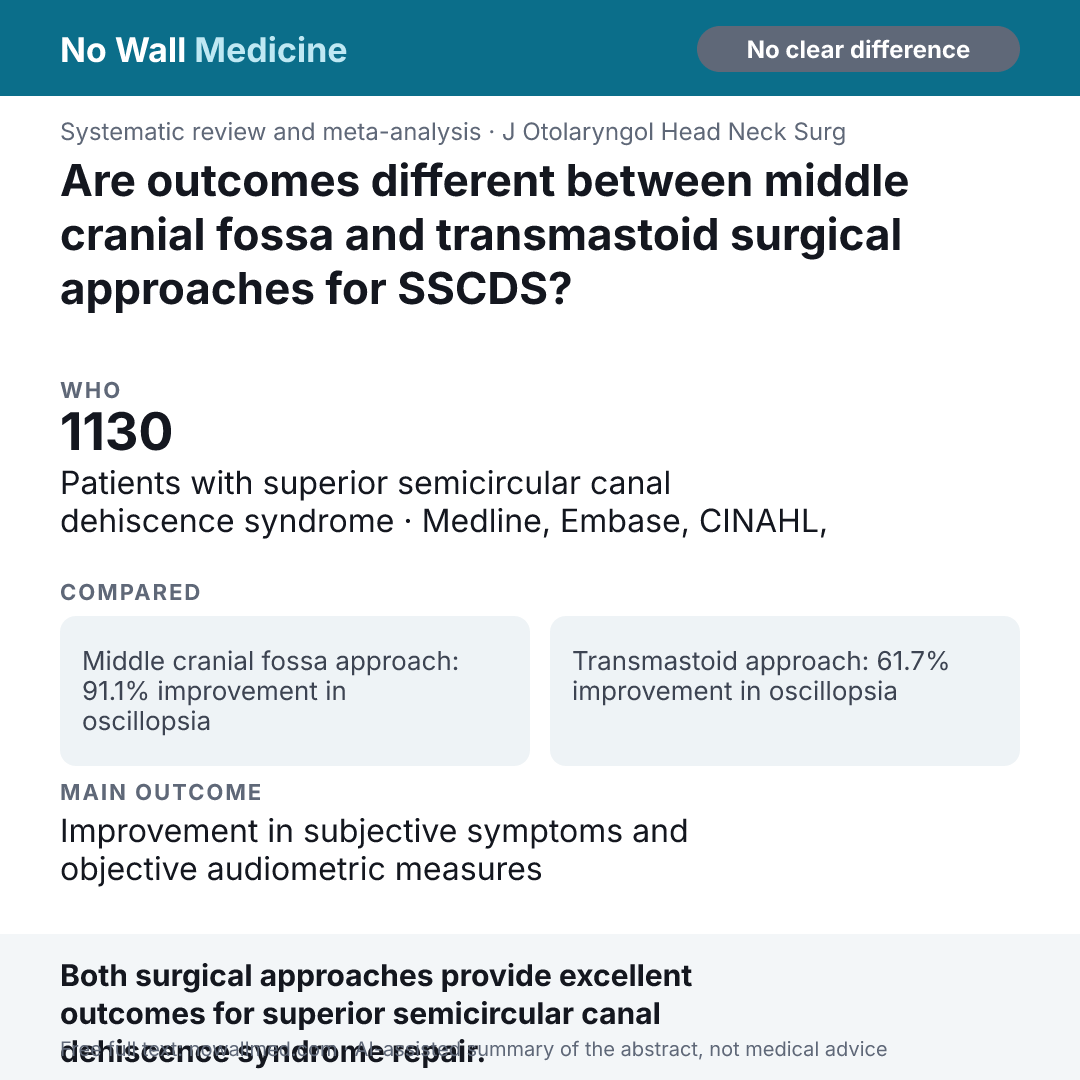
Are outcomes different between middle cranial fossa and transmastoid surgical approaches for SSCDS?
Who
1130
Patients with superior semicircular canal dehiscence syndrome · Medline, Embase, CINAHL, Scopus, and Web of Science databases
Compared
Middle cranial fossa approach: 91.1% improvement in oscillopsia
Transmastoid approach: 61.7% improvement in oscillopsia
Main outcome
Improvement in subjective symptoms and objective audiometric measures
Result: aOR 6.40 (95% CI 1.66-24.66) for oscillopsia improvement
Bottom line: Both surgical approaches provide excellent outcomes for superior semicircular canal dehiscence syndrome repair.
J Otolaryngol Head Neck Surg · 2026-03-30 · Save PNG
Key points
- Researchers analyzed 1130 patients across 34 studies to compare middle cranial fossa and transmastoid surgical approaches for superior semicircular canal dehiscence syndrome.
- Between 60% and 95% of patients reported improvement in hearing and balance symptoms regardless of the surgical technique used.
- The transmastoid approach was associated with a higher rate of oscillopsia resolution compared to the middle cranial fossa approach at 91.1% versus 61.7%.
Discussion prompts
- Would these patients look like yours? Who was left out?
- Is the main outcome one that matters to patients?
- Is the difference large enough to change what you do?
Cite: Urichuk M, Azzi J, Woldu B, Hadian A, Hochman J. Comparison of Outcomes in Superior Canal Dehiscence Surgery Using Either Transmastoid or Middle Fossa Surgical Approaches: A Systematic Review and Meta-Analysis. J Otolaryngol Head Neck Surg. 2026;55:19160216261435611. doi:10.1177/19160216261435611
Free full text: PubMed Central · Summary and visual abstract: nowallmed.com/a/comparison-of-outcomes-in-superior-canal-dehiscence-surgery-using-nv57vm/ (AI-assisted from the abstract; check the paper before relying on it).