Radiofrequency coagulation was associated with lower rebleeding rates than silver nitrate in children with nosebleeds
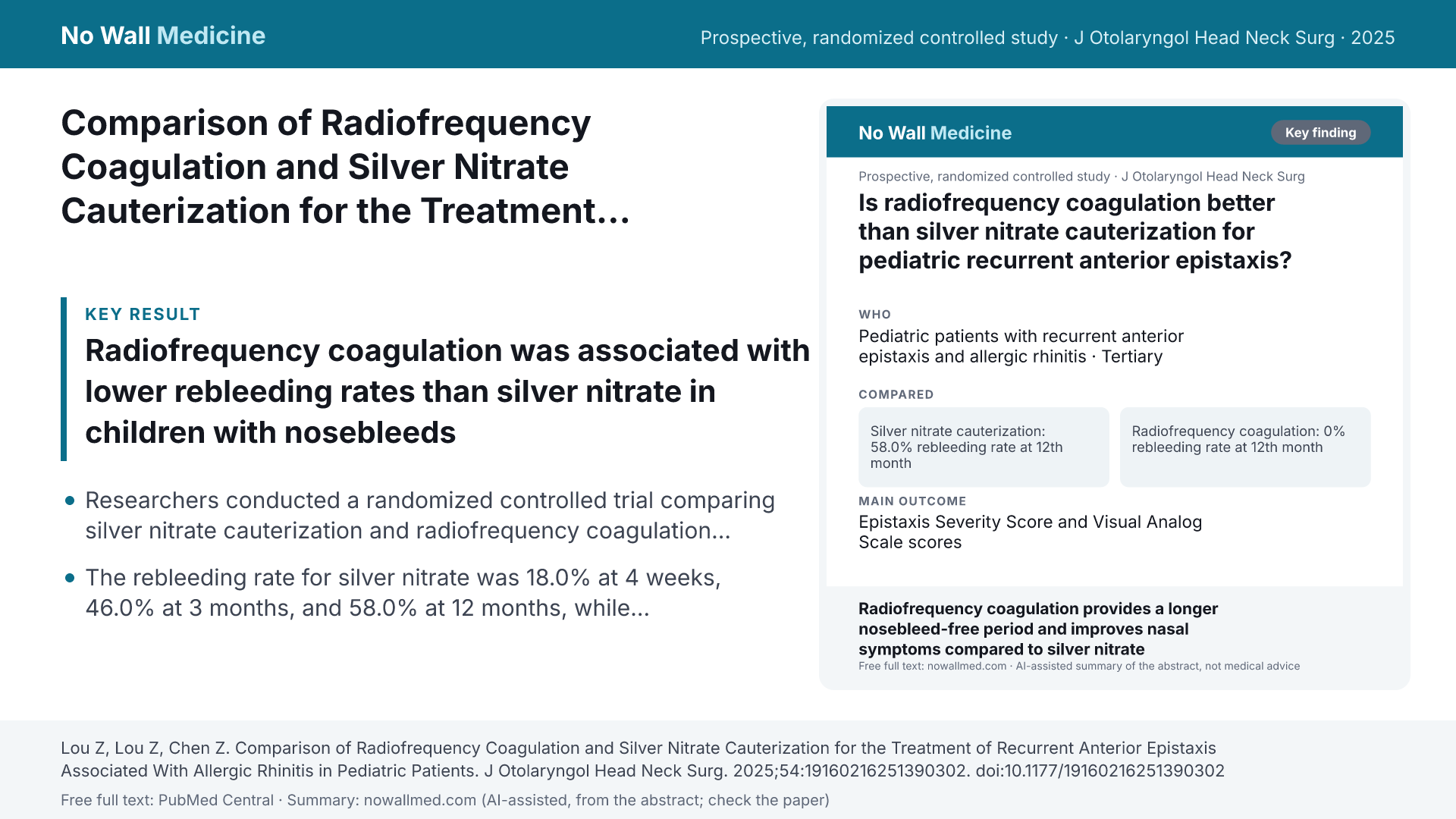
Comparison of Radiofrequency Coagulation and Silver Nitrate Cauterization for the Treatment of Recurrent Anterior Epistaxis Associated With Allergic Rhinitis in Pediatric Patients
Prospective, randomized controlled studyBenefit found
Is radiofrequency coagulation better than silver nitrate cauterization for pediatric recurrent anterior epistaxis?
Who
Pediatric patients with recurrent anterior epistaxis and allergic rhinitis · Tertiary referral center
Compared
Silver nitrate cauterization: 58.0% rebleeding rate at 12th month
Radiofrequency coagulation: 0% rebleeding rate at 12th month
Main outcome
Epistaxis Severity Score and Visual Analog Scale scores
Bottom line: Radiofrequency coagulation provides a longer nosebleed-free period and improves nasal symptoms compared to silver nitrate cauterization.
Limitation: Septal perforation occurred in 1 patient among the 4 who underwent radiofrequency coagulation using ablation mode.
J Otolaryngol Head Neck Surg · 2025-11-19Download image
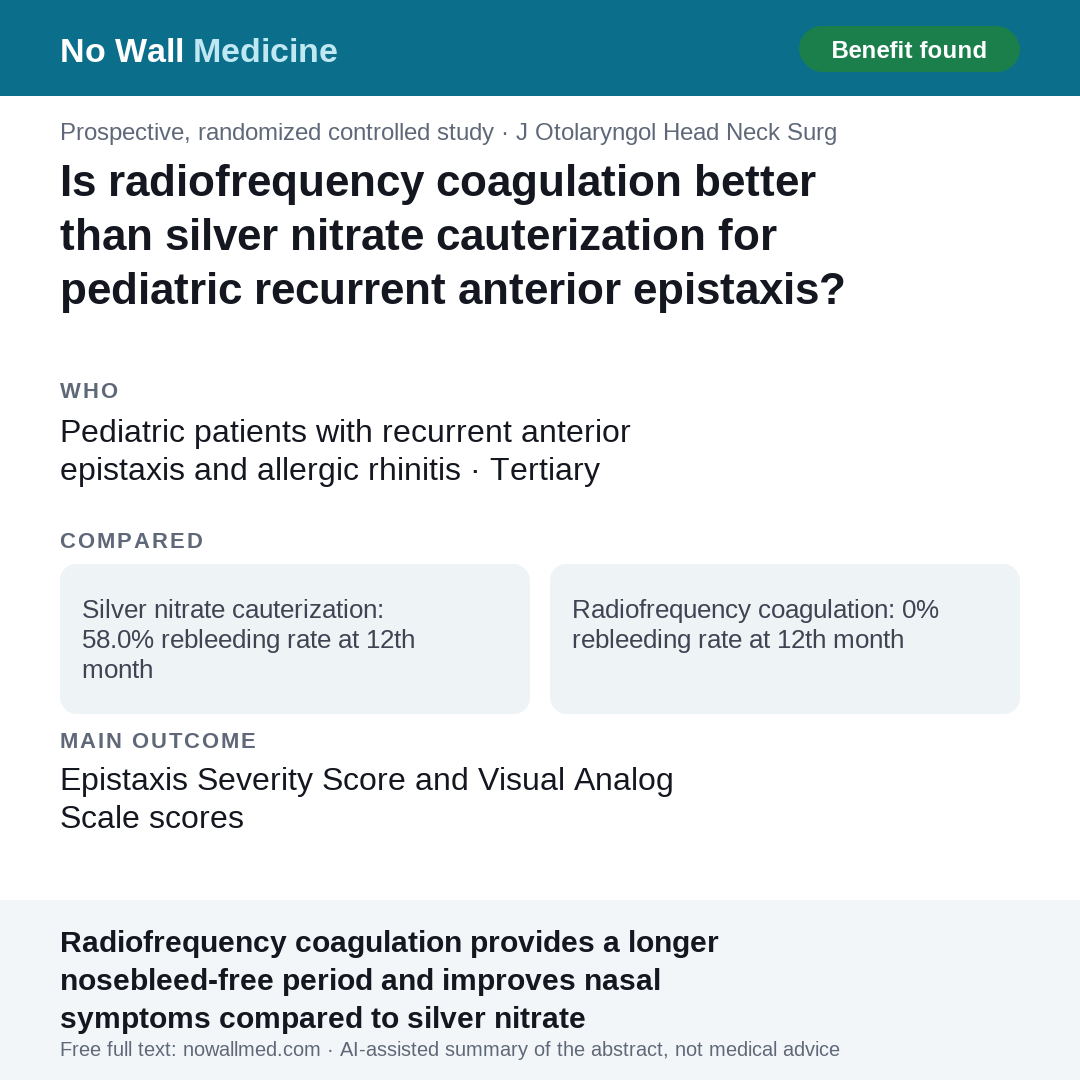
Clinical question: Is radiofrequency coagulation better than silver nitrate cauterization for pediatric recurrent anterior epistaxis?
Why it matters: Treatment methods for recurrent anterior nosebleeds in children with allergic rhinitis remain controversial.
Key points
- Researchers conducted a randomized controlled trial comparing silver nitrate cauterization and radiofrequency coagulation in pediatric patients with recurrent anterior nosebleeds and allergic rhinitis.
- The rebleeding rate for silver nitrate was 18.0% at 4 weeks, 46.0% at 3 months, and 58.0% at 12 months, while radiofrequency coagulation rates were 2.0%, 0%, and 0%.
- One patient experienced a septal perforation, which is a hole in the wall dividing the nostrils, among the 4 patients who received radiofrequency coagulation using ablation mode.
Headline and key points written with AI from the paper’s abstract, with every number checked against it. Read the paper before relying on them.
Was this summary helpful?
Subject terms
Cite this article
Lou Z, Lou Z, Chen Z. Comparison of Radiofrequency Coagulation and Silver Nitrate Cauterization for the Treatment of Recurrent Anterior Epistaxis Associated With Allergic Rhinitis in Pediatric Patients. J Otolaryngol Head Neck Surg. 2025. doi:10.1177/19160216251390302
Spotted a mistake? Suggest a correction
Top studies every Monday
The week’s key trials and guidelines in your specialties, plus any topics you follow. By email, free.
Get the weekly digest