Comparison of Radiofrequency Coagulation and Silver Nitrate Cauterization for the Treatment of Recurrent Anterior Epistaxis Associated With Allergic Rhinitis in Pediatric Patients
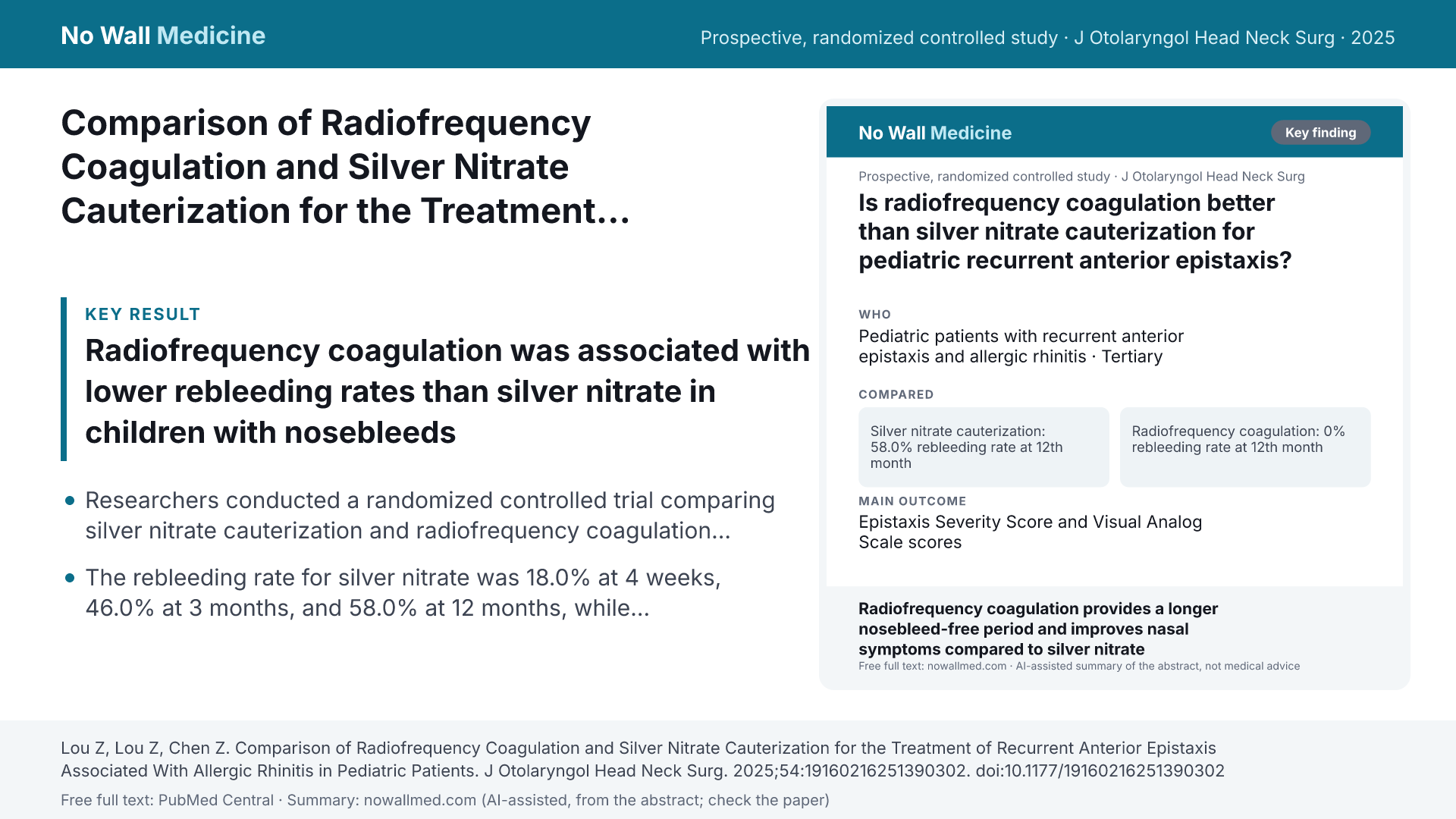
Key result: Radiofrequency coagulation was associated with lower rebleeding rates than silver nitrate in children with nosebleeds
Key points
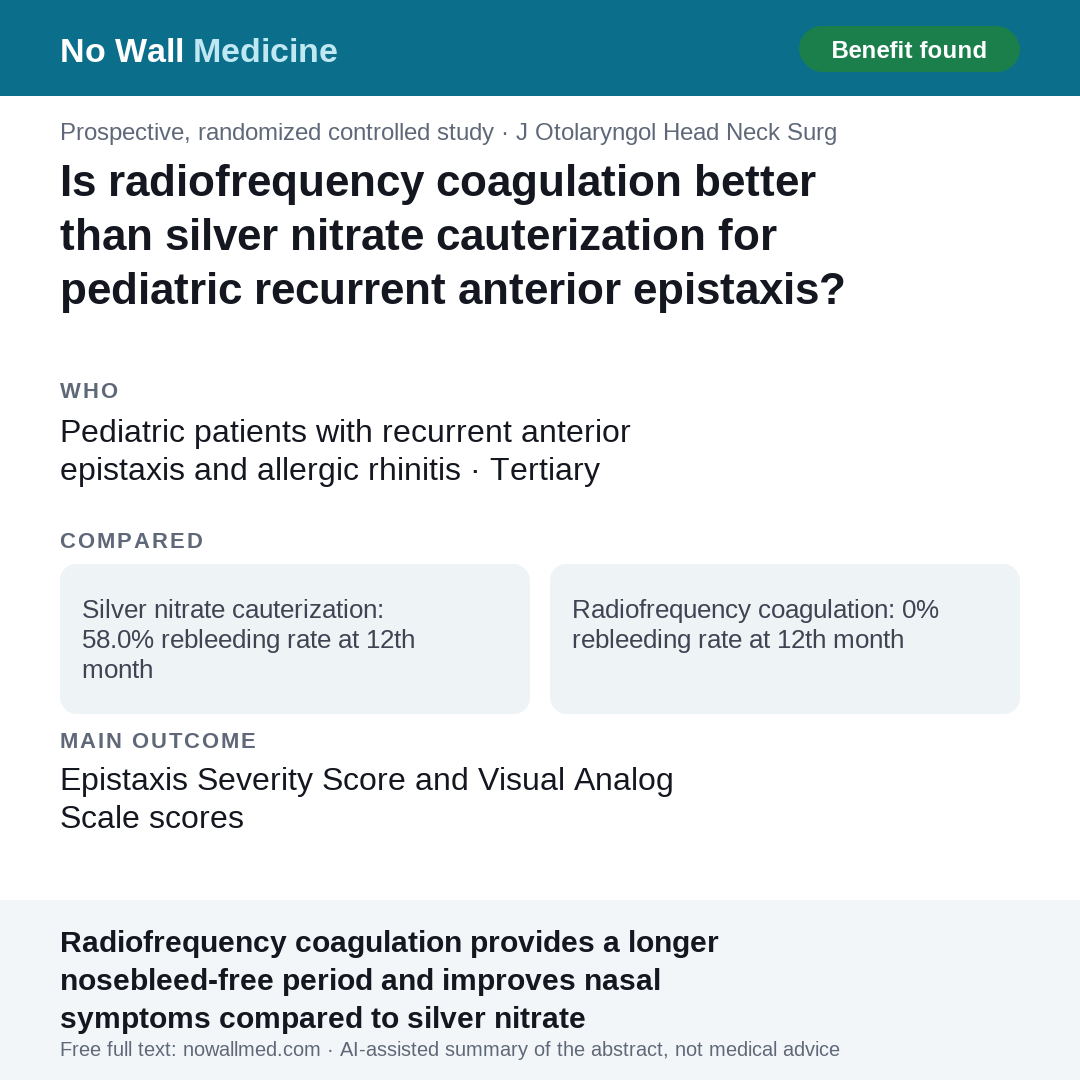
- Researchers conducted a randomized controlled trial comparing silver nitrate cauterization and radiofrequency coagulation in pediatric patients with recurrent anterior nosebleeds and allergic rhinitis.
- The rebleeding rate for silver nitrate was 18.0% at 4 weeks, 46.0% at 3 months, and 58.0% at 12 months, while radiofrequency coagulation rates were 2.0%, 0%, and 0%.
- One patient experienced a septal perforation, which is a hole in the wall dividing the nostrils, among the 4 patients who received radiofrequency coagulation using ablation mode.
Why it matters: Treatment methods for recurrent anterior nosebleeds in children with allergic rhinitis remain controversial.
Discussion prompts
- Would these patients look like yours? Who was left out?
- Is the main outcome one that matters to patients?
- Is the difference large enough to change what you do?
Cite: Lou Z, Lou Z, Chen Z. Comparison of Radiofrequency Coagulation and Silver Nitrate Cauterization for the Treatment of Recurrent Anterior Epistaxis Associated With Allergic Rhinitis in Pediatric Patients. J Otolaryngol Head Neck Surg. 2025;54:19160216251390302. doi:10.1177/19160216251390302
Free full text: PubMed Central · Summary and visual abstract: nowallmed.com/a/comparison-of-radiofrequency-coagulation-and-silver-nitrate-3bz59u/ (AI-assisted from the abstract; check the paper before relying on it).