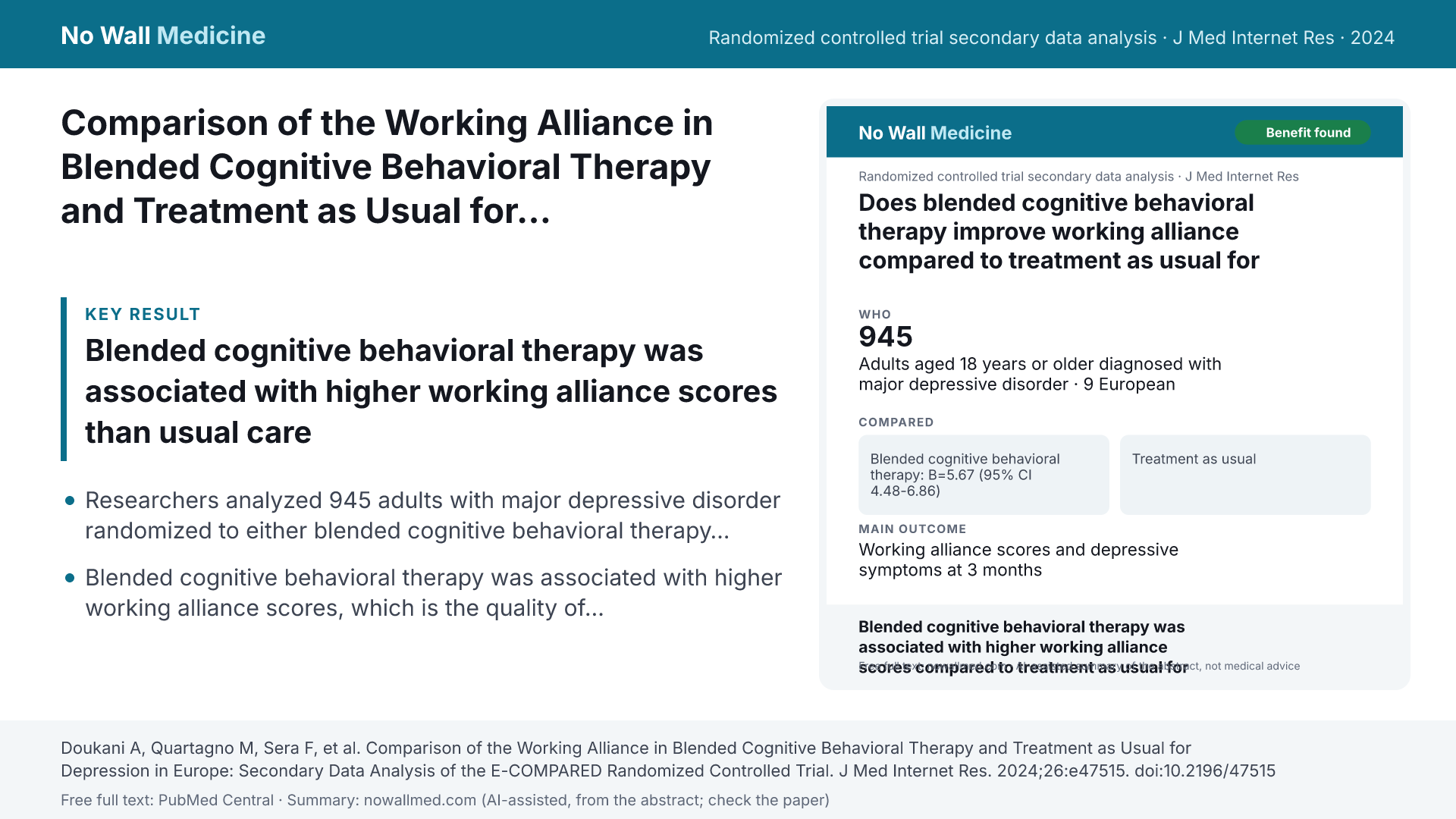
Blended cognitive behavioral therapy was associated with higher working alliance scores than usual care
Comparison of the Working Alliance in Blended Cognitive Behavioral Therapy and Treatment as Usual for Depression in Europe: Secondary Data Analysis of the E-COMPARED Randomized Controlled Trial
Randomized controlled trial secondary data analysisBenefit found
Does blended cognitive behavioral therapy improve working alliance compared to treatment as usual for depression?
Who
945
Adults aged 18 years or older diagnosed with major depressive disorder · 9 European countries in primary care and specialized services
Compared
Blended cognitive behavioral therapy: B=5.67 (95% CI 4.48-6.86)
Treatment as usual
Main outcome
Working alliance scores and depressive symptoms at 3 months
Result: B=5.67, 95% CI 4.48-6.86
Bottom line: Blended cognitive behavioral therapy was associated with higher working alliance scores compared to treatment as usual for depression.
J Med Internet Res · 2024-05-31Download image
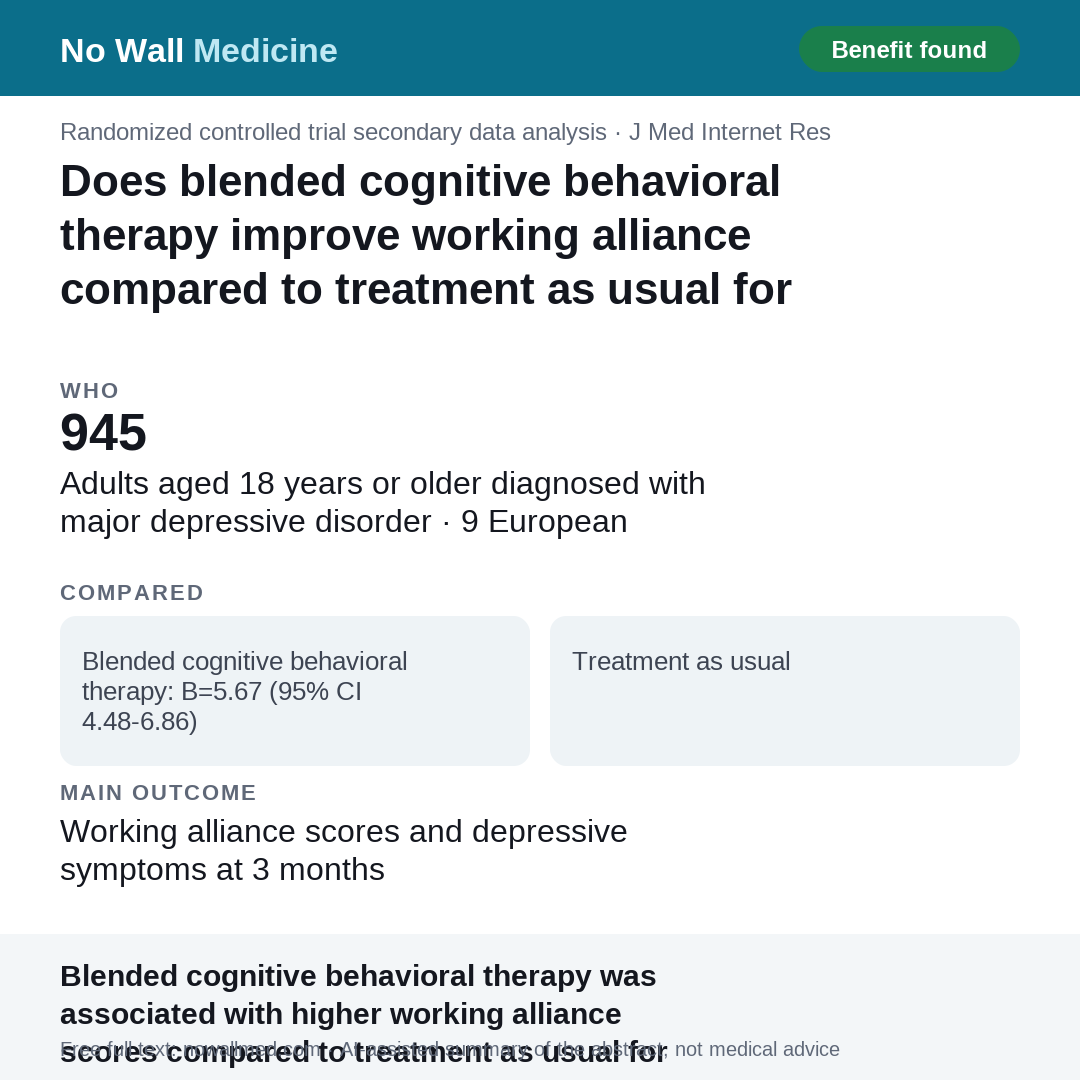
Clinical question: Does blended cognitive behavioral therapy improve working alliance compared to treatment as usual for depression?
Why it matters: It is unknown how much a digital mental health program impacts the working alliance and clinical outcomes in a blended therapy intervention for depression.
Key points
- Researchers analyzed 945 adults with major depressive disorder randomized to either blended cognitive behavioral therapy or treatment as usual.
- Blended cognitive behavioral therapy was associated with higher working alliance scores, which is the quality of the relationship between patient and therapist, compared to usual care (B=5.67, 95% CI 4.48-6.86).
- Higher working alliance scores were associated with lower depression scores in both groups, and this association was stronger in the blended group when digital program usability was high.
Headline and key points written with AI from the paper’s abstract, with every number checked against it. Read the paper before relying on them.
Was this summary helpful?
Subject terms
Cite this article
Doukani A, Quartagno M, Sera F, et al. Comparison of the Working Alliance in Blended Cognitive Behavioral Therapy and Treatment as Usual for Depression in Europe: Secondary Data Analysis of the E-COMPARED Randomized Controlled Trial. J Med Internet Res. 2024. doi:10.2196/47515
Spotted a mistake? Suggest a correction