Teprotumumab and combined steroid treatments show varying effectiveness for active Graves orbitopathy
Comprehensive Comparisons of Different Treatments for Active Graves Orbitopathy: A Systematic Review and Bayesian Model-Based Network Meta-Analysis
Network meta-analysis of randomized controlled trialsMixed results
What are the most effective and safe treatments for active Graves orbitopathy?
Who
Patients with active thyroid eye disease
Compared
Teprotumumab: RR 5.5 (95% CI 2.3 to 16)
No treatment
Main outcome
Overall response rate, clinical activity score, proptosis, diplopia, and adverse events
Result: RR 5.5 (95% CI 2.3 to 16)
Bottom line: Teprotumumab is most effective for response rates, while oral mycophenolate with intravenous glucocorticosteroids best improves proptosis.
J Clin Endocrinol Metab · 2024-12-16Download image
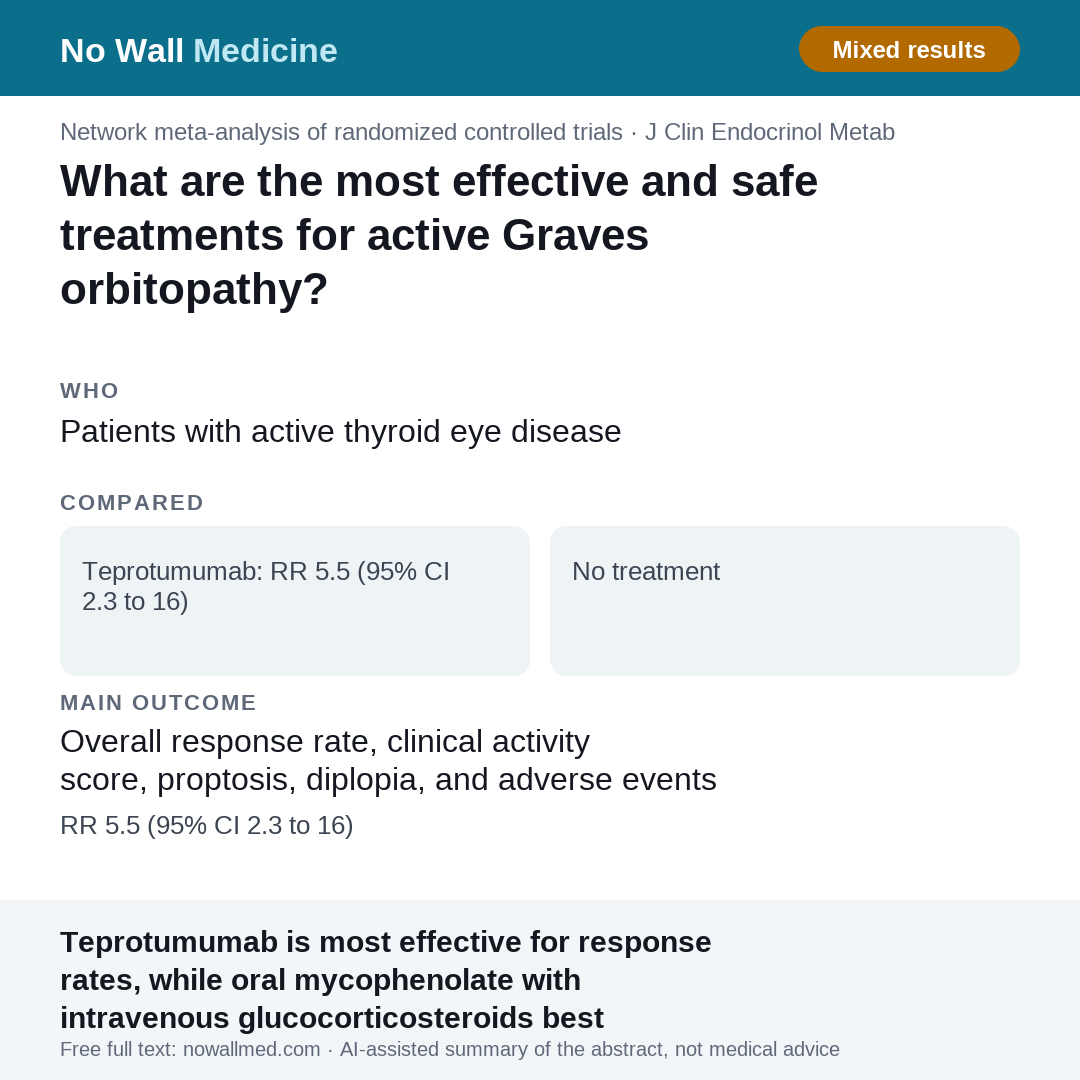
Clinical question: What are the most effective and safe treatments for active Graves orbitopathy?
Why it matters: The complexity and tendency for Graves orbitopathy to recur make it difficult to determine which specific treatments are most effective for different symptoms.
Key points
- Researchers performed a network meta-analysis of randomized controlled trials to compare different treatments for thyroid eye disease, an inflammatory eye disorder.
- Teprotumumab was associated with the highest overall response rate (RR 5.5, 95% CI 2.3 to 16) and the greatest reduction in proptosis, which is bulging of the eyes.
- Oral mycophenolate combined with intravenous glucocorticosteroids (steroid injections) was associated with the best results for improving proptosis, while oral methotrexate with steroids showed a favorable balance of efficacy and safety.
Headline and key points written with AI from the paper’s abstract, with every number checked against it. Read the paper before relying on them.
Was this summary helpful?
Subject terms
Cite this article
Xu Y, Liu R, Huang L, Qin Y, Liu W, Huang S. Comprehensive Comparisons of Different Treatments for Active Graves Orbitopathy: A Systematic Review and Bayesian Model-Based Network Meta-Analysis. J Clin Endocrinol Metab. 2024. doi:10.1210/clinem/dgae877
Spotted a mistake? Suggest a correction
Top studies every Monday
The week’s key trials and guidelines in your specialties, plus any topics you follow. By email, free.
Get the weekly digest