Systematic review shows most automated brain ultrasound methods lack public data and code sharing
Computational methods for the analysis of early-pregnancy brain ultrasonography: a systematic review
Systematic reviewUnclear result
What are the current computational methods for early-pregnancy brain ultrasonography analysis?
Who
55
Studies on human brain ultrasonography before 20th week of pregnancy
Compared
76%Automatic methods
62%Learning-based methods
45%Used clinical routine data
13%Data depicted abnormal development
Main outcome
Attributes of computational methods for early-pregnancy brain ultrasonography
Bottom line: Automated methods are emerging, but more research using routine data and public code is needed for clinical practice.
Limitation: None of the studies shared the program source code publicly.
Funded by: Erasmus MC Medical Research Advisor Committee
eBioMedicine · 2023-02-14Download image
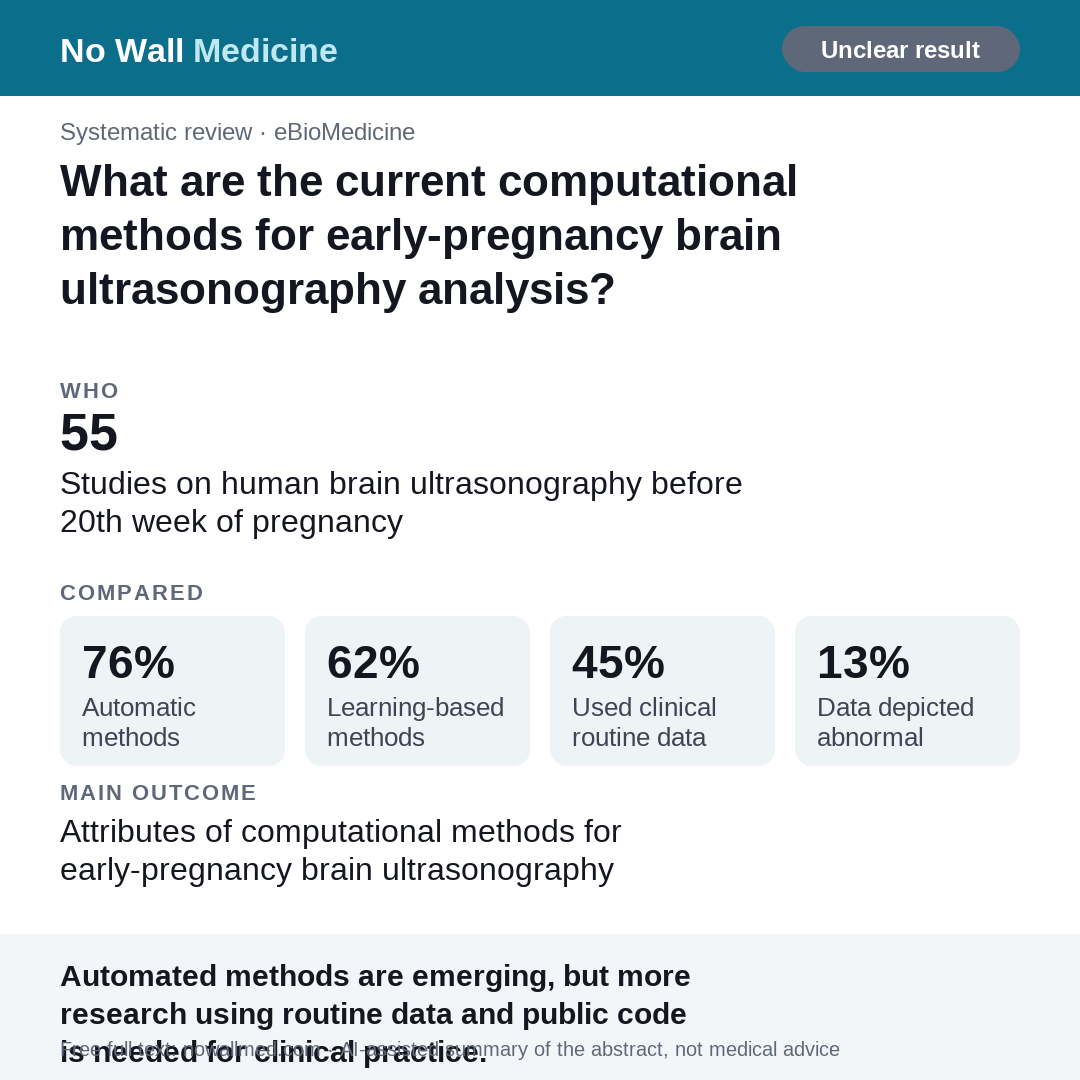
Clinical question: What are the current computational methods for early-pregnancy brain ultrasonography analysis?
Why it matters: Manual measurements and visual analysis of early-pregnancy brain ultrasound are time-consuming and prone to errors, but the requirements for clinical implementation of automated methods are unclear.
Key points
- Researchers reviewed 55 studies involving computational methods for analyzing human brain ultrasound scans performed before the 20th week of pregnancy.
- While 76% used automatic methods and 62% used learning-based methods, none of the studies shared their program source code publicly.
- Only 13% of the studies used clinical routine data that depicted abnormal brain development and 35% did not analyze confounding factors.
Headline and key points written with AI from the paper’s abstract, with every number checked against it. Read the paper before relying on them.
Was this summary helpful?
Subject terms
Cite this article
Bastiaansen WAP, Klein S, Koning AHJ, Niessen WJ, Steegers-Theunissen RPM, Rousian M. Computational methods for the analysis of early-pregnancy brain ultrasonography: a systematic review. eBioMedicine. 2023. doi:10.1016/j.ebiom.2023.104466
Spotted a mistake? Suggest a correction
Top studies every Monday
The week’s key trials and guidelines in your specialties, plus any topics you follow. By email, free.
Get the weekly digest