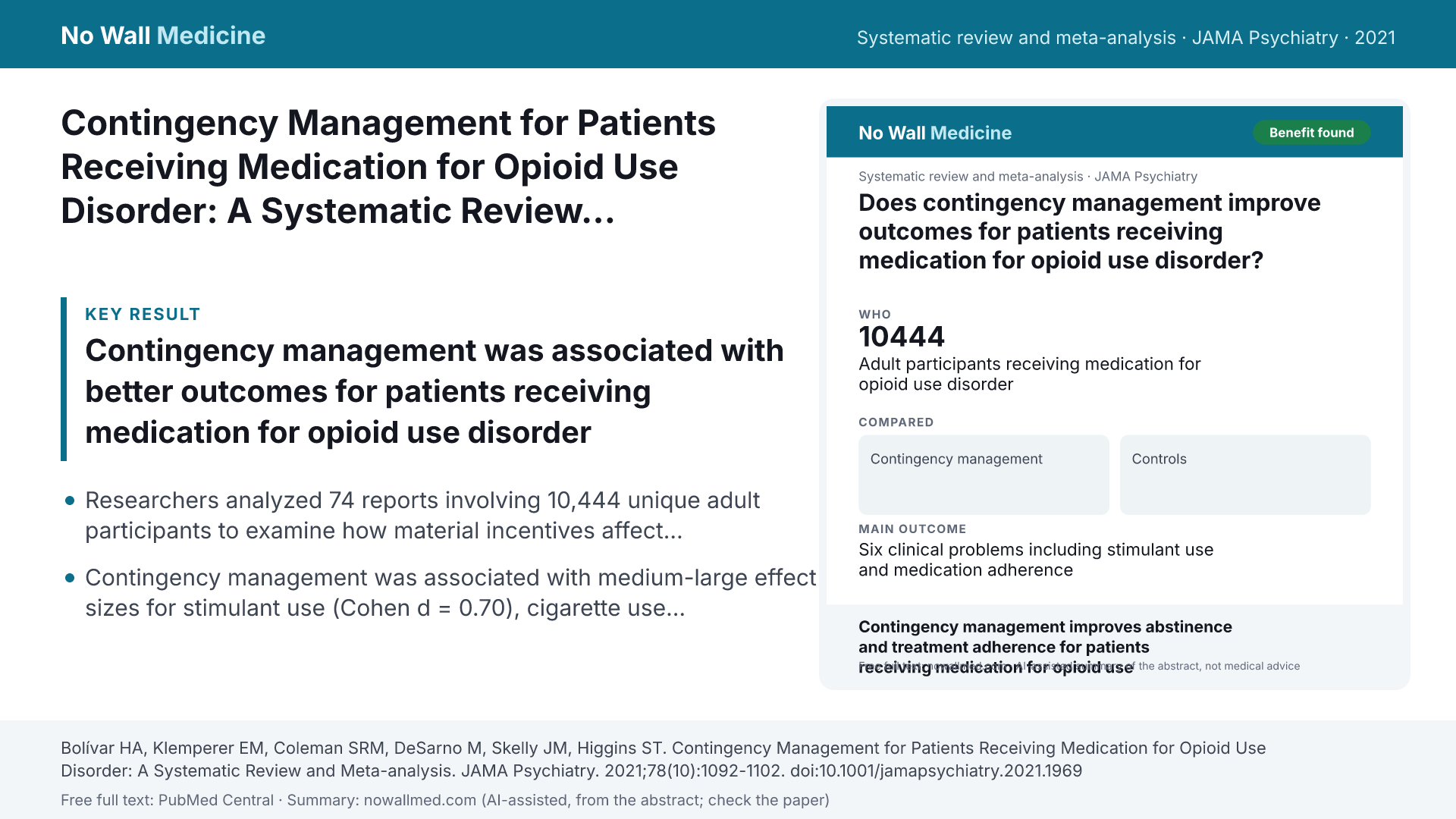
Contingency Management for Patients Receiving Medication for Opioid Use Disorder: A Systematic Review and Meta-analysis
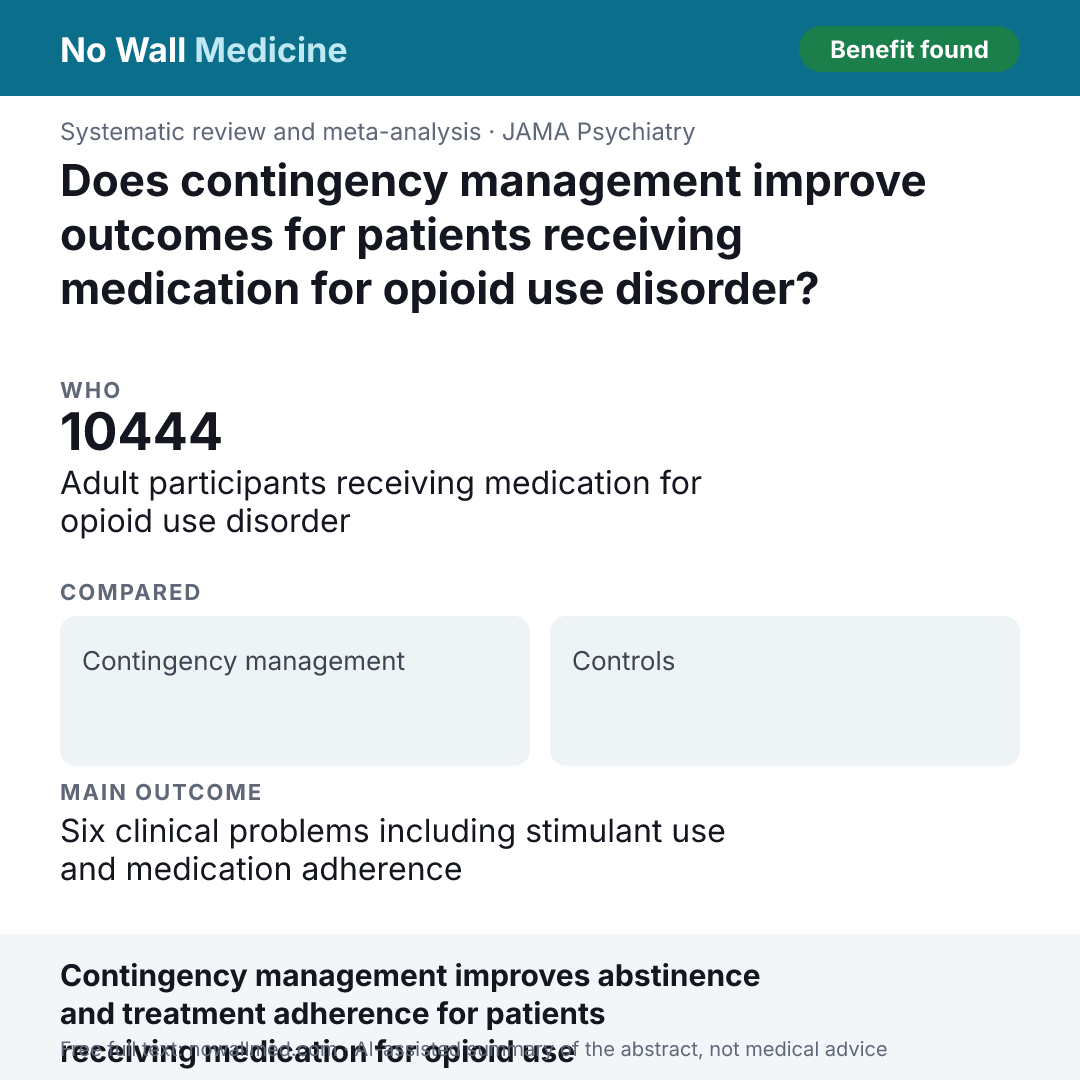
Key result: Contingency management was associated with better outcomes for patients receiving medication for opioid use disorder
Key points
- Researchers analyzed 74 reports involving 10,444 unique adult participants to examine how material incentives affect clinical outcomes during medication treatment for opioid use disorder.
- Contingency management was associated with medium-large effect sizes for stimulant use (Cohen d = 0.70), cigarette use (Cohen d = 0.78), illicit opioid use (Cohen d = 0.58), and medication adherence (Cohen d = 0.75).
- The intervention was also associated with small-medium effect sizes for polysubstance use (Cohen d = 0.46) and therapy attendance (d = 0.43).
Why it matters: Comorbid stimulant use and other behavioral health problems often undermine the efficacy of medication treatment for opioid use disorder.
Discussion prompts
- Would these patients look like yours? Who was left out?
- Is the main outcome one that matters to patients?
- Is the difference large enough to change what you do?
Cite: Bolívar HA, Klemperer EM, Coleman SRM, DeSarno M, Skelly JM, Higgins ST. Contingency Management for Patients Receiving Medication for Opioid Use Disorder: A Systematic Review and Meta-analysis. JAMA Psychiatry. 2021. doi:10.1001/jamapsychiatry.2021.1969
Free full text: PubMed Central · Summary and visual abstract: nowallmed.com/a/contingency-management-for-patients-receiving-medication-for-opioid-mqvmzi/ (AI-assisted from the abstract; check the paper before relying on it).