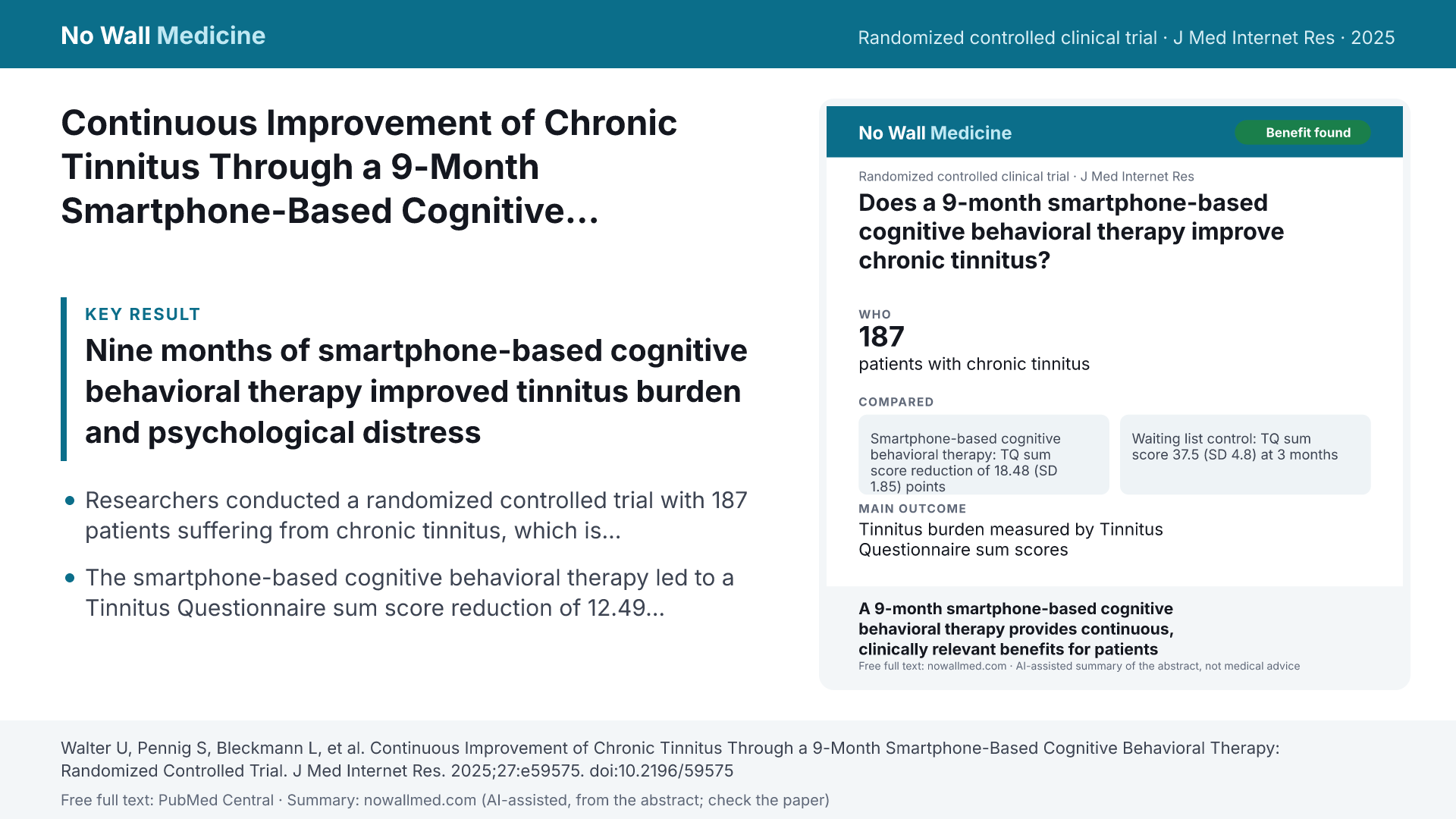
Nine months of smartphone-based cognitive behavioral therapy improved tinnitus burden and psychological distress
Continuous Improvement of Chronic Tinnitus Through a 9-Month Smartphone-Based Cognitive Behavioral Therapy: Randomized Controlled Trial
Randomized controlled clinical trialBenefit found
Does a 9-month smartphone-based cognitive behavioral therapy improve chronic tinnitus?
Who
187
patients with chronic tinnitus
Compared
Smartphone-based cognitive behavioral therapy: TQ sum score reduction of 18.48 (SD 1.85) points
Waiting list control: TQ sum score 37.5 (SD 4.8) at 3 months
Main outcome
Tinnitus burden measured by Tinnitus Questionnaire sum scores
Result: Cohen d 1.38
Bottom line: A 9-month smartphone-based cognitive behavioral therapy provides continuous, clinically relevant benefits for patients with chronic tinnitus.
J Med Internet Res · 2025-02-18Download image
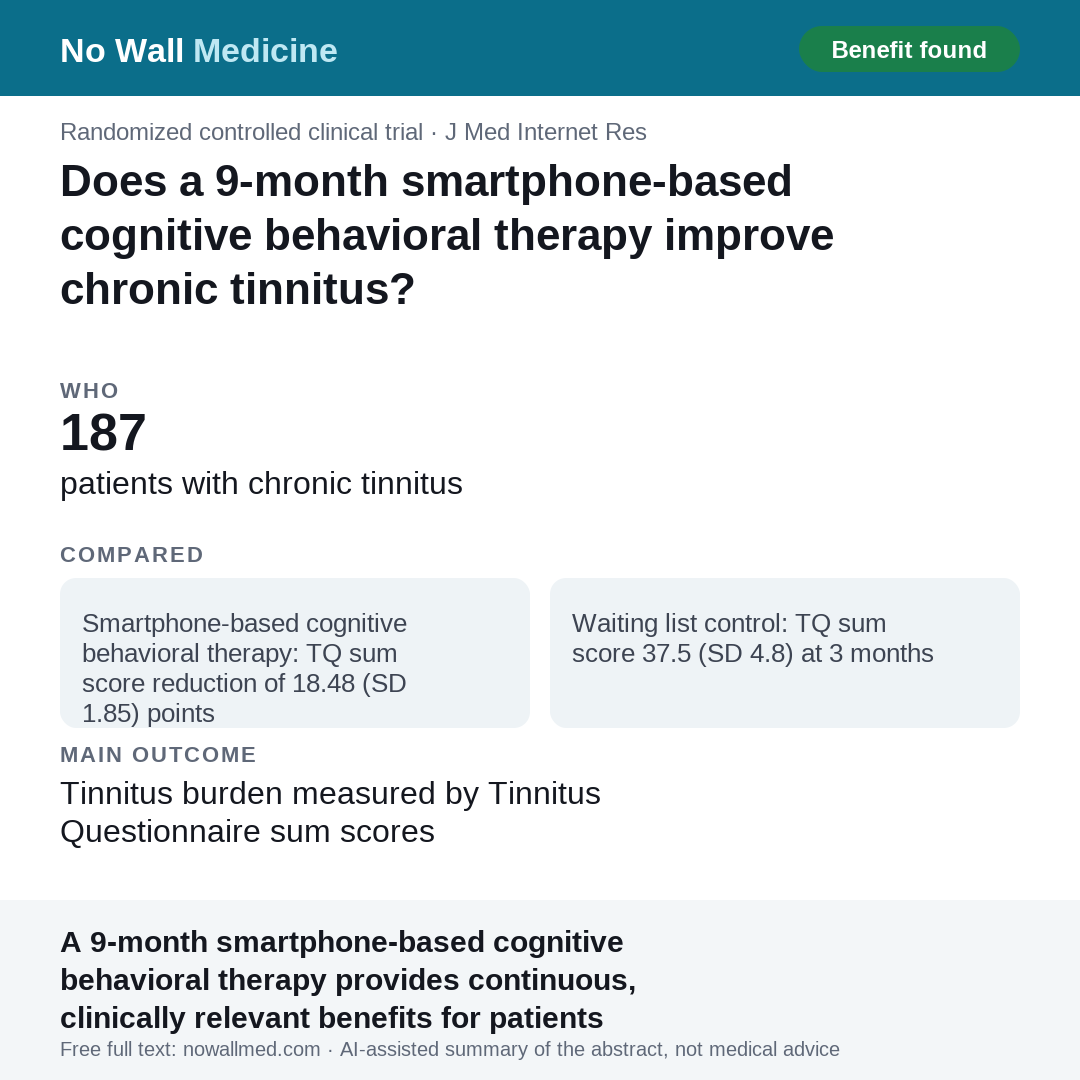
Clinical question: Does a 9-month smartphone-based cognitive behavioral therapy improve chronic tinnitus?
Why it matters: It was unknown if a smartphone-based version of cognitive behavioral therapy provides continuous and clinically relevant benefits for people with chronic tinnitus.
Key points
- Researchers conducted a randomized controlled trial with 187 patients suffering from chronic tinnitus, which is the perception of sound without an external source.
- The smartphone-based cognitive behavioral therapy led to a Tinnitus Questionnaire sum score reduction of 12.49 points after 3 months and 18.48 points after 9 months.
- The intervention was also associated with lower scores on measures of perceived stress, depression, and self-efficacy, optimism, and pessimism.
Headline and key points written with AI from the paper’s abstract, with every number checked against it. Read the paper before relying on them.
Was this summary helpful?
Subject terms
Cite this article
Walter U, Pennig S, Bleckmann L, et al. Continuous Improvement of Chronic Tinnitus Through a 9-Month Smartphone-Based Cognitive Behavioral Therapy: Randomized Controlled Trial. J Med Internet Res. 2025. doi:10.2196/59575
Spotted a mistake? Suggest a correction