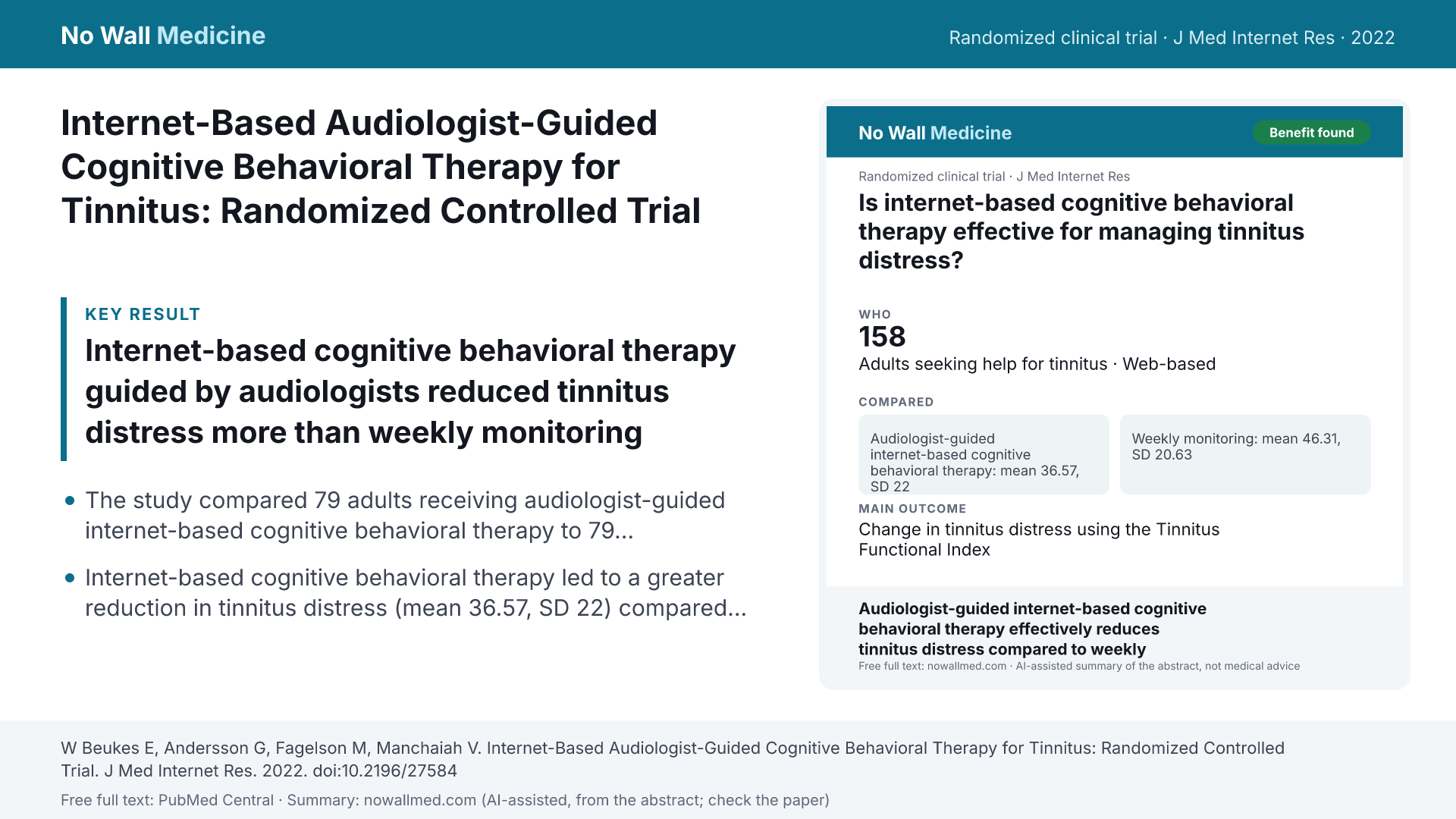
Internet-based cognitive behavioral therapy guided by audiologists reduced tinnitus distress more than weekly monitoring
Internet-Based Audiologist-Guided Cognitive Behavioral Therapy for Tinnitus: Randomized Controlled Trial
Randomized clinical trialBenefit found
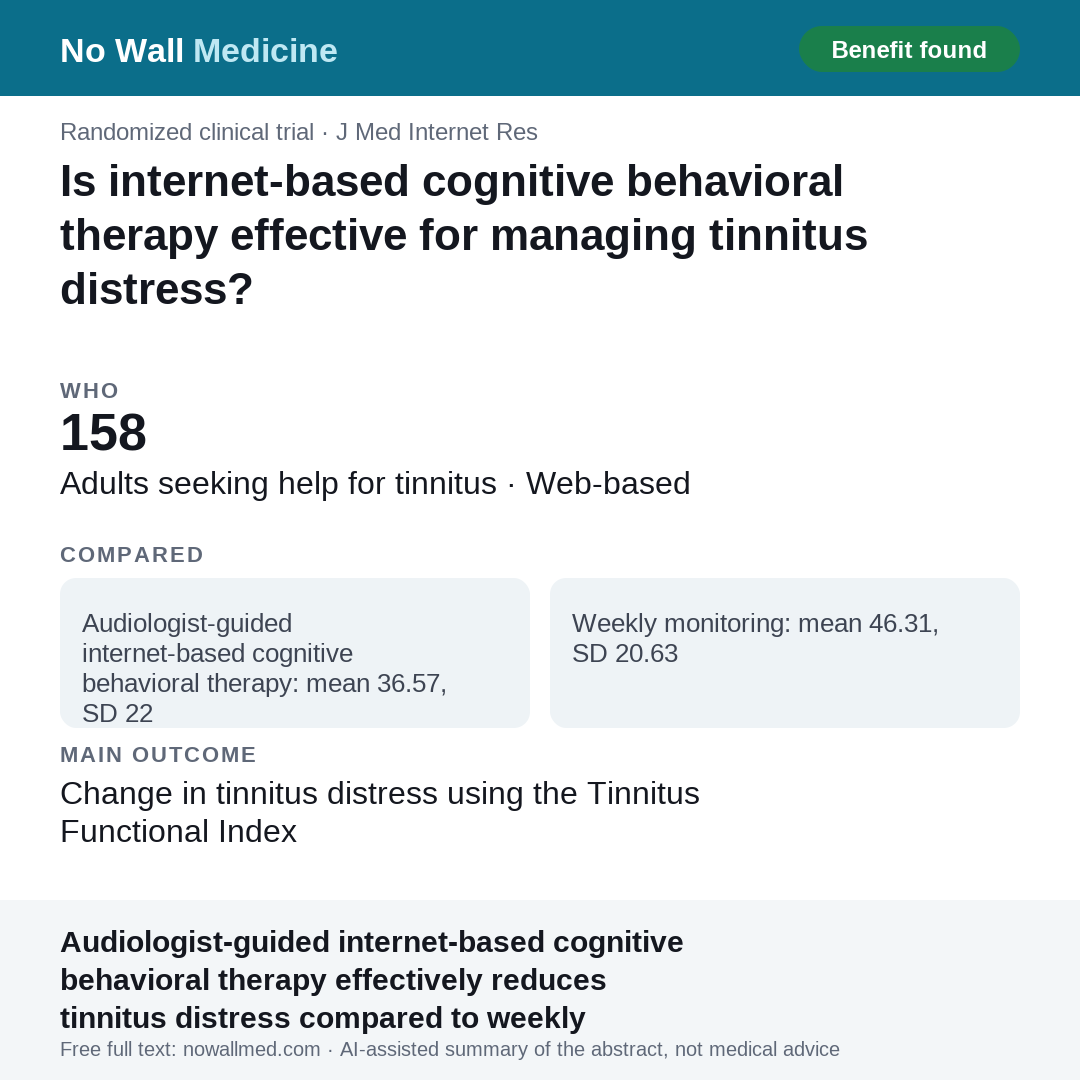
Is internet-based cognitive behavioral therapy effective for managing tinnitus distress?
Who
158
Adults seeking help for tinnitus · Web-based
Compared
Audiologist-guided internet-based cognitive behavioral therapy: mean 36.57, SD 22
Weekly monitoring: mean 46.31, SD 20.63
Main outcome
Change in tinnitus distress using the Tinnitus Functional Index
Result: Cohen d=0.46, 95% CI 0.14-0.77
Bottom line: Audiologist-guided internet-based cognitive behavioral therapy effectively reduces tinnitus distress compared to weekly monitoring.
Limitation: Low overall compliance rates for questionnaire completion and need to attract more Spanish speakers.
J Med Internet Res · 2022-02-14Download image
Clinical question: Is internet-based cognitive behavioral therapy effective for managing tinnitus distress?
Why it matters: Access to evidence-based care for tinnitus is limited and internet-based cognitive behavioral therapy is not currently readily available in the United States.
Key points
- The study compared 79 adults receiving audiologist-guided internet-based cognitive behavioral therapy to 79 adults receiving weekly monitoring for tinnitus management.
- Internet-based cognitive behavioral therapy led to a greater reduction in tinnitus distress (mean 36.57, SD 22) compared to weekly monitoring (mean 46.31, SD 20.63).
- The intervention also showed a greater reduction in insomnia and negative tinnitus cognitions, with effects remaining stable at a 2-month follow-up.
Limitation the authors note: The study had low overall compliance rates for questionnaire completion, which dropped to 42% (62/148) by the final assessment.
Headline and key points written with AI from the paper’s abstract, with every number checked against it. Read the paper before relying on them.
Was this summary helpful?
Subject terms
Cite this article
W Beukes E, Andersson G, Fagelson M, Manchaiah V. Internet-Based Audiologist-Guided Cognitive Behavioral Therapy for Tinnitus: Randomized Controlled Trial. J Med Internet Res. 2022. doi:10.2196/27584
Spotted a mistake? Suggest a correction