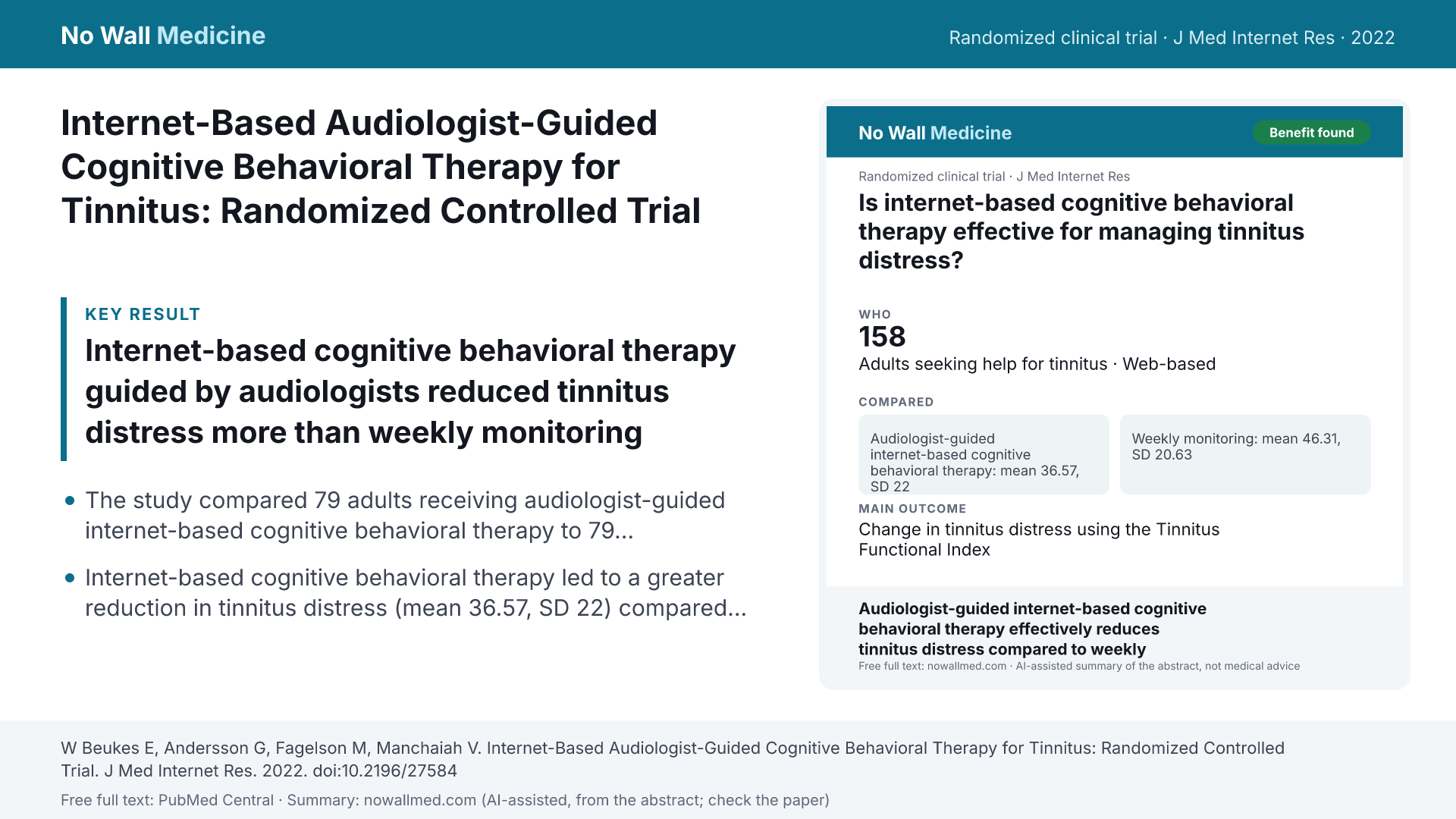
Internet-Based Audiologist-Guided Cognitive Behavioral Therapy for Tinnitus: Randomized Controlled Trial
Key result: Internet-based cognitive behavioral therapy guided by audiologists reduced tinnitus distress more than weekly monitoring
Key points
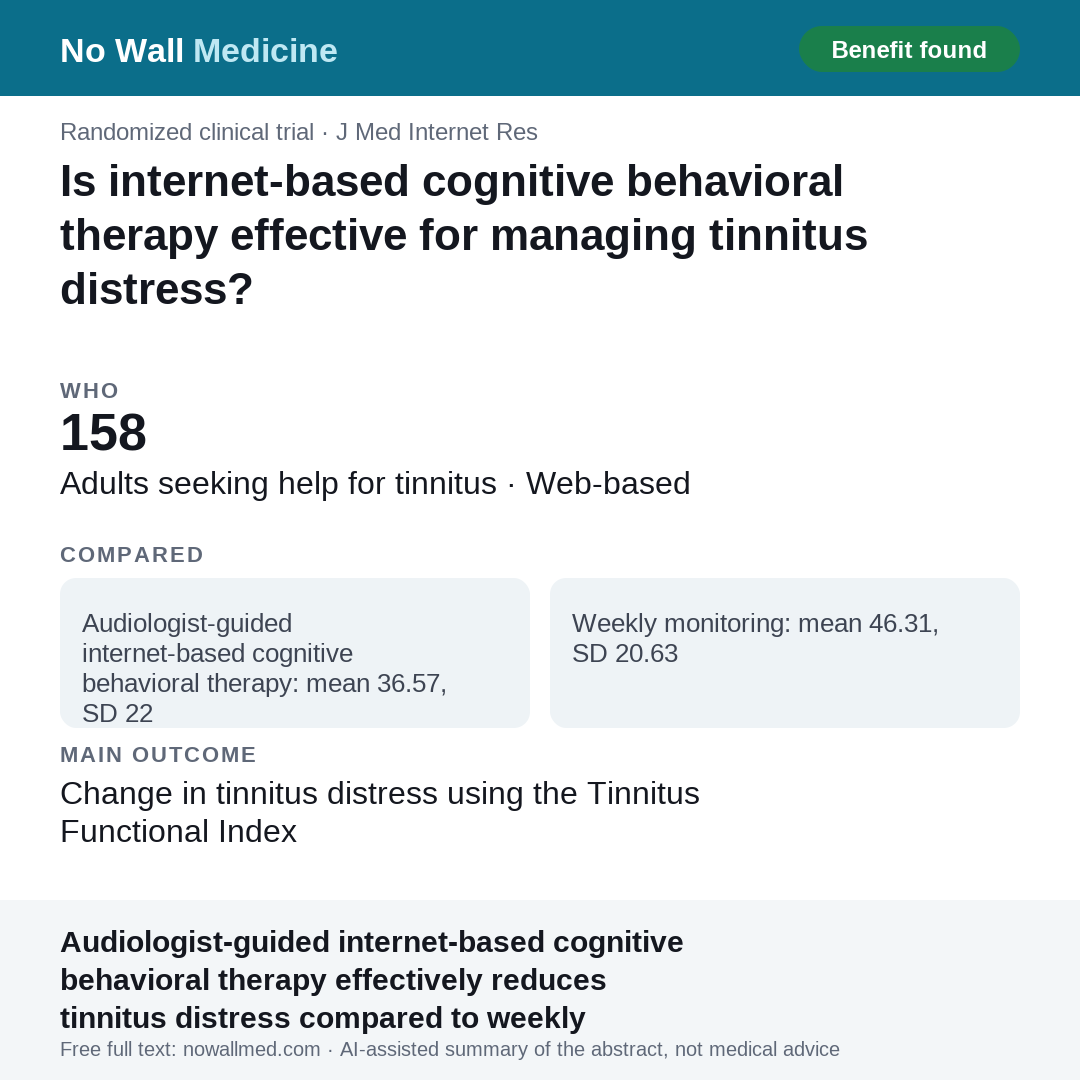
- The study compared 79 adults receiving audiologist-guided internet-based cognitive behavioral therapy to 79 adults receiving weekly monitoring for tinnitus management.
- Internet-based cognitive behavioral therapy led to a greater reduction in tinnitus distress (mean 36.57, SD 22) compared to weekly monitoring (mean 46.31, SD 20.63).
- The intervention also showed a greater reduction in insomnia and negative tinnitus cognitions, with effects remaining stable at a 2-month follow-up.
Why it matters: Access to evidence-based care for tinnitus is limited and internet-based cognitive behavioral therapy is not currently readily available in the United States.
Limitation the authors note: The study had low overall compliance rates for questionnaire completion, which dropped to 42% (62/148) by the final assessment.
Discussion prompts
- Would these patients look like yours? Who was left out?
- Is the main outcome one that matters to patients?
- Is the difference large enough to change what you do?
Cite: W Beukes E, Andersson G, Fagelson M, Manchaiah V. Internet-Based Audiologist-Guided Cognitive Behavioral Therapy for Tinnitus: Randomized Controlled Trial. J Med Internet Res. 2022. doi:10.2196/27584
Free full text: PubMed Central · Summary and visual abstract: nowallmed.com/a/internet-based-audiologist-guided-cognitive-behavioral-therapy-for-17n79jt/ (AI-assisted from the abstract; check the paper before relying on it).