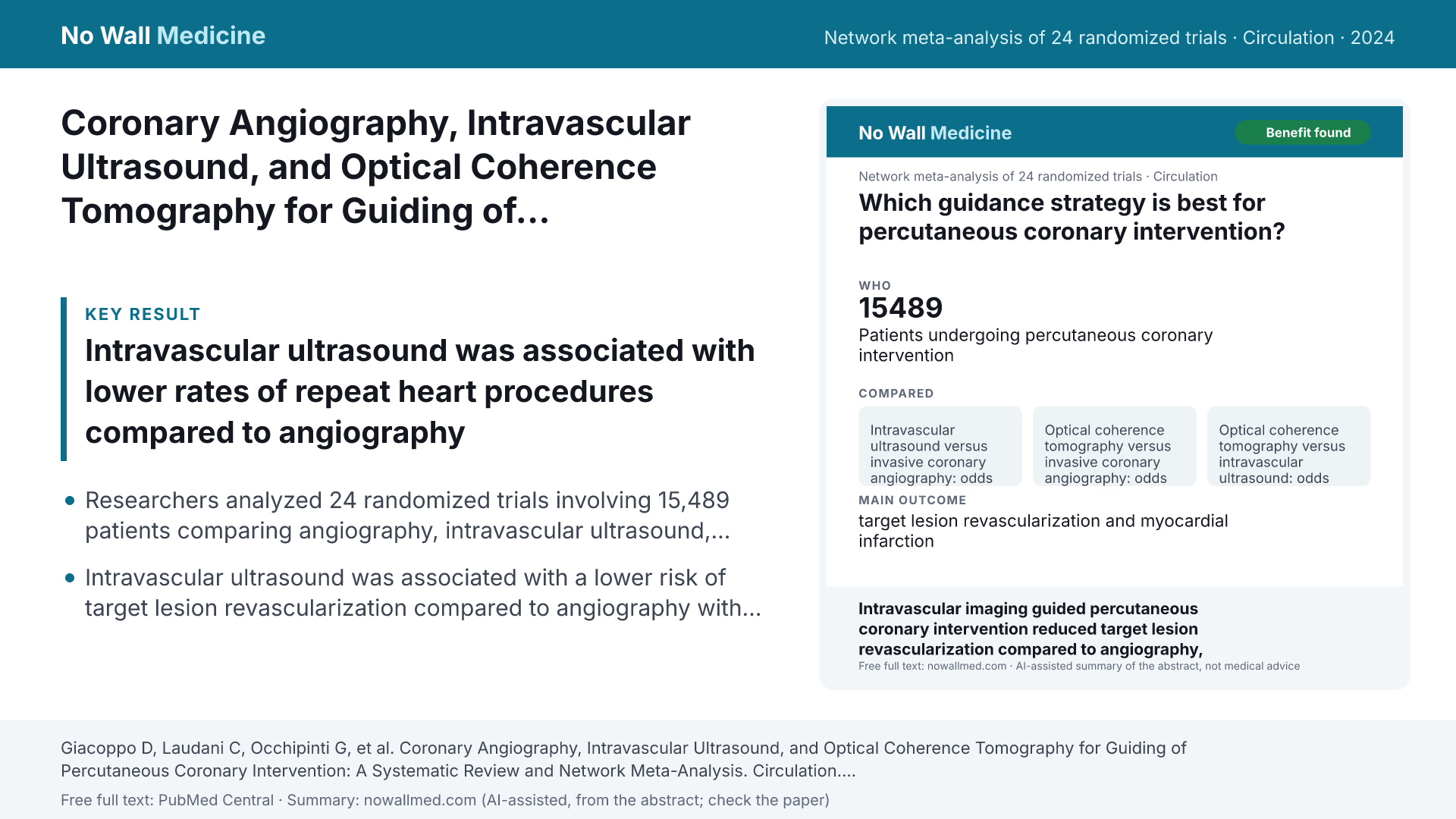
Intravascular ultrasound was associated with lower rates of repeat heart procedures compared to angiography
Coronary Angiography, Intravascular Ultrasound, and Optical Coherence Tomography for Guiding of Percutaneous Coronary Intervention: A Systematic Review and Network Meta-Analysis
Network meta-analysis of 24 randomized trialsBenefit found
Which guidance strategy is best for percutaneous coronary intervention?
Who
15489
Patients undergoing percutaneous coronary intervention
Compared
Intravascular ultrasound versus invasive coronary angiography: odds ratio 0.69 (95% CI 0.54-0.87)
Optical coherence tomography versus invasive coronary angiography: odds ratio 0.83 (95% CI 0.63-1.09)
Optical coherence tomography versus intravascular ultrasound: odds ratio 1.21 (95% CI 0.88-1.66)
Main outcome
target lesion revascularization and myocardial infarction
Result: odds ratio 0.69 (95% CI 0.54-0.87) for IVUS versus ICA
Bottom line: Intravascular imaging guided percutaneous coronary intervention reduced target lesion revascularization compared to angiography, most notably with intravascular ultrasound.
Circulation · 2024-02-12 · Save PNG
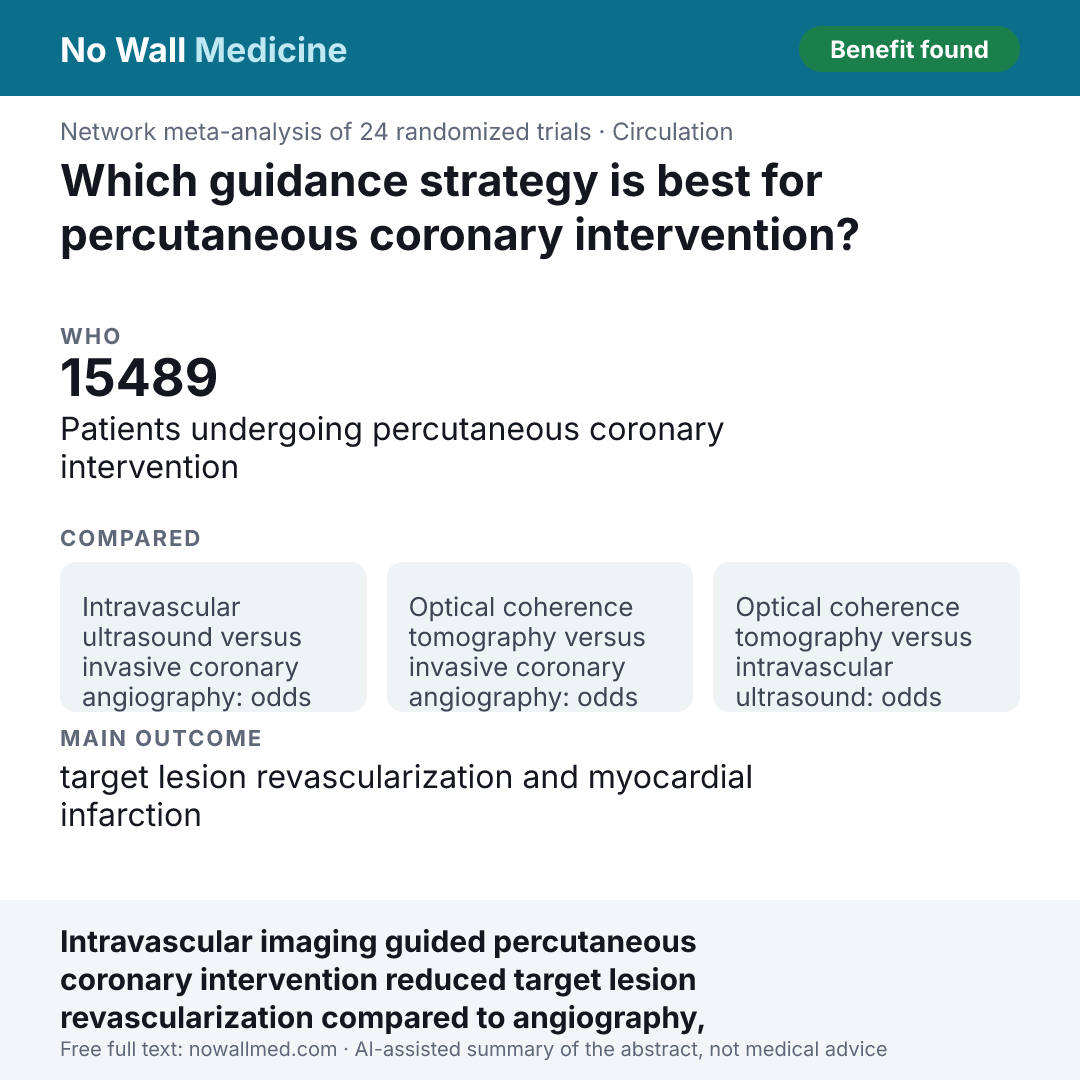
Clinical question: Which guidance strategy is best for percutaneous coronary intervention?
Why it matters: Results from previous clinical trials comparing different imaging techniques to guide heart stent procedures have been mixed.
Key points
- Researchers analyzed 24 randomized trials involving 15,489 patients comparing angiography, intravascular ultrasound, and optical coherence tomography for guiding heart stent procedures.
- Intravascular ultrasound was associated with a lower risk of target lesion revascularization compared to angiography with an odds ratio of 0.69.
- No significant differences were observed for myocardial infarction between the different guidance strategies used in the trials.
Headline and key points written with AI from the paper’s abstract, with every number checked against it. Read the paper before relying on them.
Was this summary helpful?
Subject terms
Headline, design, result, key points, caveat and citation as plain text.
Cite this article
Giacoppo D, Laudani C, Occhipinti G, et al. Coronary Angiography, Intravascular Ultrasound, and Optical Coherence Tomography for Guiding of Percutaneous Coronary Intervention: A Systematic Review and Network Meta-Analysis. Circulation. 2024;149(14):1065-1086. doi:10.1161/CIRCULATIONAHA.123.067583
Spotted a mistake? Suggest a correction