Coronary Venous Pressure and Microvascular Hemodynamics in Patients With Microvascular Angina: A Randomized Clinical Trial
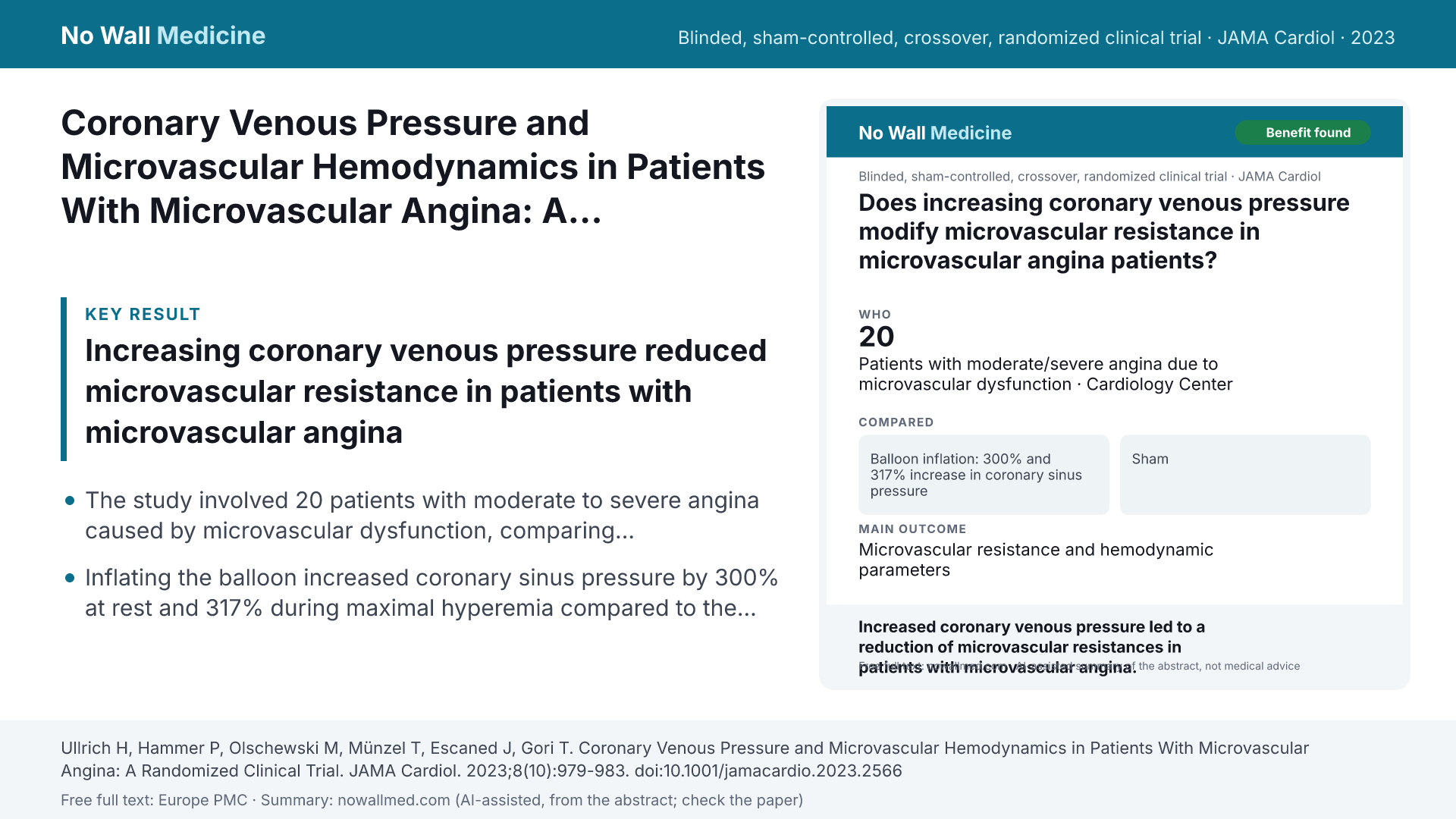
Key result: Increasing coronary venous pressure reduced microvascular resistance in patients with microvascular angina
Key points
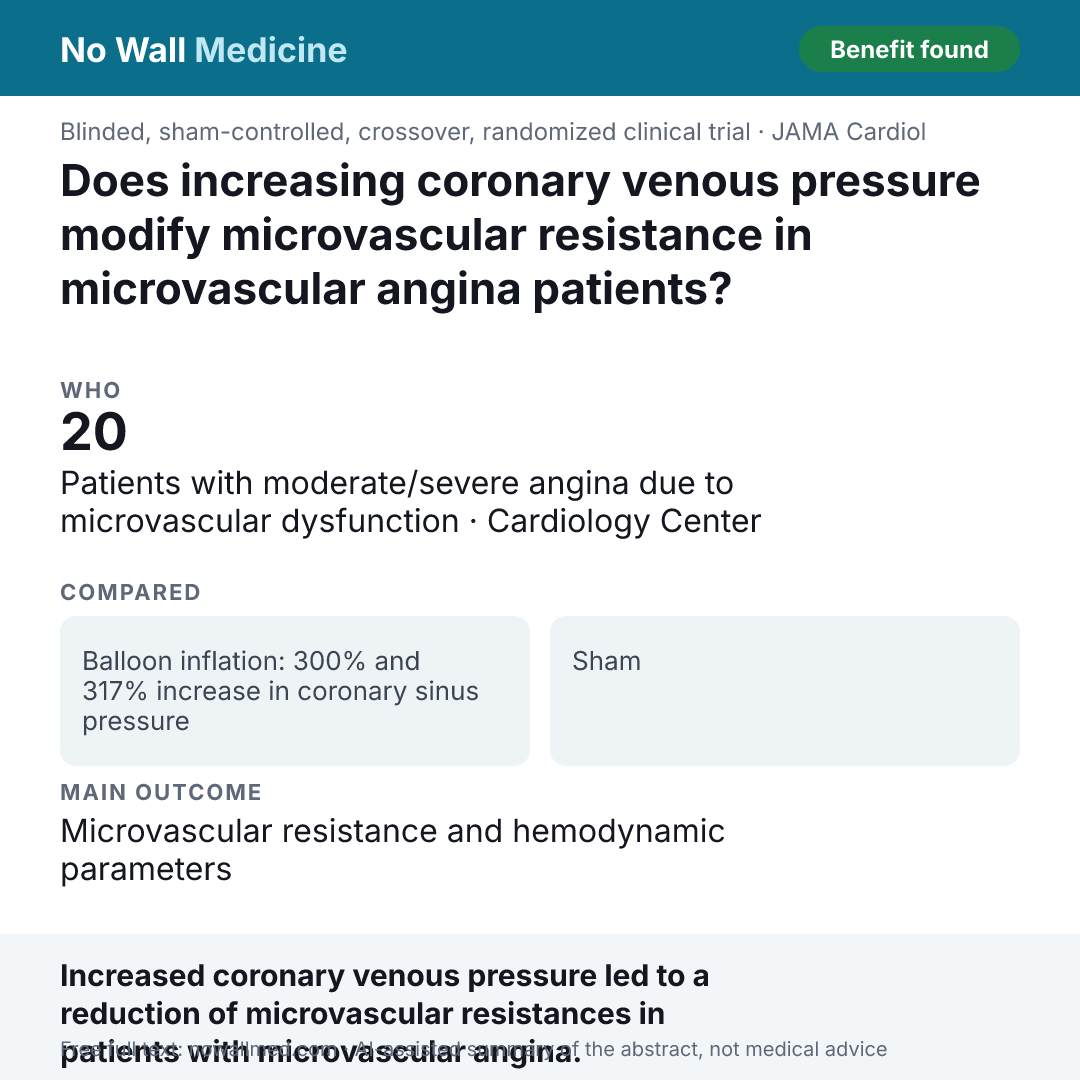
- The study involved 20 patients with moderate to severe angina caused by microvascular dysfunction, comparing balloon inflation in the coronary sinus to a sham procedure.
- Inflating the balloon increased coronary sinus pressure by 300% at rest and 317% during maximal hyperemia compared to the sham group.
- The increase in coronary venous pressure led to a reduction in microvascular resistance, which is the resistance to blood flow in the smallest heart vessels.
Why it matters: The role of the coronary venous circulation in regulating blood flow to the heart muscle and its potential for treating microvascular angina is unexplored.
Discussion prompts
- Would these patients look like yours? Who was left out?
- Is the main outcome one that matters to patients?
- Is the difference large enough to change what you do?
Cite: Ullrich H, Hammer P, Olschewski M, Münzel T, Escaned J, Gori T. Coronary Venous Pressure and Microvascular Hemodynamics in Patients With Microvascular Angina: A Randomized Clinical Trial. JAMA Cardiol. 2023;8(10):979-983. doi:10.1001/jamacardio.2023.2566
Free full text: Europe PMC · Summary and visual abstract: nowallmed.com/a/coronary-venous-pressure-and-microvascular-hemodynamics-in-patients-10wpjga/ (AI-assisted from the abstract; check the paper before relying on it).