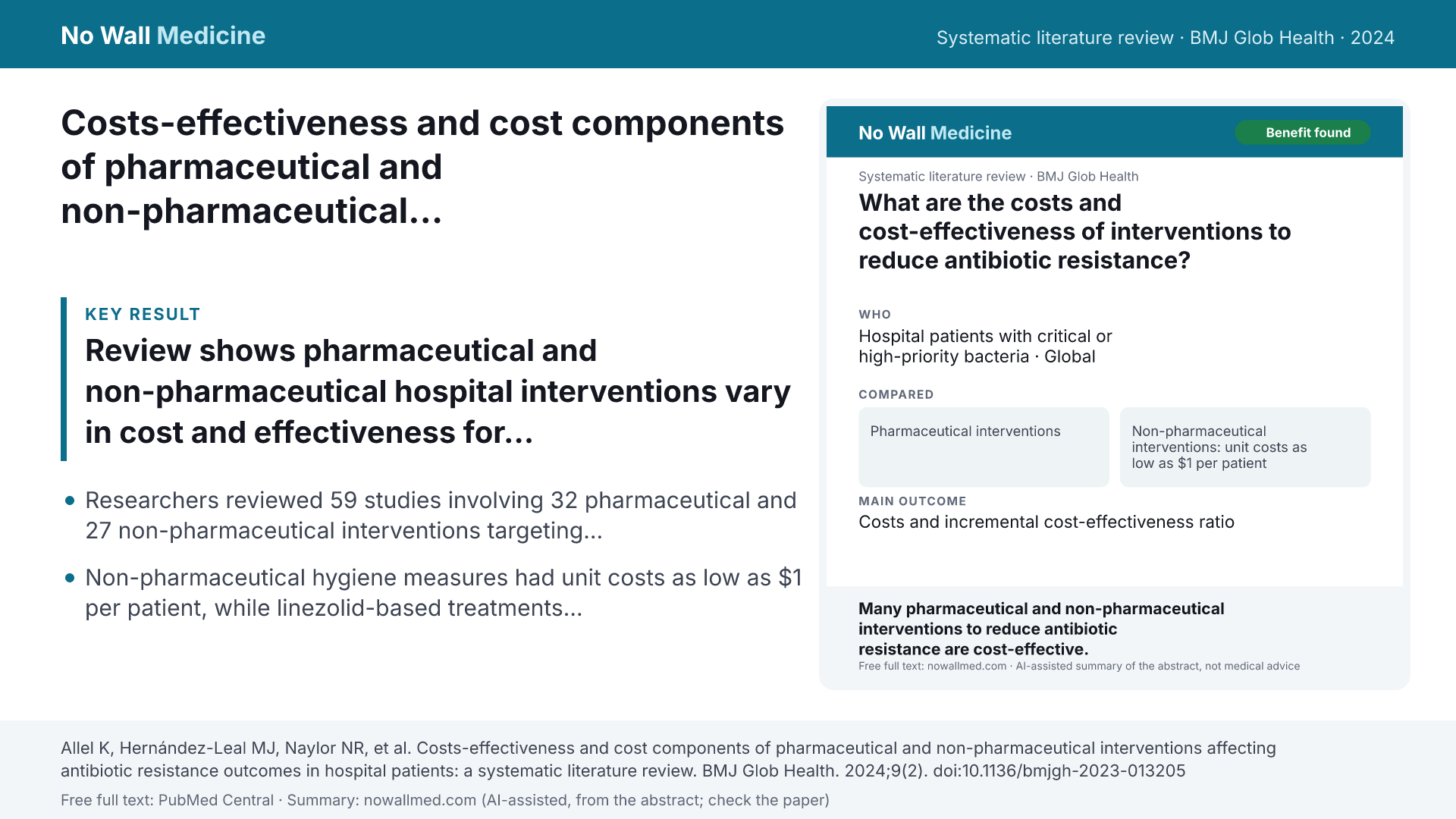
Costs-effectiveness and cost components of pharmaceutical and non-pharmaceutical interventions affecting antibiotic resistance outcomes in hospital patients: a systematic literature review
Key result: Review shows pharmaceutical and non-pharmaceutical hospital interventions vary in cost and effectiveness for antibiotic resistance
Key points
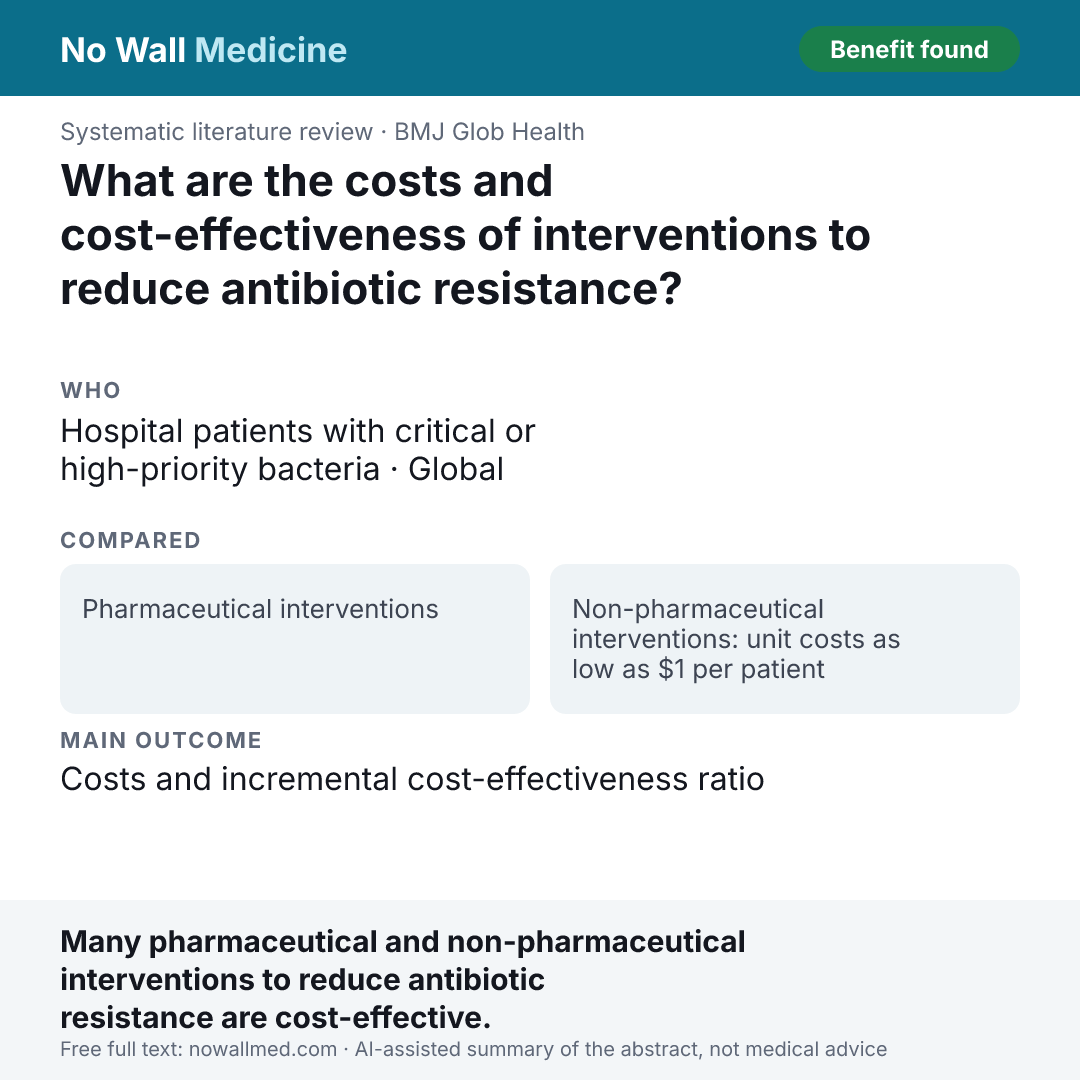
- Researchers reviewed 59 studies involving 32 pharmaceutical and 27 non-pharmaceutical interventions targeting high-priority bacteria in hospital patients.
- Non-pharmaceutical hygiene measures had unit costs as low as $1 per patient, while linezolid-based treatments for methicillin-resistant Staphylococcus aureus showed an incremental cost-effectiveness ratio up to $21,488 per treatment success.
- Infection control measures like hand hygiene and gown usage were found to be highly cost-effective, with an incremental cost-effectiveness ratio of $1160 per quality-adjusted life year.
Why it matters: Limited information on the costs and cost-effectiveness of hospital interventions hinders efficient resource allocation for reducing antibiotic resistance.
Limitation the authors note: Comparisons between studies were hindered by within-study differences.
Discussion prompts
- Would these patients look like yours? Who was left out?
- Is the main outcome one that matters to patients?
- Is the difference large enough to change what you do?
Cite: Allel K, Hernández-Leal MJ, Naylor NR, et al. Costs-effectiveness and cost components of pharmaceutical and non-pharmaceutical interventions affecting antibiotic resistance outcomes in hospital patients: a systematic literature review. BMJ Glob Health. 2024;9(2). doi:10.1136/bmjgh-2023-013205
Free full text: PubMed Central · Summary and visual abstract: nowallmed.com/a/costs-effectiveness-and-cost-components-of-pharmaceutical-and-non-yqubdw/ (AI-assisted from the abstract; check the paper before relying on it).