Quantitative computed tomography identifies significantly more osteoporosis cases than dual-energy X-ray absorptiometry
Criteria for osteoporosis diagnosis: a systematic review and meta-analysis of osteoporosis diagnostic studies with DXA and QCT
Systematic review and meta-analysisHarm found
Does quantitative computed tomography identify more osteoporosis patients than dual-energy X-ray absorptiometry?
Who
3939
Patients diagnosed with osteoporosis using both diagnostic methods
Compared
Quantitative computed tomography
Dual-energy X-ray absorptiometry
Main outcome
Diagnosis of osteoporosis
Result: odds ratio 4.91 (95% CI 3.19-7.54)
Bottom line: Quantitative computed tomography identifies significantly more osteoporosis patients than dual-energy X-ray absorptiometry, potentially complicating clinical practice.
eClinicalMedicine · 2025-05-09 · Save PNG
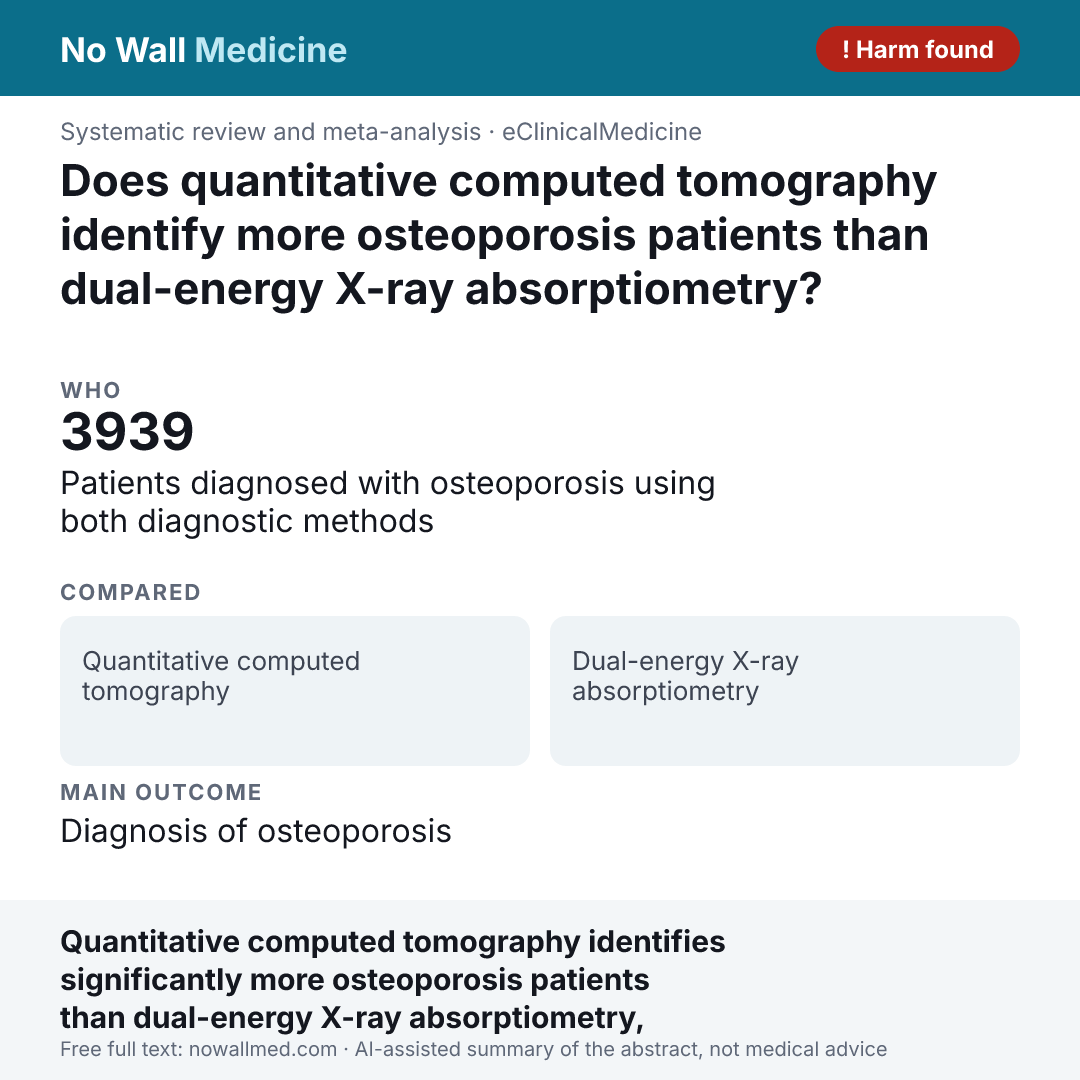
Clinical question: Does quantitative computed tomography identify more osteoporosis patients than dual-energy X-ray absorptiometry?
Why it matters: Different prevalence rates from these two diagnostic techniques may complicate osteoporosis prevention, treatment, and the selection of cases in drug clinical trials.
Key points
- Researchers analyzed 19 studies involving 3939 cases to compare osteoporosis diagnosis using dual-energy X-ray absorptiometry and quantitative computed tomography.
- Quantitative computed tomography was associated with a higher rate of osteoporosis diagnosis compared to dual-energy X-ray absorptiometry (OR: 4.91, 95% CI: 3.19-7.54).
- The higher diagnostic rate of quantitative computed tomography was stronger in males (OR: 8.45, 95% CI: 3.80-18.77) and those aged ≥65 years (OR: 6.01, 95% CI: 3.45-10.47).
Headline and key points written with AI from the paper’s abstract, with every number checked against it. Read the paper before relying on them.
Was this summary helpful?
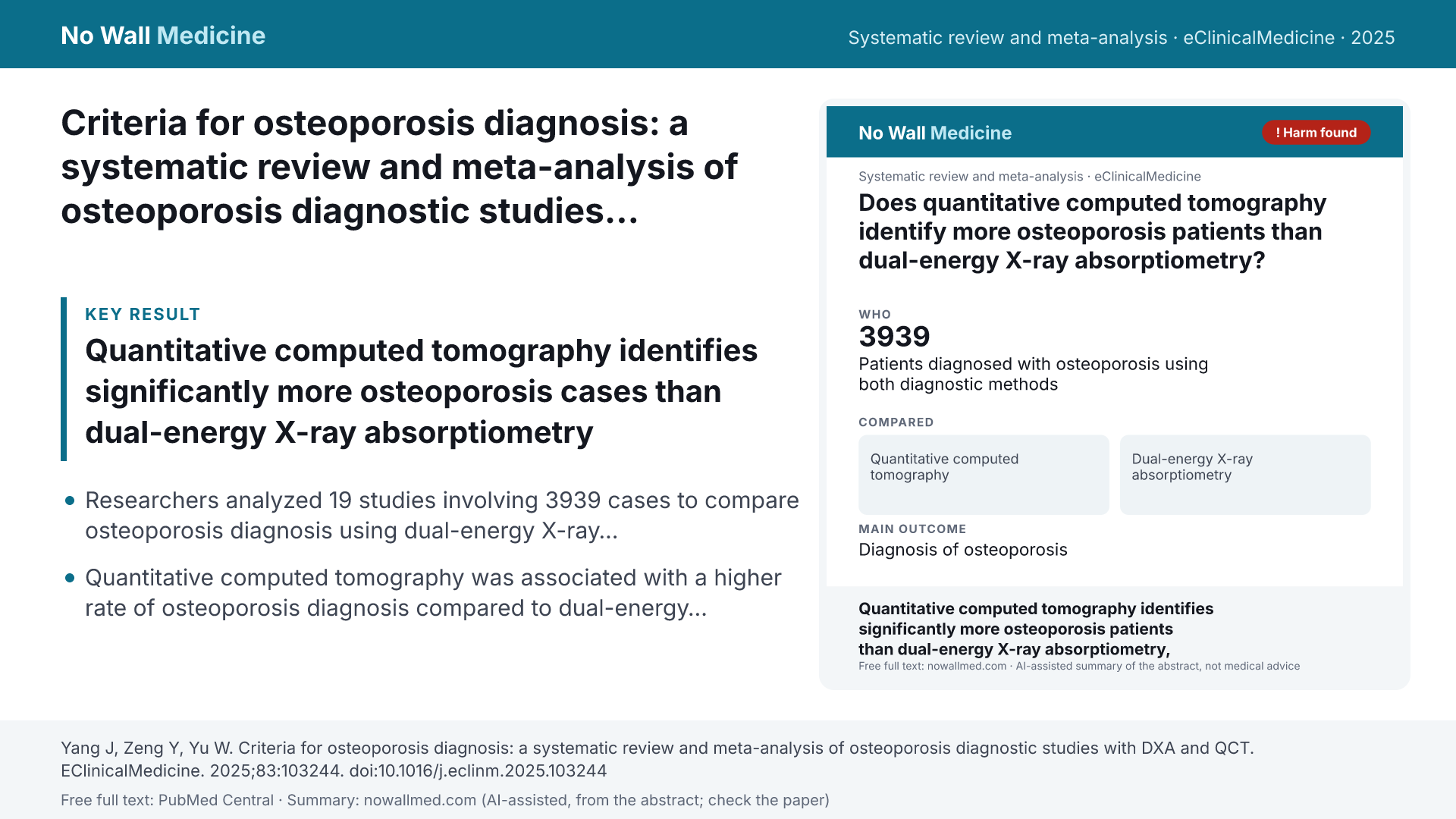
Headline, design, result, key points, caveat and citation as plain text.
Cite this article
Yang J, Zeng Y, Yu W. Criteria for osteoporosis diagnosis: a systematic review and meta-analysis of osteoporosis diagnostic studies with DXA and QCT. EClinicalMedicine. 2025;83:103244. doi:10.1016/j.eclinm.2025.103244
Spotted a mistake? Suggest a correction