Hydrocortisone reduced ventilator use and intensive care stay but did not improve neurological function
Critical illness-related corticosteroid insufficiency after acute brain hemorrhage surgery: a prospective cohort study with a randomized trial of hydrocortisone : HYdrocortisone theraPy in nEurocRitical illness; HYPER study
Single-blinded randomized controlled trialMixed results
Does hydrocortisone improve neurological outcomes in patients with critical illness-related corticosteroid insufficiency?
Who
64
Adult patients after neurological surgery for acute brain hemorrhage · Multicenter tertiary care hospitals
Compared
Hydrocortisone: median [IQR], 5 [3–7] days mechanical ventilation
Placebo: median [IQR], 10 [6–16] days mechanical ventilation
Main outcome
Neurological improvement at 30 days using modified Rankin Scale
Bottom line: Hydrocortisone did not improve 30-day neurological function but reduced mechanical ventilation duration and intensive care unit stay.
Crit Care · 2026-02-24Download image
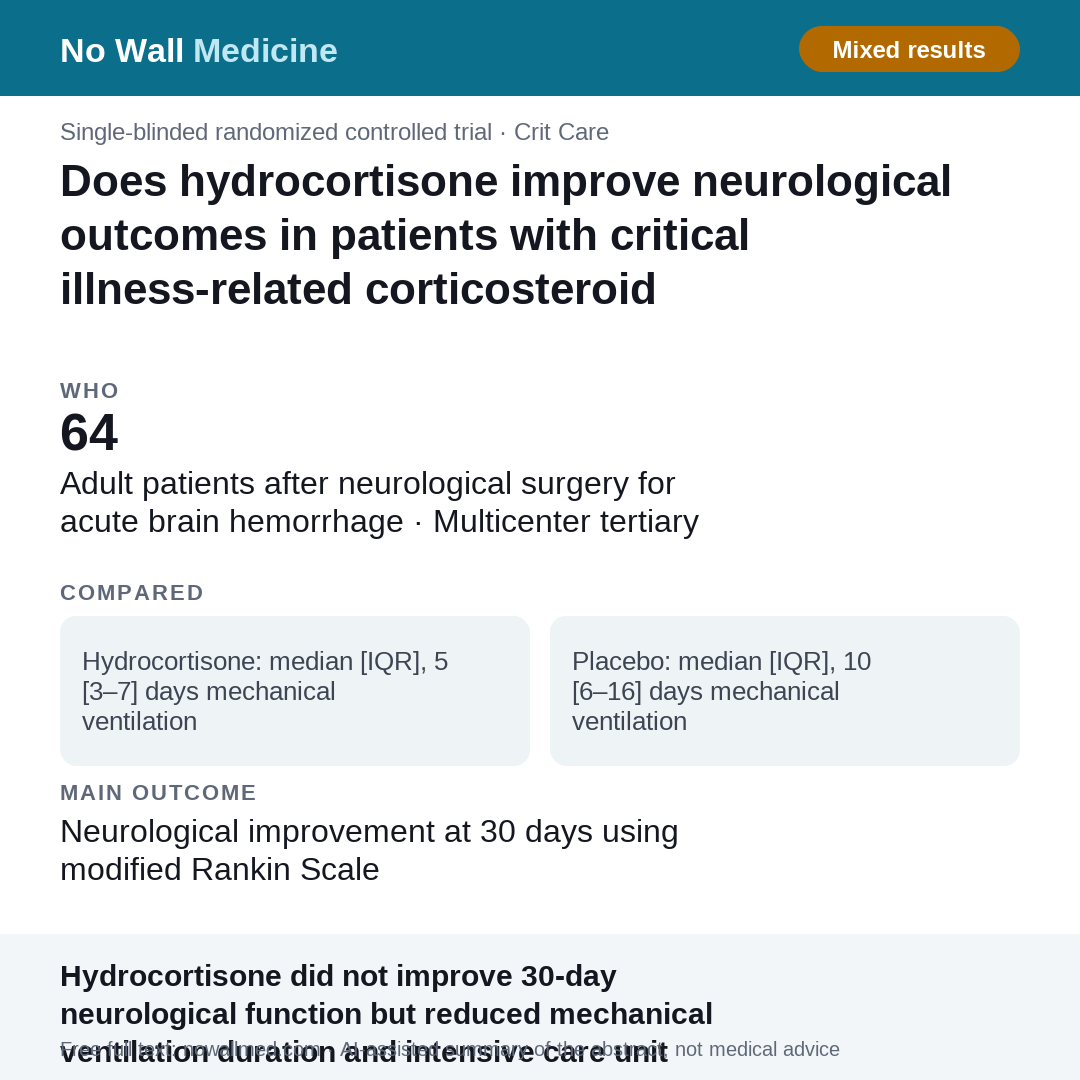
Clinical question: Does hydrocortisone improve neurological outcomes in patients with critical illness-related corticosteroid insufficiency?
Why it matters: The incidence, risk factors, and therapeutic role of corticosteroids in patients with critical illness-related corticosteroid insufficiency after brain hemorrhage surgery remain unclear.
Key points
- Researchers studied 255 postoperative patients after brain hemorrhage surgery, including 64 patients diagnosed with critical illness-related corticosteroid insufficiency, a condition where the body lacks enough cortisol.
- Hydrocortisone treatment did not significantly improve neurological function at 30 days using the modified Rankin Scale compared to a placebo.
- Hydrocortisone reduced the median duration of mechanical ventilation to 5 days versus 10 days and shortened intensive care unit stays from 13 days to 5 days.
Limitation the authors note: The authors state that further adequately powered studies are needed to evaluate the role of corticosteroid therapy.
Headline and key points written with AI from the paper’s abstract, with every number checked against it. Read the paper before relying on them.
Topics
Cite this article
Kim M, Jung H, Kim SB, Jeon H, Chung Y, Shim Y. Critical illness-related corticosteroid insufficiency after acute brain hemorrhage surgery: a prospective cohort study with a randomized trial of hydrocortisone : HYdrocortisone theraPy in nEurocRitical illness; HYPER study. Crit Care. 2026. doi:10.1186/s13054-026-05915-z
Spotted a mistake? Suggest a correction