Culturally adapted internet and mobile mental health interventions showed similar adherence and effectiveness to original versions
Cultural adaptation of internet- and mobile-based interventions for mental disorders: a systematic review
Systematic reviewUnclear result
How are internet- and mobile-based interventions culturally adapted for mental disorders?
Who
People in low- and middle-income countries, migrants, and indigenous people
Compared
Culturally adapted interventions
Original interventions
Main outcome
Adherence and effectiveness of culturally adapted interventions
Bottom line: Adherence and effectiveness of adapted interventions seemed similar to original interventions, but no direct comparisons were conducted.
NPJ Digit Med · 2021-08-25 · Save PNG
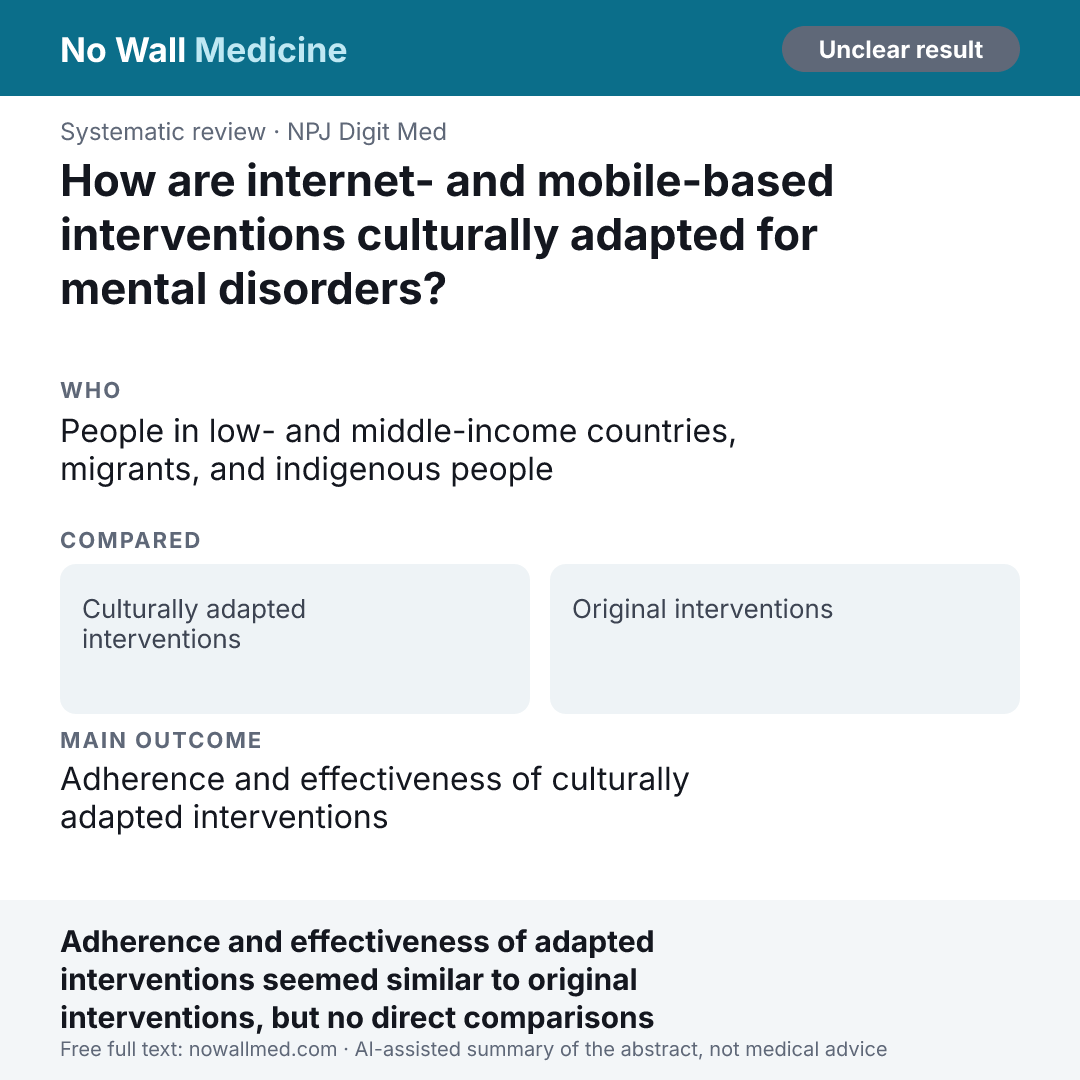
Clinical question: How are internet- and mobile-based interventions culturally adapted for mental disorders?
Key points
- Researchers systematically reviewed 55 eligible articles from five databases to examine how internet- and mobile-based interventions for mental disorders are culturally adapted.
- The adherence and effectiveness of culturally adapted internet- and mobile-based interventions appeared similar to the original versions, though no study performed a direct comparison.
- The review identified 17 different content, methodological, and procedural components used to adapt these digital tools for specific target populations.
Headline and key points written with AI from the paper’s abstract, with every number checked against it. Read the paper before relying on them.
Was this summary helpful?
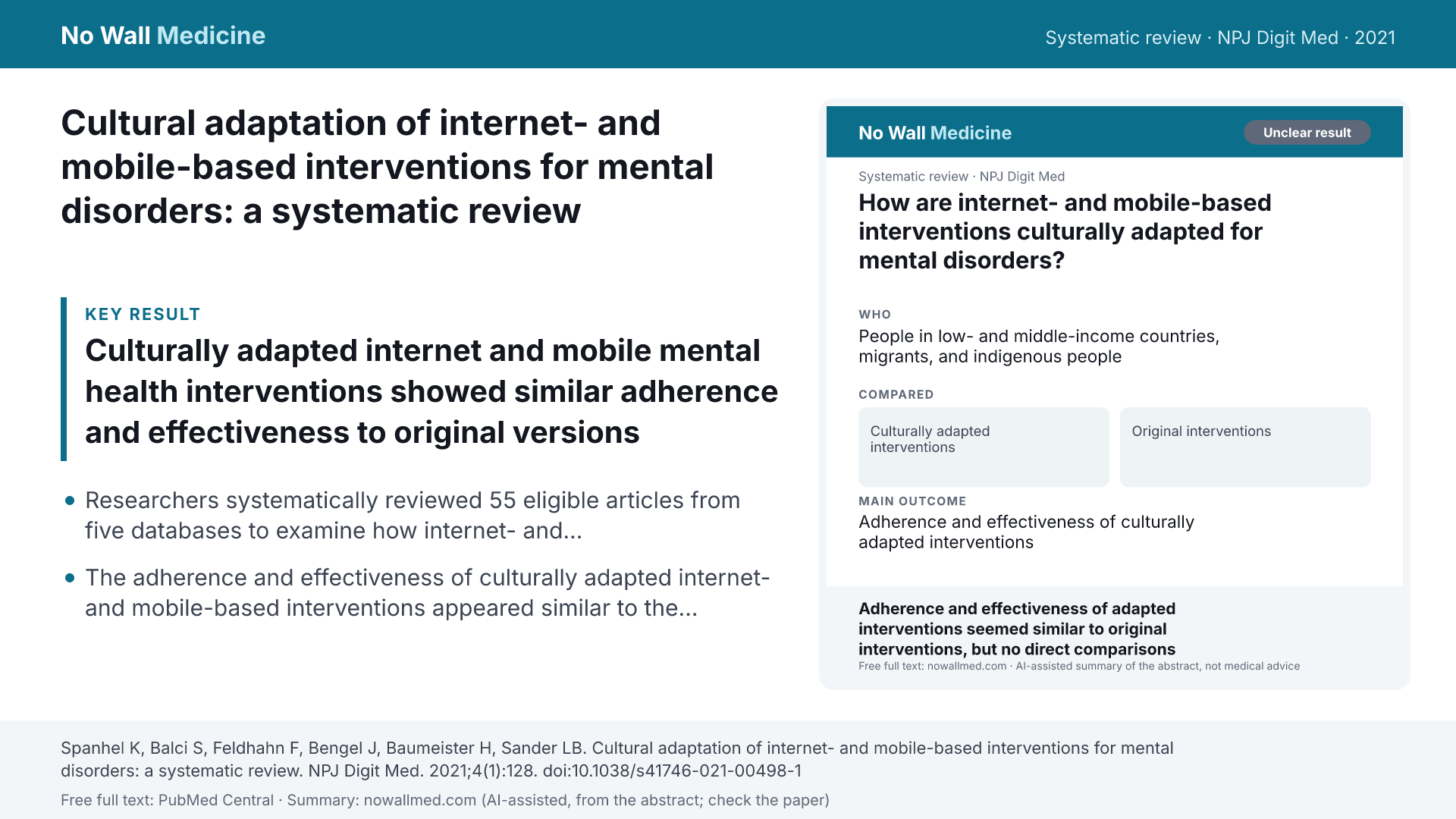
Headline, design, result, key points, caveat and citation as plain text.
Cite this article
Spanhel K, Balci S, Feldhahn F, Bengel J, Baumeister H, Sander LB. Cultural adaptation of internet- and mobile-based interventions for mental disorders: a systematic review. NPJ Digit Med. 2021. doi:10.1038/s41746-021-00498-1
Spotted a mistake? Suggest a correction