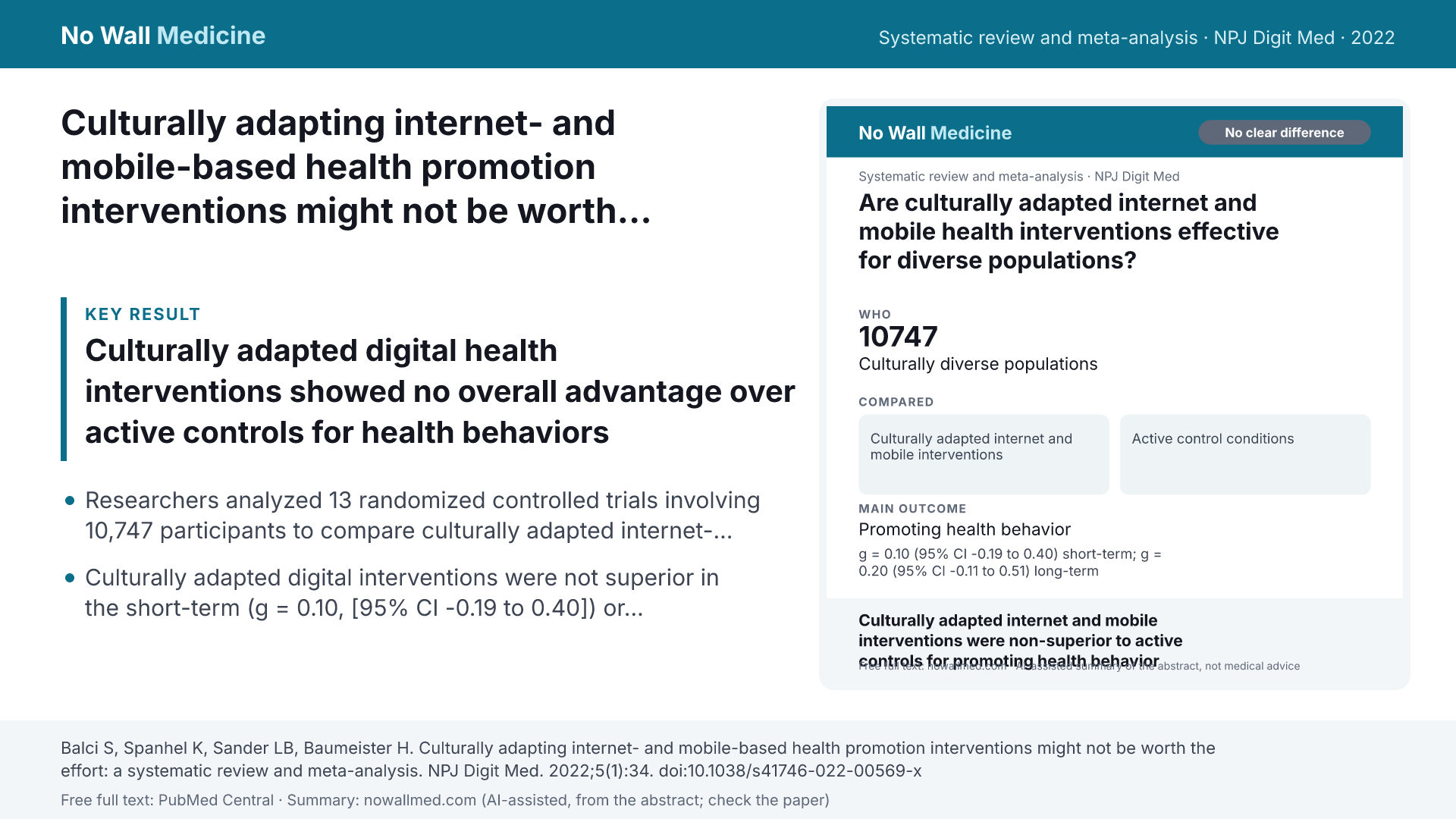
Culturally adapting internet- and mobile-based health promotion interventions might not be worth the effort: a systematic review and meta-analysis
Key result: Culturally adapted digital health interventions showed no overall advantage over active controls for health behaviors
Key points
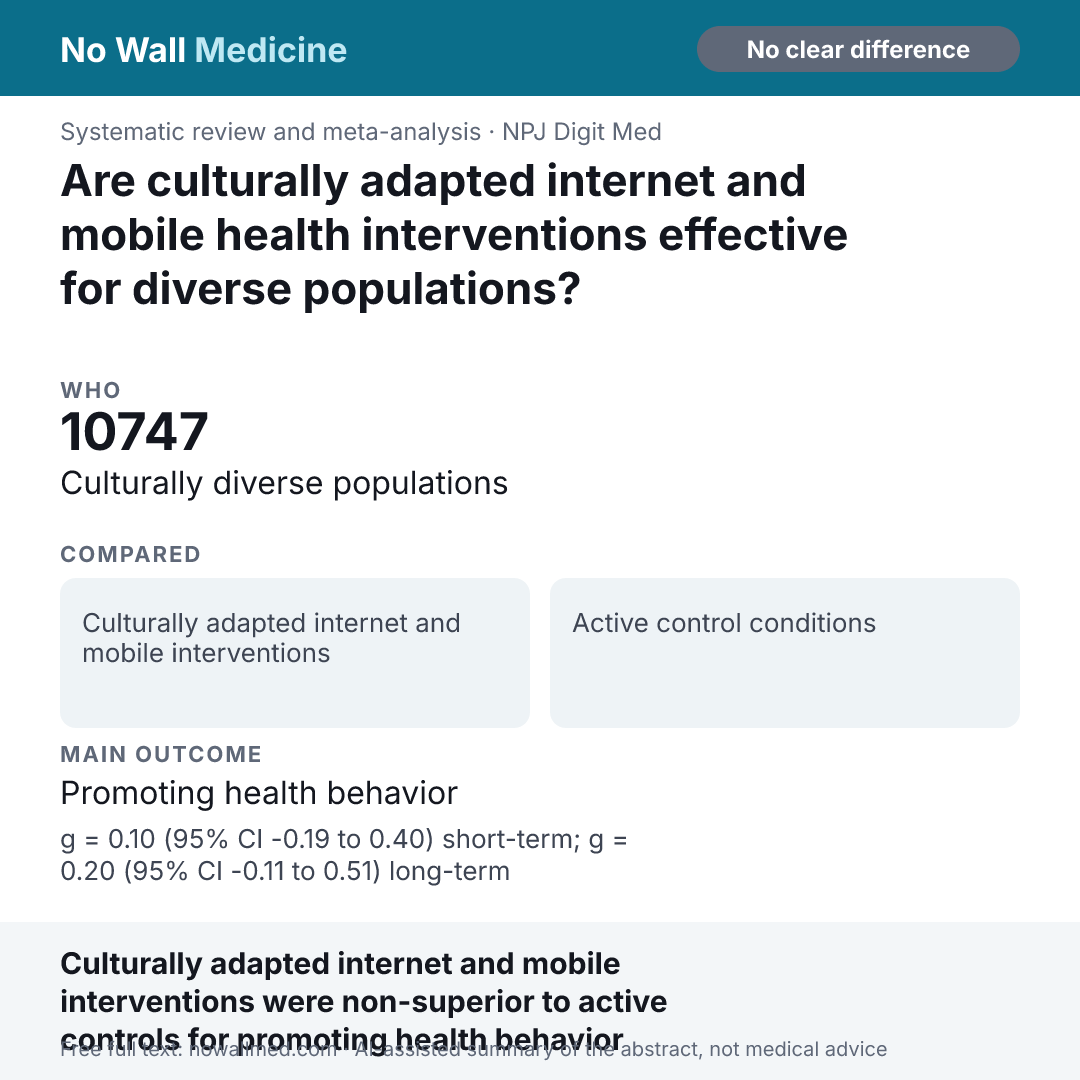
- Researchers analyzed 13 randomized controlled trials involving 10,747 participants to compare culturally adapted internet- and mobile-based health interventions against active control conditions.
- Culturally adapted digital interventions were not superior in the short-term (g = 0.10, [95% CI -0.19 to 0.40]) or long-term (g = 0.20, [95% CI -0.11 to 0.51]) for promoting health behavior.
- A beneficial long-term effect was found specifically for physical activity interventions (k = 3, N = 296) compared to active controls (g = 0.48, [95% CI 0.25 to 0.71]).
Limitation the authors note: The findings are considered preliminary due to a limited number of included trials with varying methodological rigor and substantial between-trial heterogeneity.
Discussion prompts
- Would these patients look like yours? Who was left out?
- Is the main outcome one that matters to patients?
- Is the difference large enough to change what you do?
Cite: Balci S, Spanhel K, Sander LB, Baumeister H. Culturally adapting internet- and mobile-based health promotion interventions might not be worth the effort: a systematic review and meta-analysis. NPJ Digit Med. 2022. doi:10.1038/s41746-022-00569-x
Free full text: PubMed Central · Summary and visual abstract: nowallmed.com/a/culturally-adapting-internet-and-mobile-based-health-promotion-1cpitob/ (AI-assisted from the abstract; check the paper before relying on it).