Dupilumab may unmask or worsen cutaneous T-cell lymphomas in patients treated for atopic dermatitis
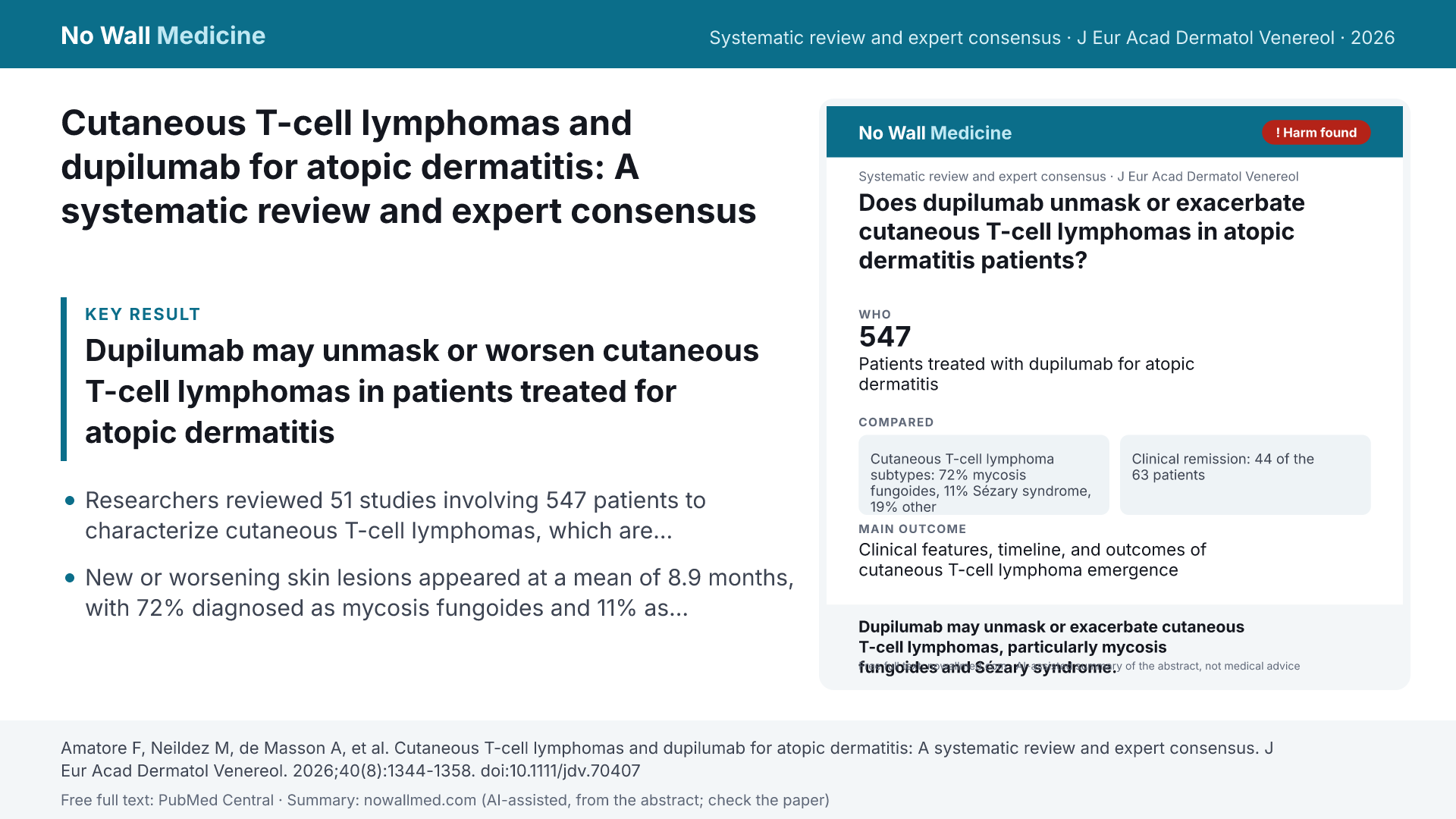
Cutaneous T-cell lymphomas and dupilumab for atopic dermatitis: A systematic review and expert consensus
Systematic review and expert consensusHarm found
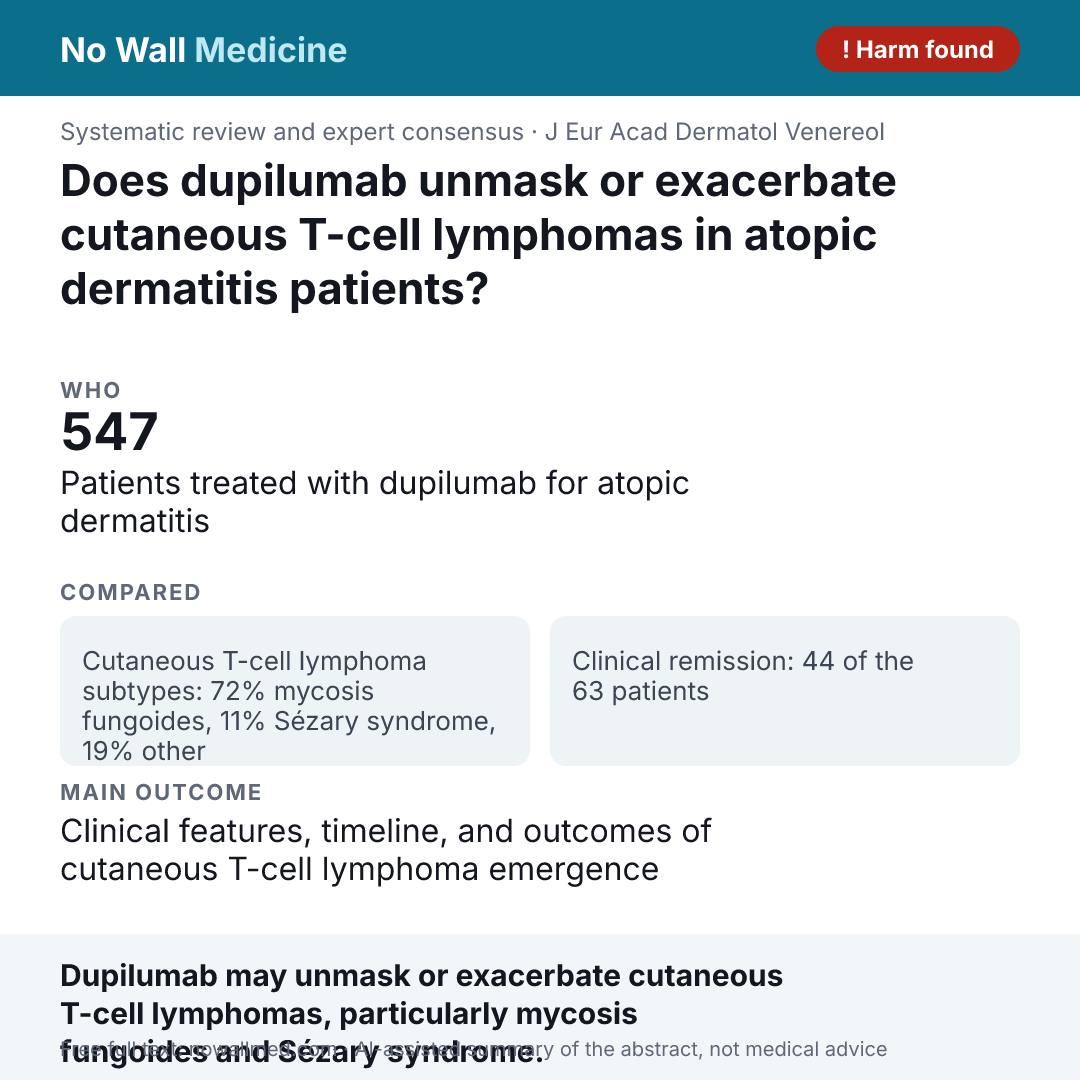
Does dupilumab unmask or exacerbate cutaneous T-cell lymphomas in atopic dermatitis patients?
Who
547
Patients treated with dupilumab for atopic dermatitis
Compared
Cutaneous T-cell lymphoma subtypes: 72% mycosis fungoides, 11% Sézary syndrome, 19% other
Clinical remission: 44 of the 63 patients
Main outcome
Clinical features, timeline, and outcomes of cutaneous T-cell lymphoma emergence
Bottom line: Dupilumab may unmask or exacerbate cutaneous T-cell lymphomas, particularly mycosis fungoides and Sézary syndrome.
J Eur Acad Dermatol Venereol · 2026-03-12 · Save PNG
Clinical question: Does dupilumab unmask or exacerbate cutaneous T-cell lymphomas in atopic dermatitis patients?
Why it matters: Data regarding the clinical features, timing, and outcomes of cutaneous T-cell lymphomas emerging during dupilumab treatment for atopic dermatitis have remained heterogeneous.
Key points
- Researchers reviewed 51 studies involving 547 patients to characterize cutaneous T-cell lymphomas, which are skin cancers, following dupilumab treatment for atopic dermatitis.
- New or worsening skin lesions appeared at a mean of 8.9 months, with 72% diagnosed as mycosis fungoides and 11% as Sézary syndrome.
- Clinical remission was achieved in 44 of the 63 patients who had available follow-up data after treatment changes.
Headline and key points written with AI from the paper’s abstract, with every number checked against it. Read the paper before relying on them.
Was this summary helpful?
Subject terms
Headline, design, result, key points, caveat and citation as plain text.
Cite this article
Amatore F, Neildez M, de Masson A, et al. Cutaneous T-cell lymphomas and dupilumab for atopic dermatitis: A systematic review and expert consensus. J Eur Acad Dermatol Venereol. 2026;40(8):1344-1358. doi:10.1111/jdv.70407
Spotted a mistake? Suggest a correction