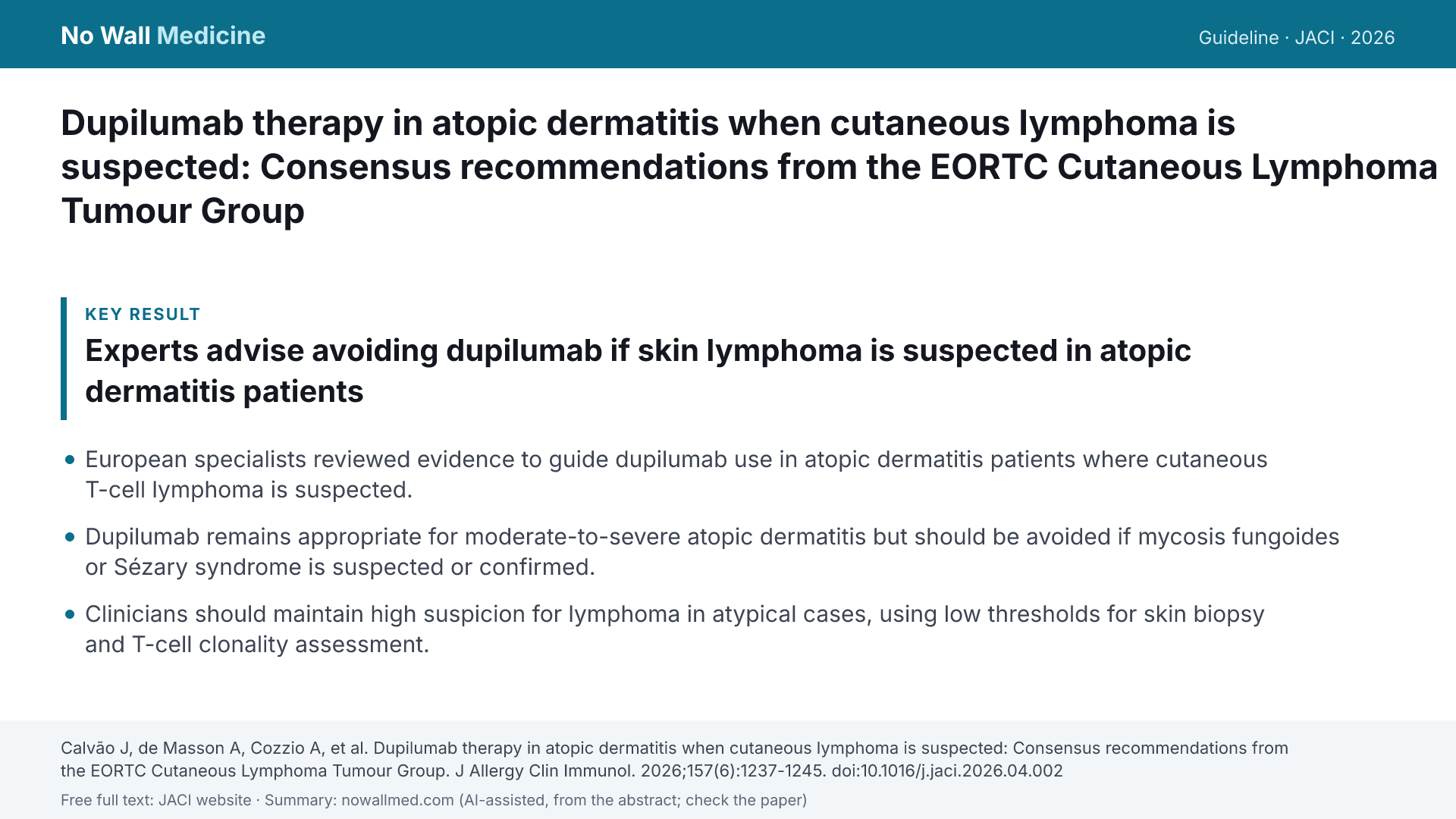
Experts advise avoiding dupilumab if skin lymphoma is suspected in atopic dermatitis patients
Dupilumab therapy in atopic dermatitis when cutaneous lymphoma is suspected: Consensus recommendations from the EORTC Cutaneous Lymphoma Tumour Group
No newer version found (checked 2026-11-27). PubMed lists no update or withdrawal of this guideline. Issuing bodies sometimes publish updates elsewhere, so check their website before relying on it.
Why it matters: Reports of lymphoma during dupilumab therapy raised concern, but a causal relationship remains unproven due to limited retrospective evidence and diagnostic overlap.
Key points
- European specialists reviewed evidence to guide dupilumab use in atopic dermatitis patients where cutaneous T-cell lymphoma is suspected.
- Dupilumab remains appropriate for moderate-to-severe atopic dermatitis but should be avoided if mycosis fungoides or Sézary syndrome is suspected or confirmed.
- Clinicians should maintain high suspicion for lymphoma in atypical cases, using low thresholds for skin biopsy and T-cell clonality assessment.
Limitation the authors note: The recommendations reflect expert consensus based on available evidence and highlight the need for prospective studies to better define risk profiles.
Headline and key points written with AI from the paper’s abstract, with every number checked against it. Read the paper before relying on them.
Was this summary helpful?
Subject terms
Headline, design, result, key points, caveat and citation as plain text.
Cite this article
Calvão J, de Masson A, Cozzio A, et al. Dupilumab therapy in atopic dermatitis when cutaneous lymphoma is suspected: Consensus recommendations from the EORTC Cutaneous Lymphoma Tumour Group. J Allergy Clin Immunol. 2026;157(6):1237-1245. doi:10.1016/j.jaci.2026.04.002
Spotted a mistake? Suggest a correction