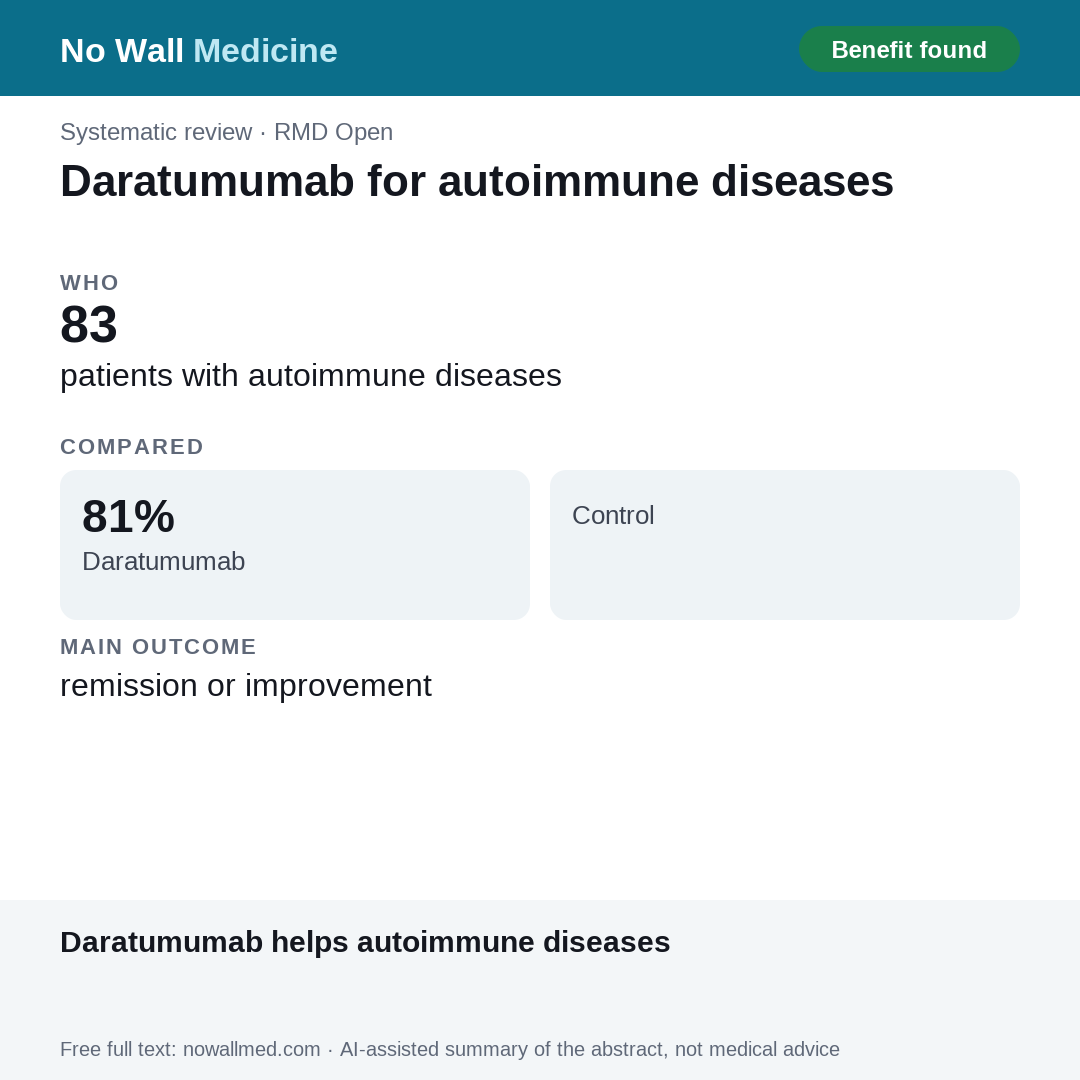
Daratumumab was associated with disease remission or improvement in 81% of patients with refractory autoimmune diseases
Daratumumab for autoimmune diseases: a systematic review
Systematic reviewBenefit found
Daratumumab for autoimmune diseases
Who
83
patients with autoimmune diseases
Compared
81%Daratumumab (remission or improvement)
Control
Main outcome
remission or improvement
Bottom line: Daratumumab helps autoimmune diseases
RMD Open · 2023-12-14Download image
Why it matters: New therapeutic options are needed for autoimmune diseases that do not respond to standard treatments.
Key points
- Researchers reviewed 38 publications involving 83 patients with 24 different autoimmune diseases who had failed a median of 5 previous therapies.
- Remission or improvement of disease was reported in 81% of patients, while autoantibody depletion or reduction occurred in 52% of patients.
- Adverse events were reported in 45% of patients, including hypogammaglobulinaemia (low levels of antibodies in the blood) in 33% and application-associated reactions in 20%.
Headline and key points written with AI from the paper’s abstract, with every number checked against it. Read the paper before relying on them.
Was this summary helpful?
Abstract
Objective
Refractory autoimmune diseases remain a significant challenge in clinical practice and new therapeutic options are needed. This systematic review evaluates the existing reported data on the CD38-targeting antibody daratumumab as a new therapeutic approach in autoantibody-mediated autoimmune diseases. Methods
A protocolised systematic literature review according to the Preferred Reporting Items for Systematic Reviews and Meta-Analyses guidelines was performed. Two databases (Medline and Embase) were searched for suitable studies. Usage of daratumumab in non-oncological or non-transplantation associated diseases with autoimmune pathophysiology was analysed including patient characteristics, therapeutic regimen, adverse events and patient outcome. Results
38 publications reporting the clinical course of 83 patients met the inclusion criteria. Daratumumab usage was reported in therapy-refractory cases (median of 5 different previous therapies) in 24 different autoimmune diseases. The median number of applications of daratumumab was 4, mainly via intravenous applications (87%). Concomitant treatment included glucocorticoids in 64% of patients, intravenous immunoglobulins (33%) and rituximab (17%). Remission or improvement of disease was reported in 81% of patients. Autoantibody depletion or reduction was stated in 52% of patients. Death occurred in three patients (3%). Adverse events were reported in 45% of patients including application-associated reaction (20%), infection (19%) and hypogammaglobulinaemia (33%). Conclusion
Targeting CD38 via daratumumab is a new promising therapeutic option in therapy refractory autoimmune diseases. Efficacy as well as optimal therapeutic regimen and management or prevention of adverse events require further investigation. Therefore, systematic clinical trials of this therapeutic approach are needed.
Abstract reproduced under the article’s CC BY NC licence.
Subject terms
Cite this article
Holzer MT, Ruffer N, Huber TB, Kötter I, Ostendorf L, Krusche M. Daratumumab for autoimmune diseases: a systematic review. RMD Open. 2023. doi:10.1136/rmdopen-2023-003604
Spotted a mistake? Suggest a correction
Top studies every Monday
The week’s key trials and guidelines in your specialties, plus any topics you follow. By email, free.
Get the weekly digest