Electronic data collection was associated with better data quality and speed than paper methods
Data Quality and Cost-effectiveness Analyses of Electronic and Paper-Based Interviewer-Administered Public Health Surveys: Systematic Review
Systematic reviewBenefit found
Do electronic data collection methods improve data quality and cost reduction in public health surveys?
Who
Population-level surveys
Compared
Electronic data collection: provided good quality data and delivered faster
Paper-based data collection
Main outcome
Data quality, cost reduction, usability, and user experience
Bottom line: Electronic data collection provides good quality data and faster delivery compared to paper-based systems, though more rigorous studies are needed.
Limitation: Included studies were not methodologically rigorous enough to perform a meta-analysis.
J Med Internet Res · 2021-01-22Download image
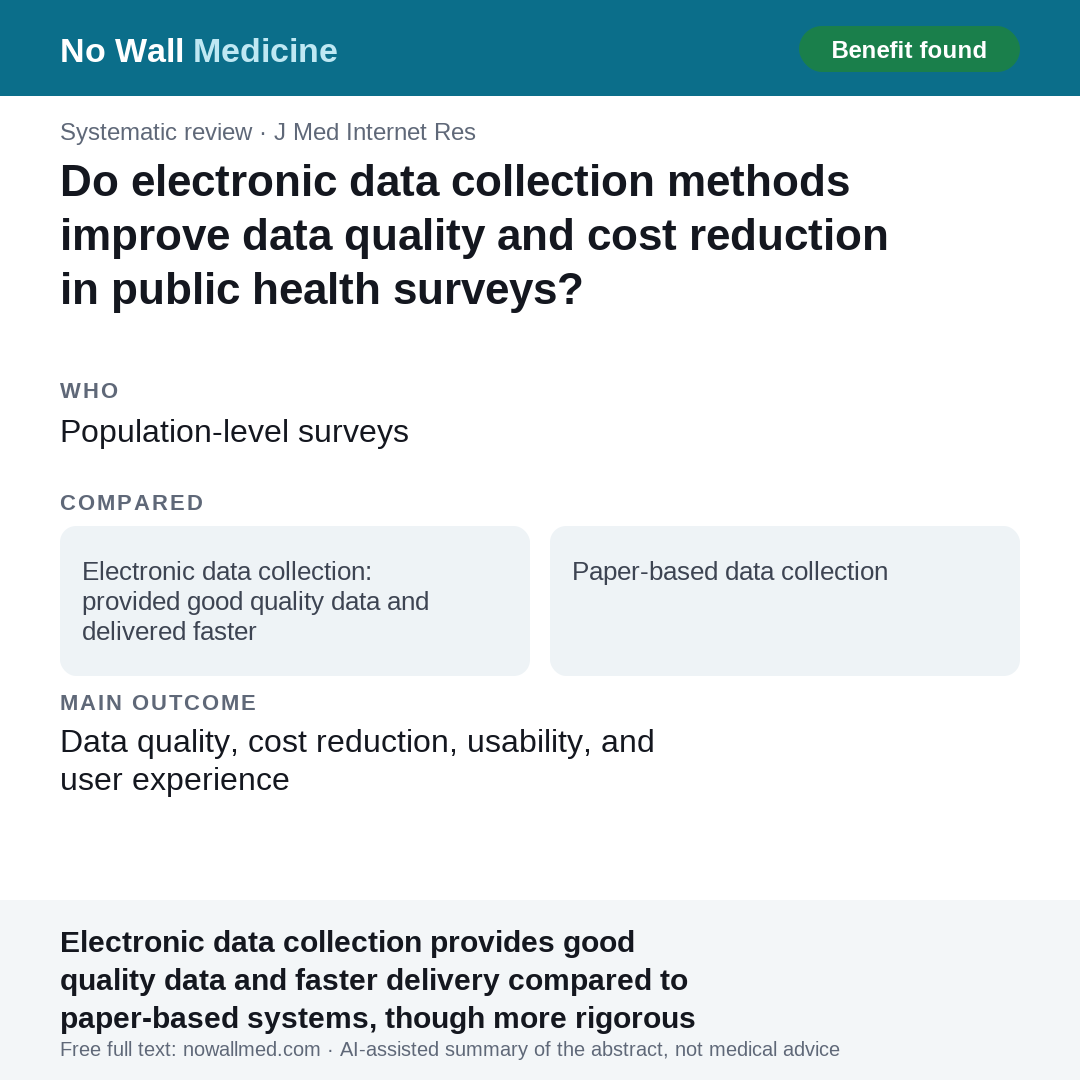
Clinical question: Do electronic data collection methods improve data quality and cost reduction in public health surveys?
Why it matters: It was unknown if electronic data collection tools impact data quality and cost reduction in interviewer-administered public health surveys compared to paper-based systems.
Key points
- Researchers reviewed 14 studies comparing electronic devices like smartphones to paper-based systems for public health surveys.
- Electronic systems were associated with good quality data, faster delivery, and onsite error prevention compared to paper.
- Implementation challenges included technical difficulties, accidental data loss, device theft, security concerns, power surges, and internet connection problems.
Limitation the authors note: The included studies were not methodologically rigorous enough to perform a meta-analysis due to heterogeneity in designs, settings, and outcome measurements.
Headline and key points written with AI from the paper’s abstract, with every number checked against it. Read the paper before relying on them.
Was this summary helpful?
Subject terms
Cite this article
Zeleke AA, Naziyok T, Fritz F, Christianson L, Röhrig R. Data Quality and Cost-effectiveness Analyses of Electronic and Paper-Based Interviewer-Administered Public Health Surveys: Systematic Review. J Med Internet Res. 2021. doi:10.2196/21382
Spotted a mistake? Suggest a correction
Top studies every Monday
The week’s key trials and guidelines in your specialties, plus any topics you follow. By email, free.
Get the weekly digest