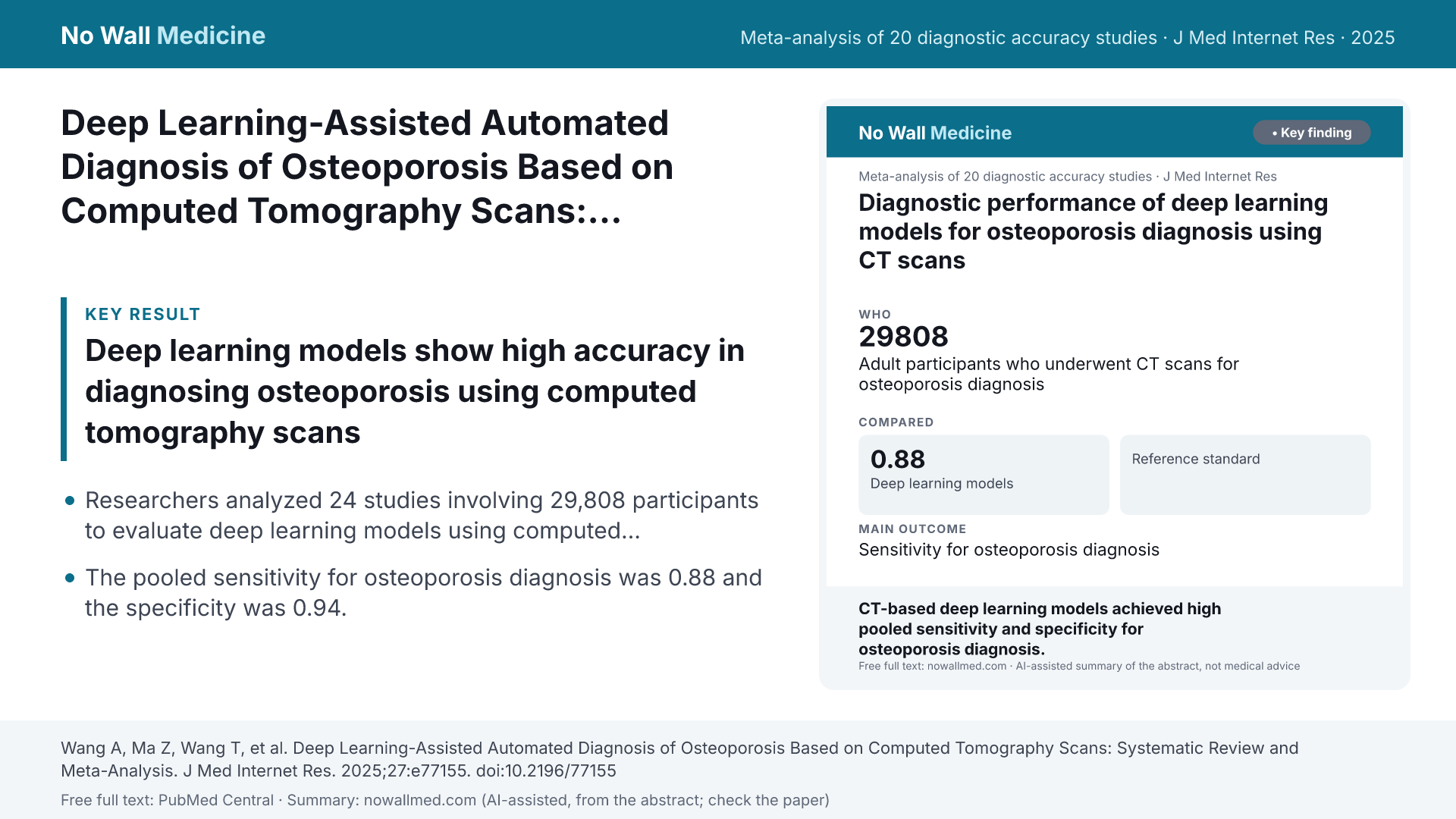
Deep learning models show high accuracy in diagnosing osteoporosis using computed tomography scans
Deep Learning-Assisted Automated Diagnosis of Osteoporosis Based on Computed Tomography Scans: Systematic Review and Meta-Analysis
Meta-analysis of 20 diagnostic accuracy studiesKey finding
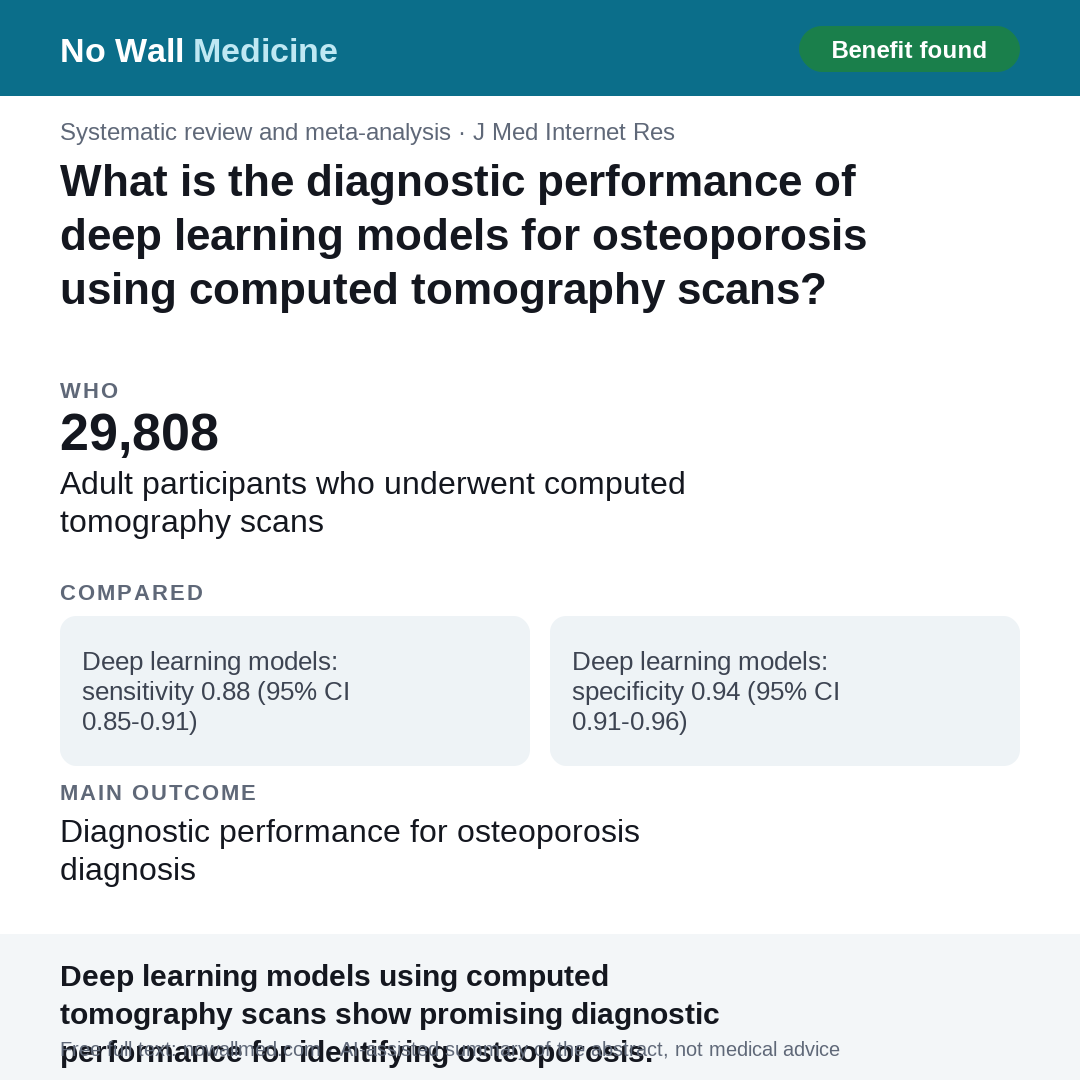
Diagnostic performance of deep learning models for osteoporosis diagnosis using CT scans
Who
29808
Adult participants who underwent CT scans for osteoporosis diagnosis
Compared
0.88Deep learning models (95% CI 0.85-0.91)
Reference standard
Main outcome
Sensitivity for osteoporosis diagnosis
Result: sensitivity 0.88 (95% CI 0.85-0.91)
Bottom line: CT-based deep learning models achieved high pooled sensitivity and specificity for osteoporosis diagnosis.
Limitation: Substantial heterogeneity, limited external validation, and incomplete end-to-end pipelines constrain generalizability.
J Med Internet Res · 2025-11-24Download image
Why it matters: Osteoporosis is frequently underdiagnosed because it often has no symptoms and healthcare resources for screening are limited.
Key points
- Researchers analyzed 24 studies involving 29,808 participants to evaluate deep learning models using computed tomography scans.
- The pooled sensitivity for osteoporosis diagnosis was 0.88 and the specificity was 0.94.
- The area under the curve for identifying osteoporosis, osteopenia, and normal cases was 0.96, 0.94, and 0.98, respectively.
Limitation the authors note: Substantial heterogeneity among studies, limited external validation, and incomplete end-to-end pipelines constrain the generalizability of the models.
Headline and key points written with AI from the paper’s abstract, with every number checked against it. Read the paper before relying on them.
Was this summary helpful?
Subject terms
Cite this article
Wang A, Ma Z, Wang T, et al. Deep Learning-Assisted Automated Diagnosis of Osteoporosis Based on Computed Tomography Scans: Systematic Review and Meta-Analysis. J Med Internet Res. 2025. doi:10.2196/77155
Spotted a mistake? Suggest a correction