Switching from ticagrelor to clopidogrel was associated with less bleeding in patients with kidney disease
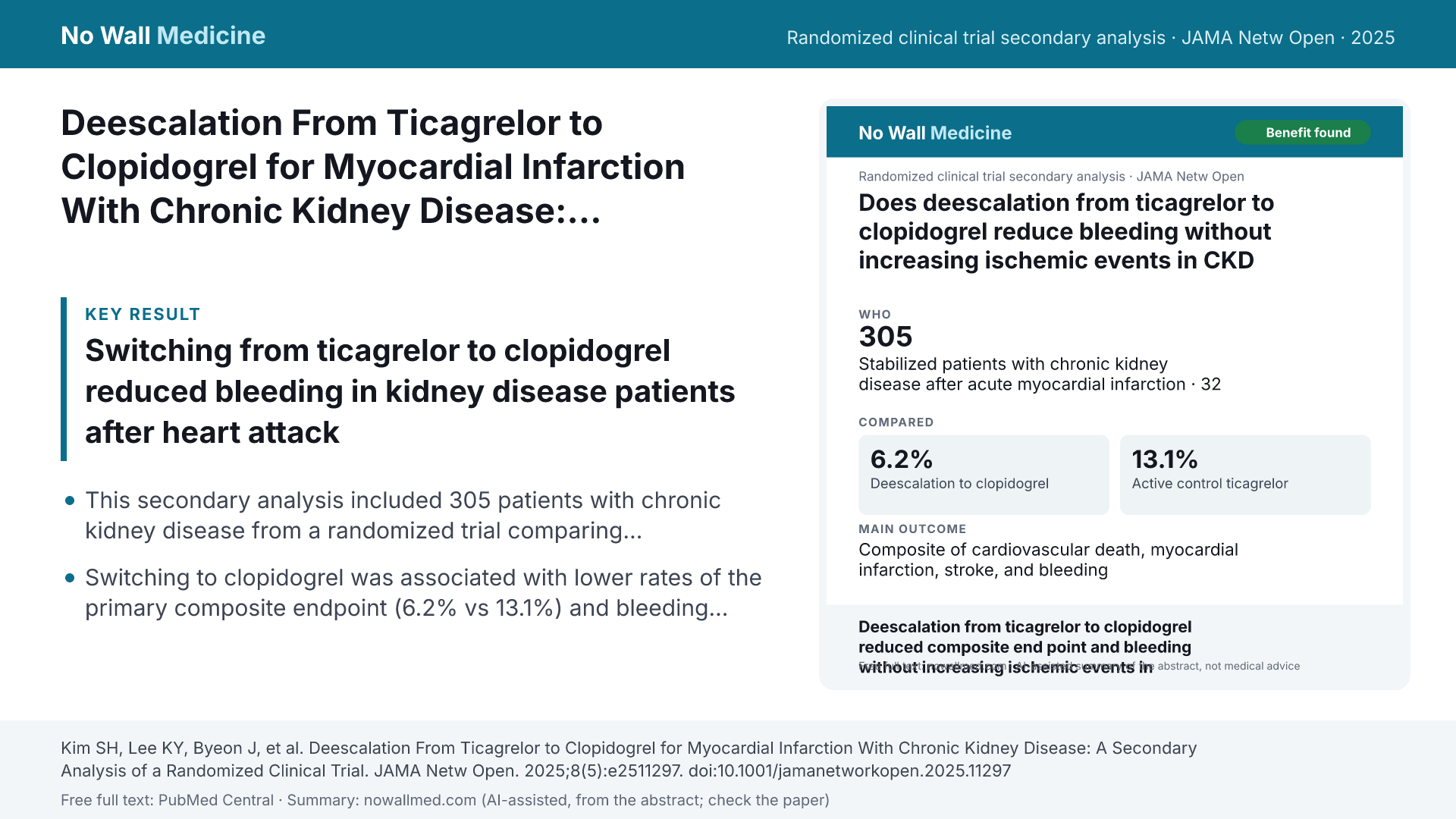
Deescalation From Ticagrelor to Clopidogrel for Myocardial Infarction With Chronic Kidney Disease: A Secondary Analysis of a Randomized Clinical Trial
Randomized clinical trial secondary analysisBenefit found
Does deescalation from ticagrelor to clopidogrel reduce bleeding without increasing ischemic events in CKD patients?
Who
305
Stabilized patients with chronic kidney disease after acute myocardial infarction · 32 major cardiac centers in South Korea
Compared
6.2%Deescalation to clopidogrel
13.1%Active control ticagrelor
Main outcome
Composite of cardiovascular death, myocardial infarction, stroke, and bleeding
Result: hazard ratio 0.45 (95% CI 0.21-0.98)
Bottom line: Deescalation from ticagrelor to clopidogrel reduced composite end point and bleeding without increasing ischemic events in patients with chronic kidney disease.
JAMA Netw Open · 2025-05-01Download image
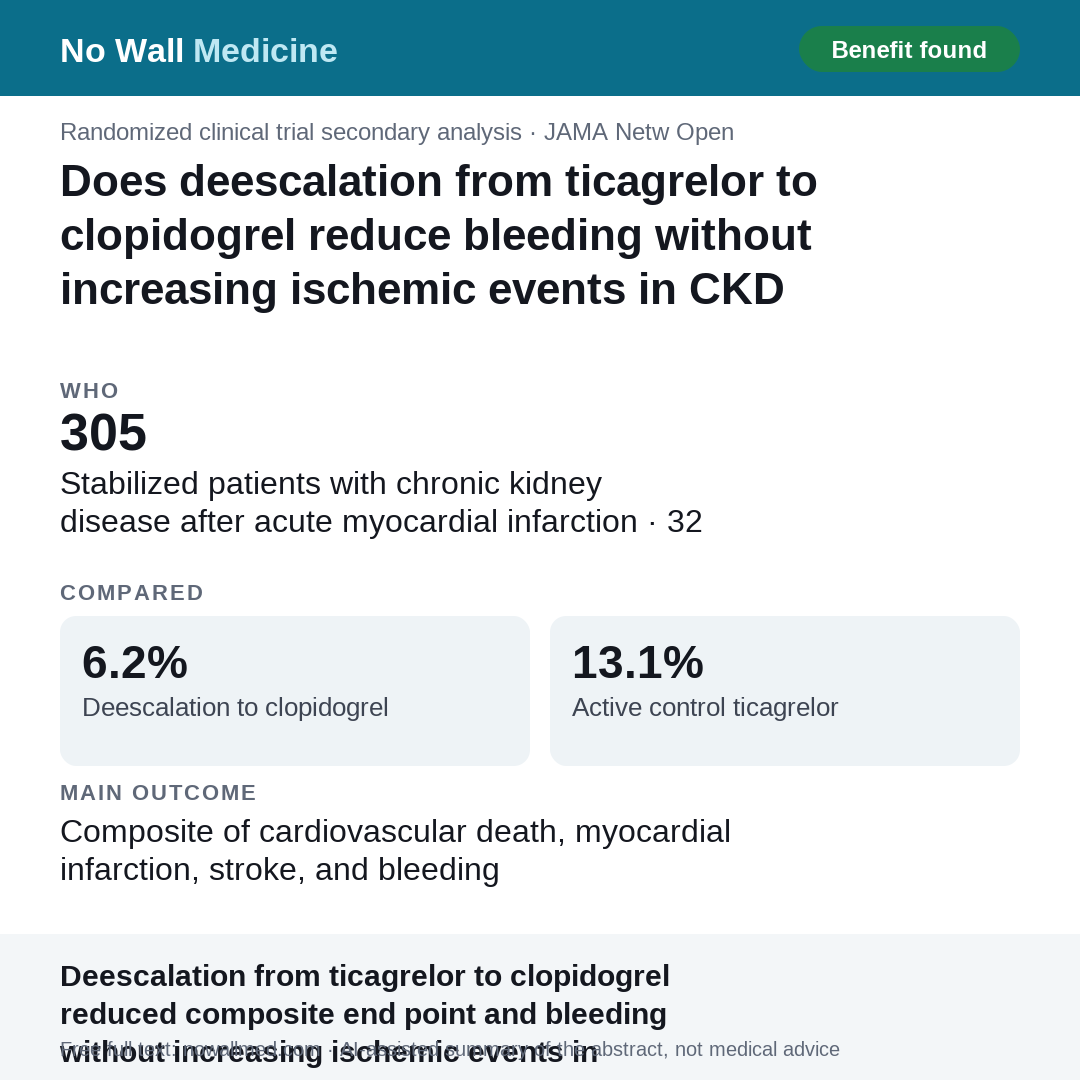
Clinical question: Does deescalation from ticagrelor to clopidogrel reduce bleeding without increasing ischemic events in CKD patients?
Why it matters: It is unclear if switching from ticagrelor to clopidogrel reduces bleeding without increasing ischemic events in patients with chronic kidney disease after a heart attack.
In absolute numbers
Deescalation to clopidogrel: 6.2% · Active control ticagrelor: 13.1% → a difference of 6.9 percentage points, so about 15 people would need the treatment for 1 more to benefit (number needed to treat) over the trial’s follow-up.
Worked out by us from the two group results above, not reported by the authors. Check the paper for the exact outcome and timing.
Key points
- This secondary analysis of a randomized clinical trial studied 305 patients with chronic kidney disease after a heart attack and percutaneous coronary intervention.
- Switching from ticagrelor to clopidogrel was associated with a lower risk of the primary composite end point (6.2% vs 13.1%) and bleeding (2.5% vs 8.3%).
- The deescalation strategy was not associated with an increased risk of ischemic events, such as heart attack or stroke, compared to continuing ticagrelor (4.4% vs 5.5%).
Headline and key points written with AI from the paper’s abstract, with every number checked against it. Read the paper before relying on them.
Was this summary helpful?
Subject terms
Cite this article
Kim SH, Lee KY, Byeon J, Sa YK, Hwang BH, Kim CJ. Deescalation From Ticagrelor to Clopidogrel for Myocardial Infarction With Chronic Kidney Disease: A Secondary Analysis of a Randomized Clinical Trial. JAMA Netw Open. 2025. doi:10.1001/jamanetworkopen.2025.11297
Spotted a mistake? Suggest a correction