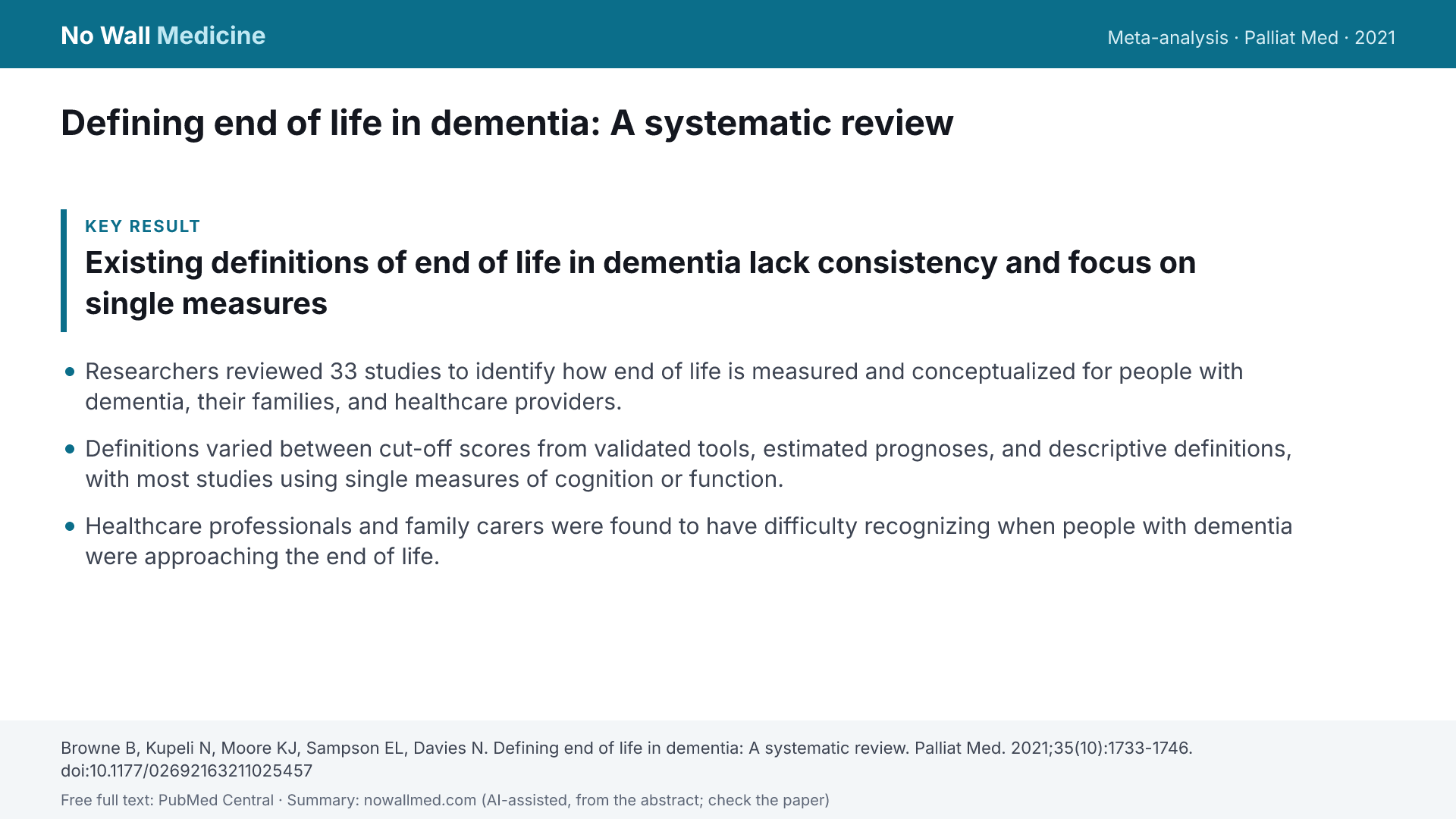
Existing definitions of end of life in dementia lack consistency and focus on single measures
Defining end of life in dementia: A systematic review
Why it matters: Existing definitions of end of life do not account for the uncertain trajectory of dementia, where patients may live in advanced stages for years or die earlier.
Key points
- Researchers reviewed 33 studies to identify how end of life is measured and conceptualized for people with dementia, their families, and healthcare providers.
- Definitions varied between cut-off scores from validated tools, estimated prognoses, and descriptive definitions, with most studies using single measures of cognition or function.
- Healthcare professionals and family carers were found to have difficulty recognizing when people with dementia were approaching the end of life.
Headline and key points written with AI from the paper’s abstract, with every number checked against it. Read the paper before relying on them.
Was this summary helpful?
Subject terms
Cite this article
Browne B, Kupeli N, Moore KJ, Sampson EL, Davies N. Defining end of life in dementia: A systematic review. Palliat Med. 2021. doi:10.1177/02692163211025457
Spotted a mistake? Suggest a correction
Top studies every Monday
The week’s key trials and guidelines in your specialties, plus any topics you follow. By email, free.
Get the weekly digest