Definition, Incidence, and Challenges for Assessment of Hyperprogressive Disease During Cancer Treatment With Immune Checkpoint Inhibitors: A Systematic Review and Meta-analysis
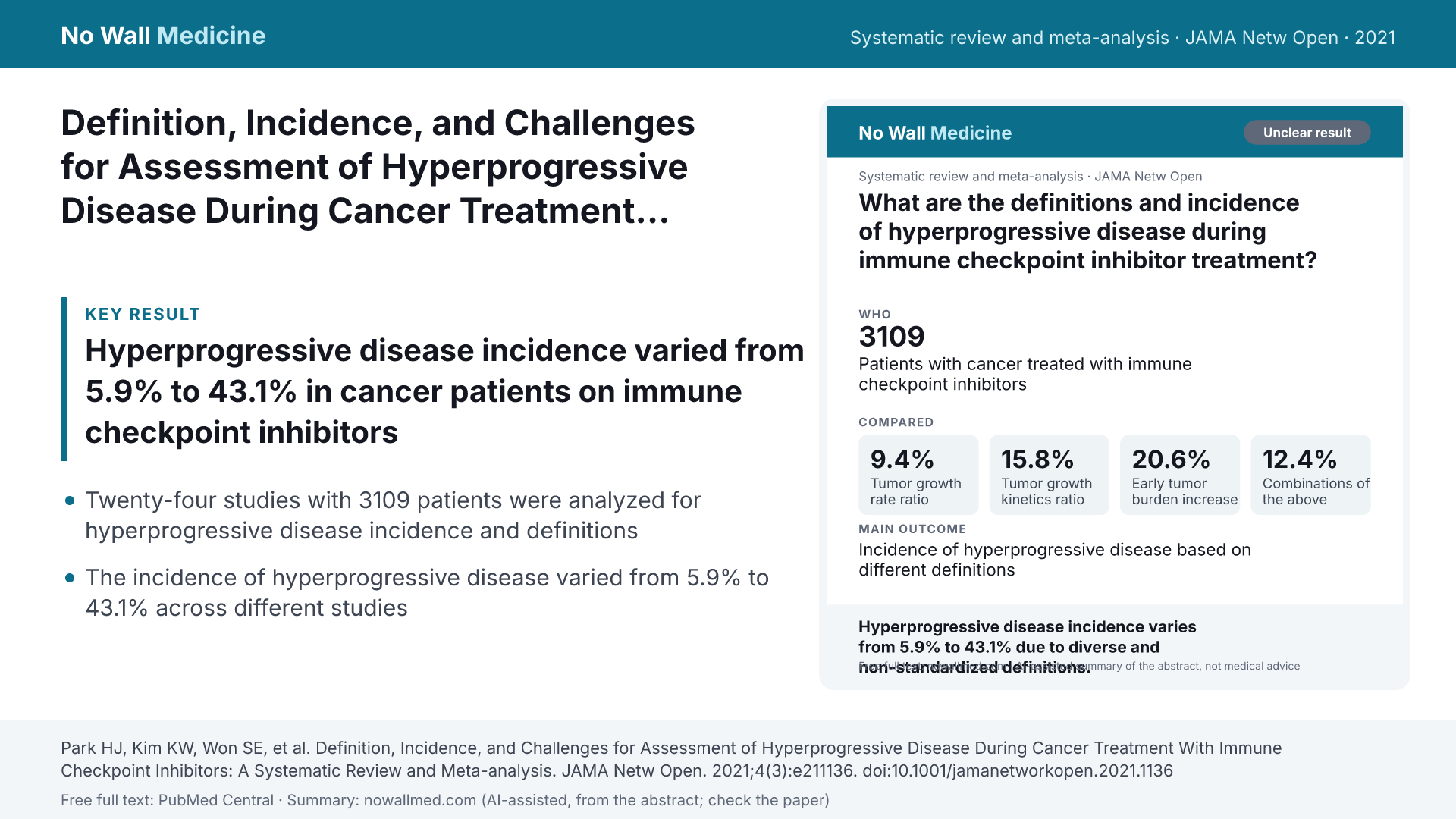
Key result: Hyperprogressive disease incidence varied from 5.9% to 43.1% in cancer patients on immune checkpoint inhibitors
Key points
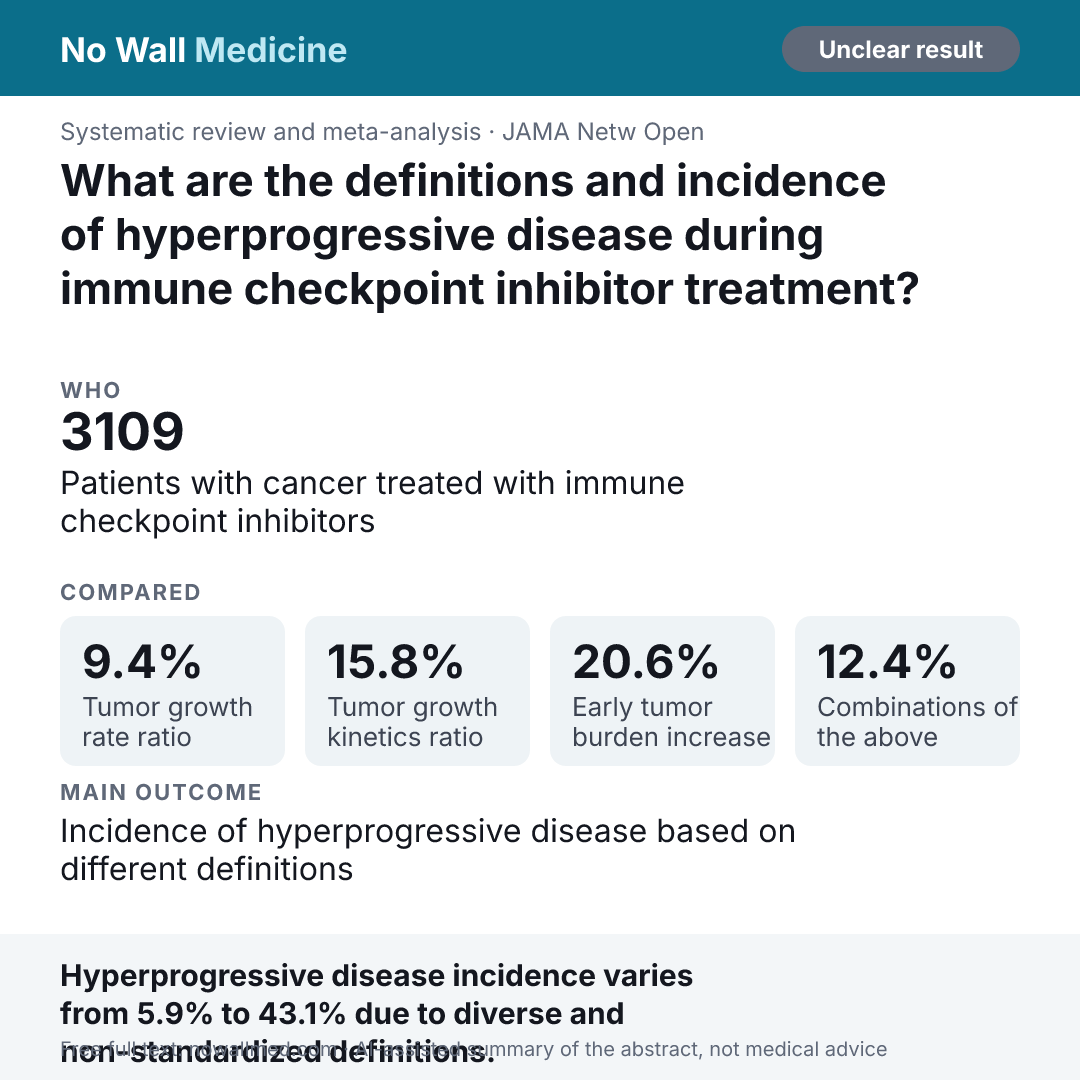
- Twenty-four studies with 3109 patients were analyzed for hyperprogressive disease incidence and definitions.
- The incidence of hyperprogressive disease varied from 5.9% to 43.1% across different studies.
- Definitions of hyperprogressive disease were divided into 4 categories with pooled incidence ranging from 9.4% to 20.6%.
Why it matters: Definitions of hyperprogressive disease have not been standardized, posing a risk of capturing different tumoral behaviors
Limitation the authors note: Study results on clinical outcome were heterogeneous, making it difficult to discriminate patients with hyperprogressive disease from those with natural progressive disease
Discussion prompts
- Would these patients look like yours? Who was left out?
- Is the main outcome one that matters to patients?
- Is the difference large enough to change what you do?
Cite: Park HJ, Kim KW, Won SE, et al. Definition, Incidence, and Challenges for Assessment of Hyperprogressive Disease During Cancer Treatment With Immune Checkpoint Inhibitors: A Systematic Review and Meta-analysis. JAMA Netw Open. 2021. doi:10.1001/jamanetworkopen.2021.1136
Free full text: PubMed Central · Summary and visual abstract: nowallmed.com/a/definition-incidence-and-challenges-for-assessment-of-17tipoa/ (AI-assisted from the abstract; check the paper before relying on it).