Degree of Myopia and Glaucoma Risk: A Dose-Response Meta-analysis
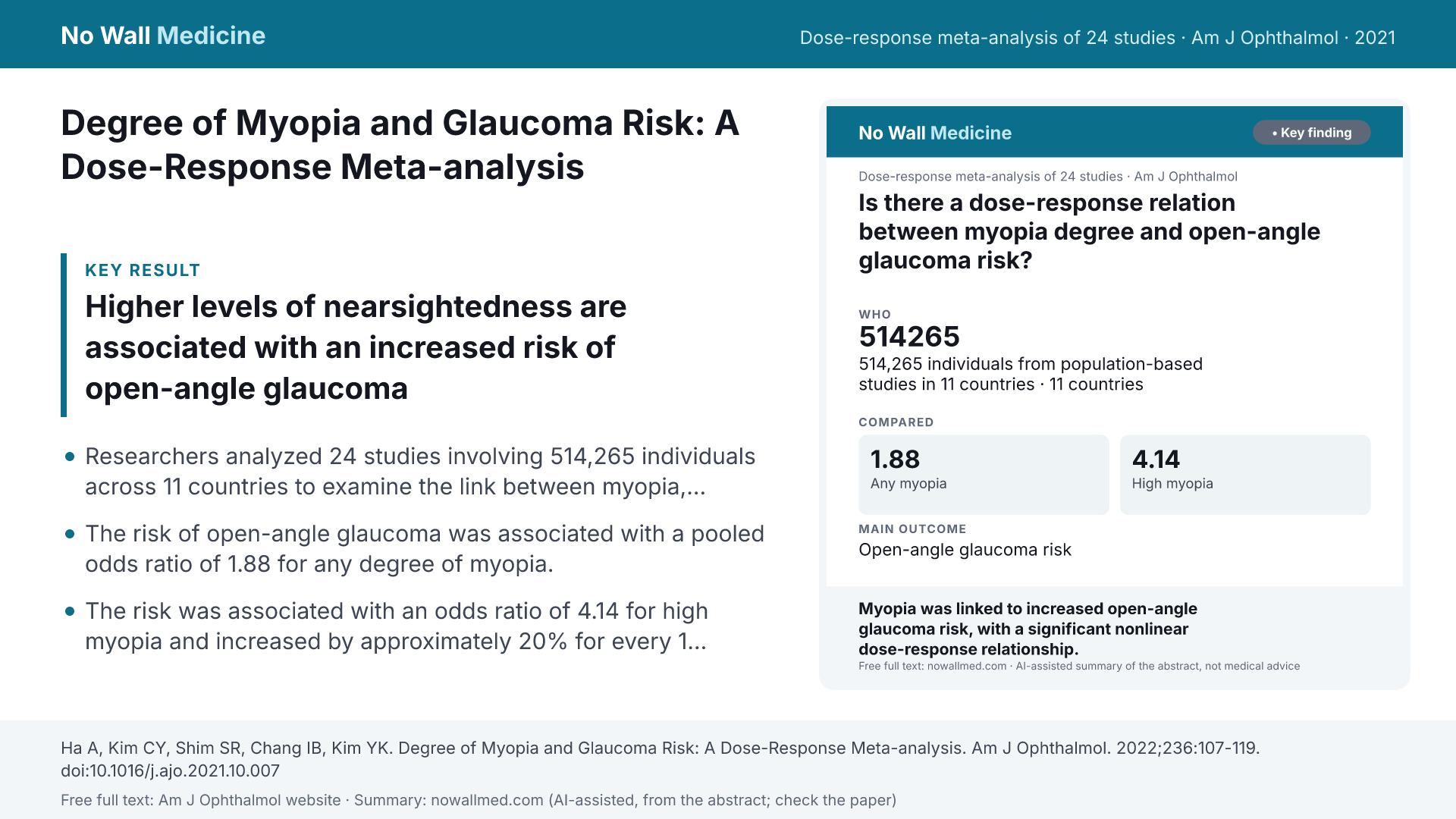
Key result: Higher levels of nearsightedness are associated with an increased risk of open-angle glaucoma
Dose-response meta-analysis of 24 studiesKey finding
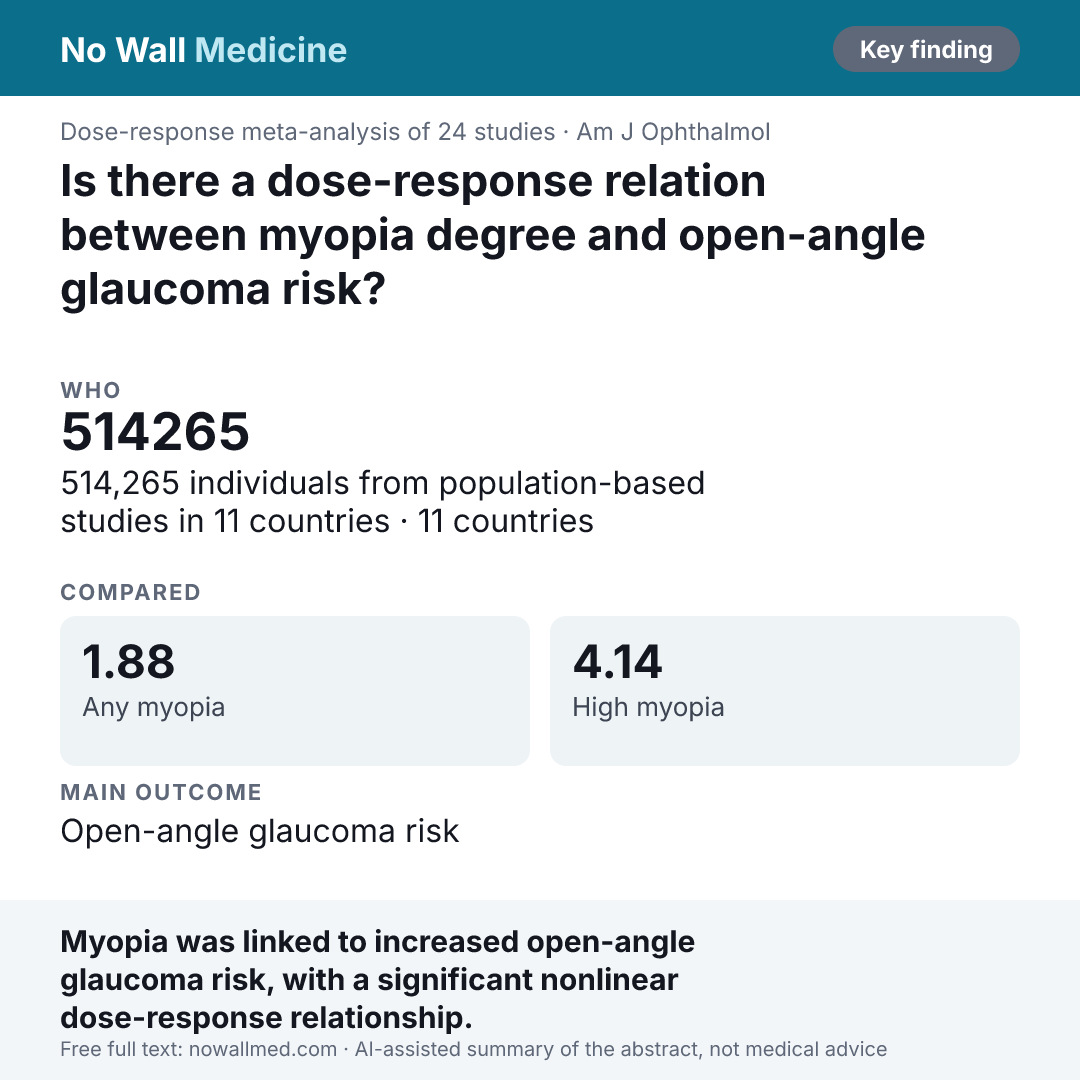
Is there a dose-response relation between myopia degree and open-angle glaucoma risk?
Who
514265
514,265 individuals from population-based studies in 11 countries · 11 countries
Compared
1.88Any myopia (95% CI, 1.66-2.13)
4.14High myopia (95% CI, 2.57-6.69)
Main outcome
Open-angle glaucoma risk
Result: odds ratio 1.21 (95% CI 1.15-1.28) per 1-D change
Bottom line: Myopia was linked to increased open-angle glaucoma risk, with a significant nonlinear dose-response relationship.
Am J Ophthalmol · 2021-10-11 · Save PNG
Key points
- Researchers analyzed 24 studies involving 514,265 individuals across 11 countries to examine the link between myopia, or nearsightedness, and open-angle glaucoma.
- The risk of open-angle glaucoma was associated with a pooled odds ratio of 1.88 for any degree of myopia.
- The risk was associated with an odds ratio of 4.14 for high myopia and increased by approximately 20% for every 1 diopter decrease in spherical equivalent.
Discussion prompts
- Would these patients look like yours? Who was left out?
- Is the main outcome one that matters to patients?
- Is the difference large enough to change what you do?
Cite: Ha A, Kim CY, Shim SR, Chang IB, Kim YK. Degree of Myopia and Glaucoma Risk: A Dose-Response Meta-analysis. Am J Ophthalmol. 2022;236:107-119. doi:10.1016/j.ajo.2021.10.007
Free full text: Am J Ophthalmol website · Summary and visual abstract: nowallmed.com/a/degree-of-myopia-and-glaucoma-risk-a-dose-response-meta-4qjh00/ (AI-assisted from the abstract; check the paper before relying on it).