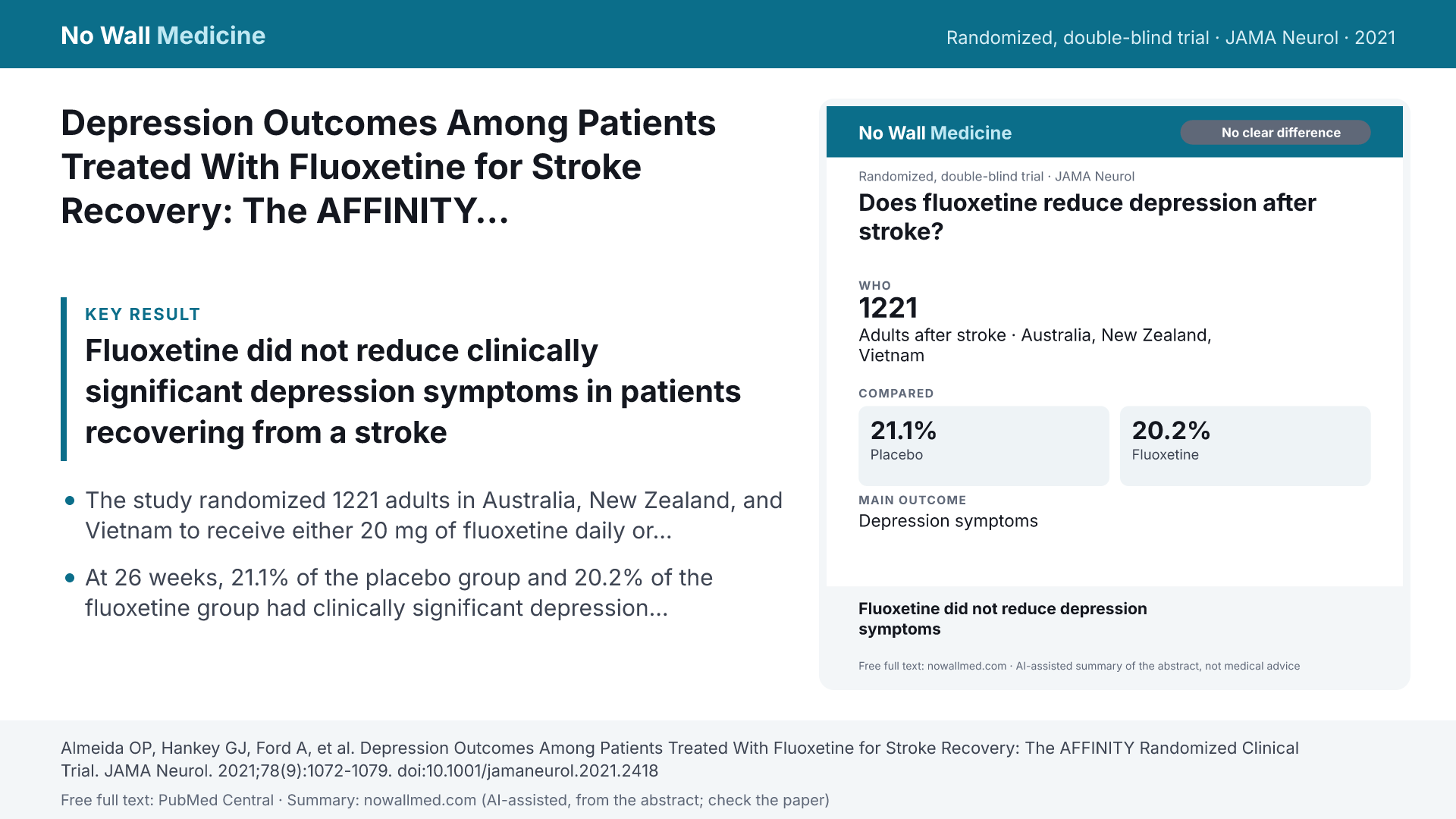
Fluoxetine did not reduce clinically significant depression symptoms in patients recovering from a stroke
Depression Outcomes Among Patients Treated With Fluoxetine for Stroke Recovery: The AFFINITY Randomized Clinical Trial
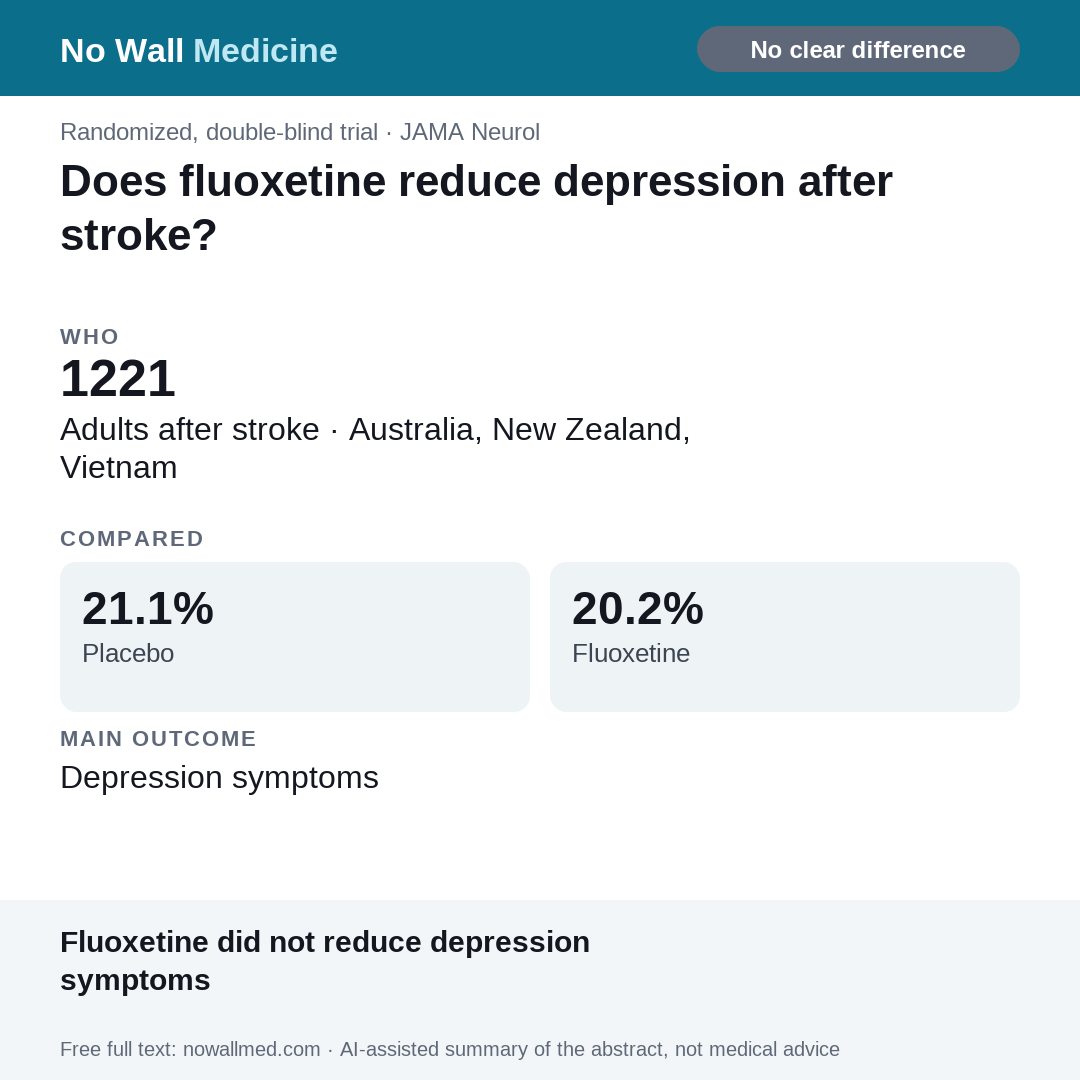
Randomized, double-blind trialNo clear difference
Does fluoxetine reduce depression after stroke?
Who
1221
Adults after stroke · Australia, New Zealand, Vietnam
Compared
21.1%Placebo (126/596)
20.2%Fluoxetine (121/598)
Main outcome
Depression symptoms
Bottom line: Fluoxetine did not reduce depression symptoms
JAMA Neurol · 2021-08-03Download image
Clinical question: Does fluoxetine reduce depression after stroke?
Key points
- The study randomized 1221 adults in Australia, New Zealand, and Vietnam to receive either 20 mg of fluoxetine daily or a placebo for 26 weeks.
- At 26 weeks, 21.1% of the placebo group and 20.2% of the fluoxetine group had clinically significant depression symptoms based on the Patient Health Questionnaire-9.
- Fluoxetine treatment was not associated with changes in the proportion of participants receiving antidepressant prescriptions or nonpharmacologic treatments for depression.
Headline and key points written with AI from the paper’s abstract, with every number checked against it. Read the paper before relying on them.
Was this summary helpful?
Subject terms
Headline, design, result, key points, caveat and citation as plain text.
Cite this article
Almeida OP, Hankey GJ, Ford A, et al. Depression Outcomes Among Patients Treated With Fluoxetine for Stroke Recovery: The AFFINITY Randomized Clinical Trial. JAMA Neurol. 2021. doi:10.1001/jamaneurol.2021.2418
Spotted a mistake? Suggest a correction