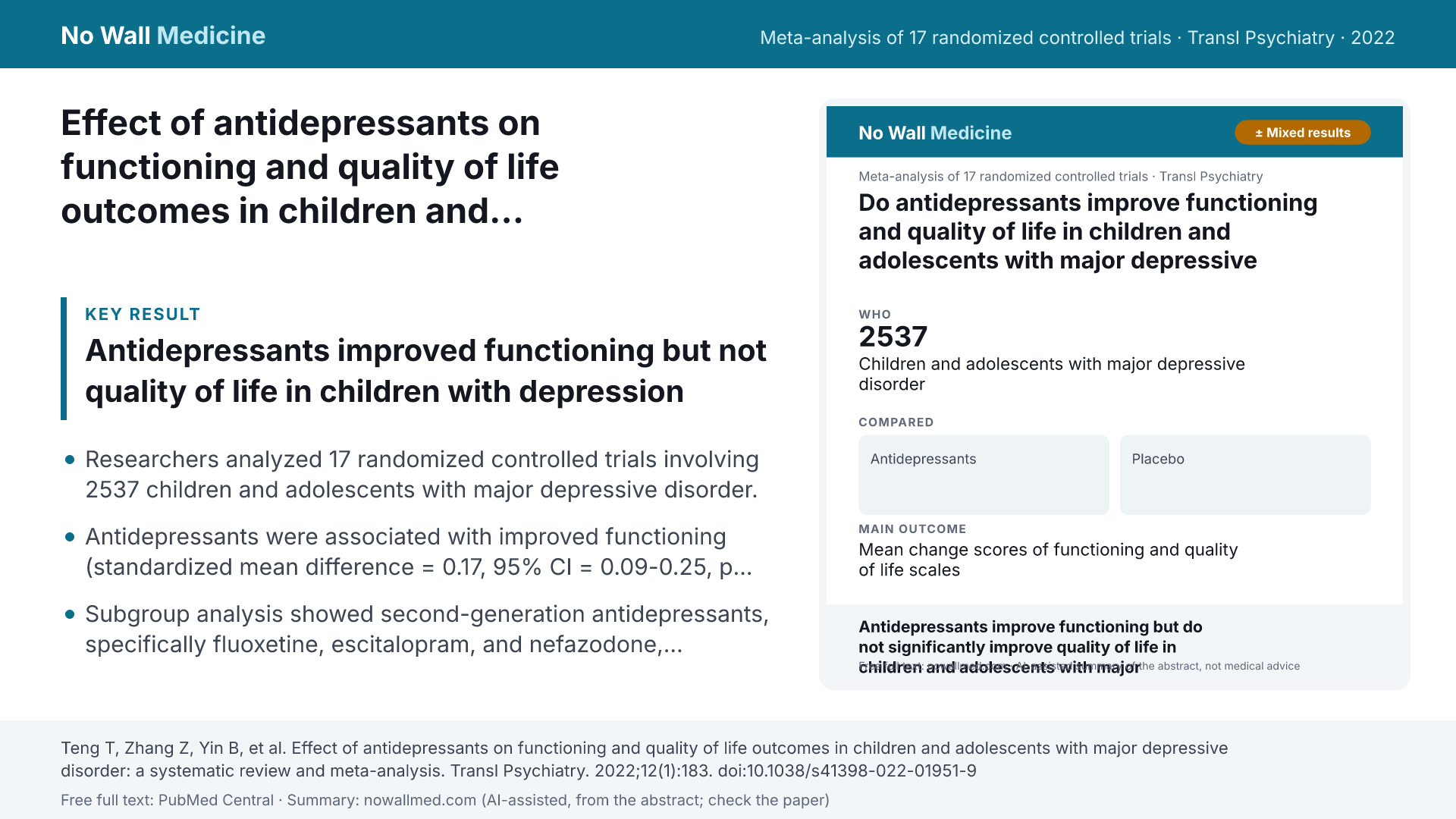
Antidepressants improved functioning but not quality of life in children with depression
Effect of antidepressants on functioning and quality of life outcomes in children and adolescents with major depressive disorder: a systematic review and meta-analysis
Meta-analysis of 17 randomized controlled trialsMixed results
Do antidepressants improve functioning and quality of life in children and adolescents with major depressive disorder?
Who
2537
Children and adolescents with major depressive disorder
Compared
Antidepressants
Placebo
Main outcome
Mean change scores of functioning and quality of life scales
Result: functioning SMD 0.17 (95% CI 0.09-0.25), quality of life SMD 0.11 (95% CI -0.02 to 0.24)
Bottom line: Antidepressants improve functioning but do not significantly improve quality of life in children and adolescents with major depressive disorder.
Limitation: Well-designed clinical studies using large samples are needed to confirm these findings.
Transl Psychiatry · 2022-05-04 · Save PNG
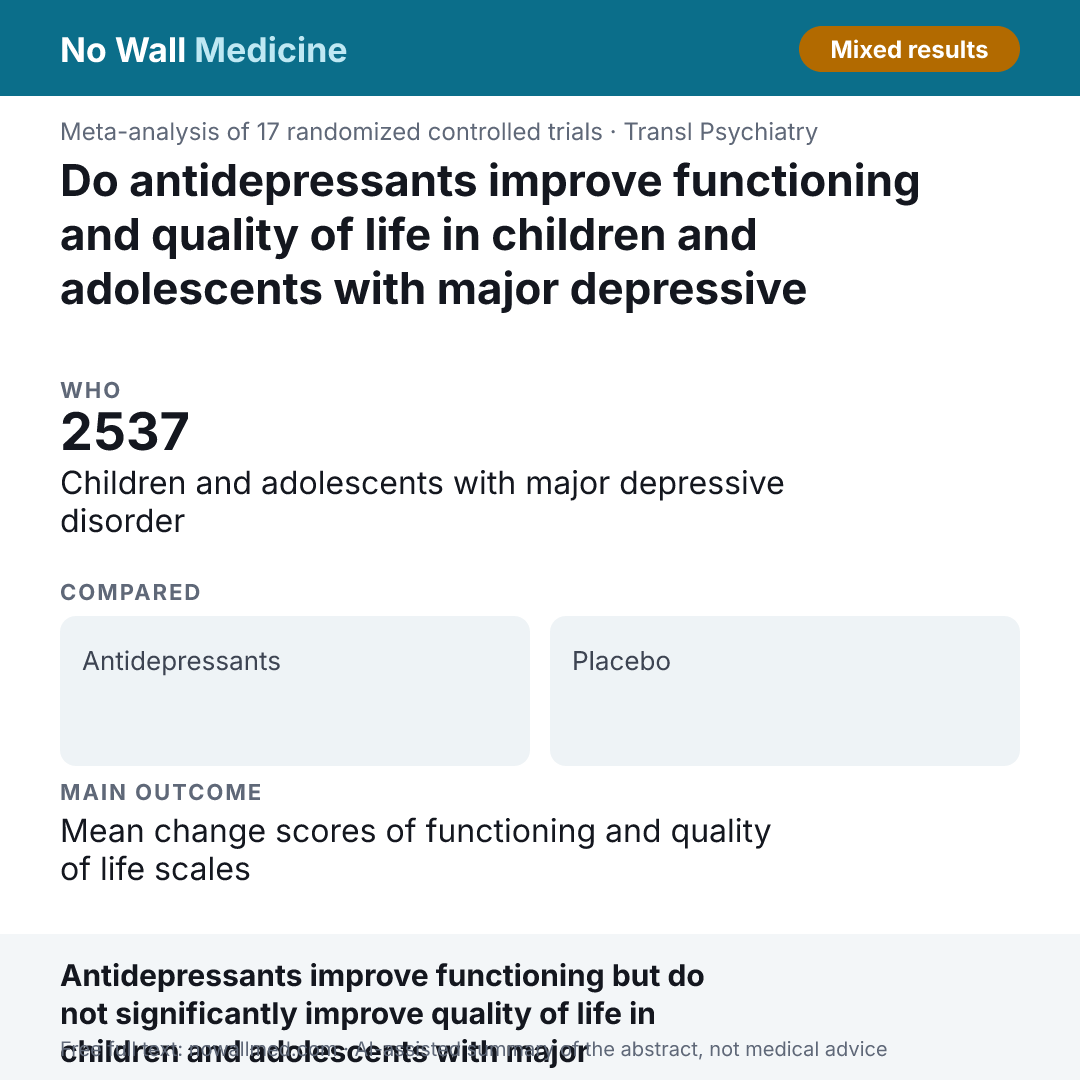
Clinical question: Do antidepressants improve functioning and quality of life in children and adolescents with major depressive disorder?
Why it matters: Meta-analytical evidence regarding how antidepressants affect functioning and quality of life in children and adolescents with major depressive disorder remains scarce.
Key points
- Researchers analyzed 17 randomized controlled trials involving 2537 children and adolescents with major depressive disorder.
- Antidepressants were associated with improved functioning (standardized mean difference = 0.17, 95% CI = 0.09-0.25, p < 0.0001) but not quality of life (standardized mean difference = 0.11, 95% CI = -0.02 to 0.24, p = 0.093).
- Subgroup analysis showed second-generation antidepressants, specifically fluoxetine, escitalopram, and nefazodone, were associated with improved functioning.
Headline and key points written with AI from the paper’s abstract, with every number checked against it. Read the paper before relying on them.
Was this summary helpful?
Subject terms
Headline, design, result, key points, caveat and citation as plain text.
Cite this article
Teng T, Zhang Z, Yin B, et al. Effect of antidepressants on functioning and quality of life outcomes in children and adolescents with major depressive disorder: a systematic review and meta-analysis. Transl Psychiatry. 2022;12(1):183. doi:10.1038/s41398-022-01951-9
Spotted a mistake? Suggest a correction