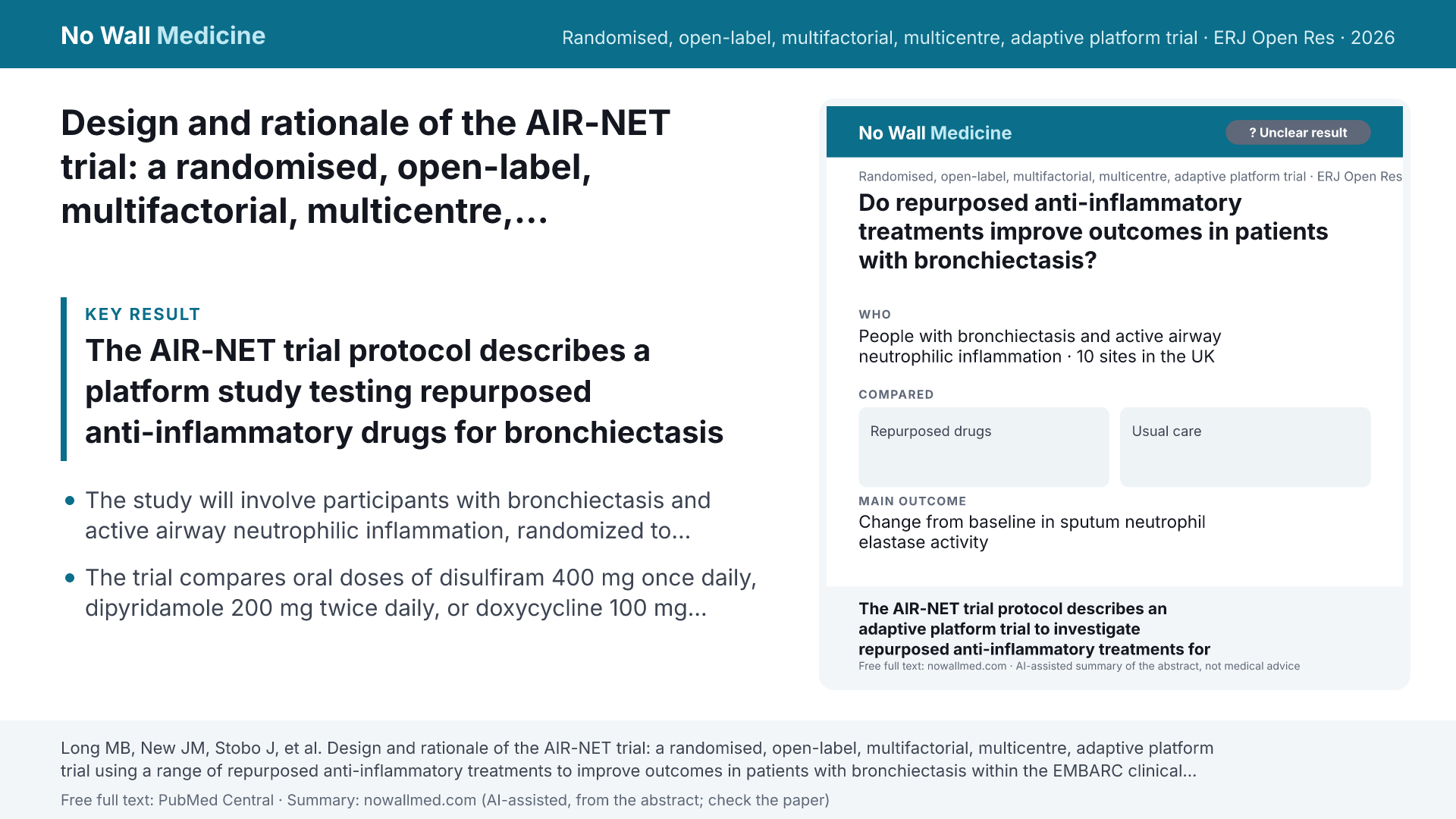
The AIR-NET trial protocol describes a platform study testing repurposed anti-inflammatory drugs for bronchiectasis
Design and rationale of the AIR-NET trial: a randomised, open-label, multifactorial, multicentre, adaptive platform trial using a range of repurposed anti-inflammatory treatments to improve outcomes in patients with bronchiectasis within the EMBARC clinical research network
Randomised, open-label, multifactorial, multicentre, adaptive platform trialUnclear result
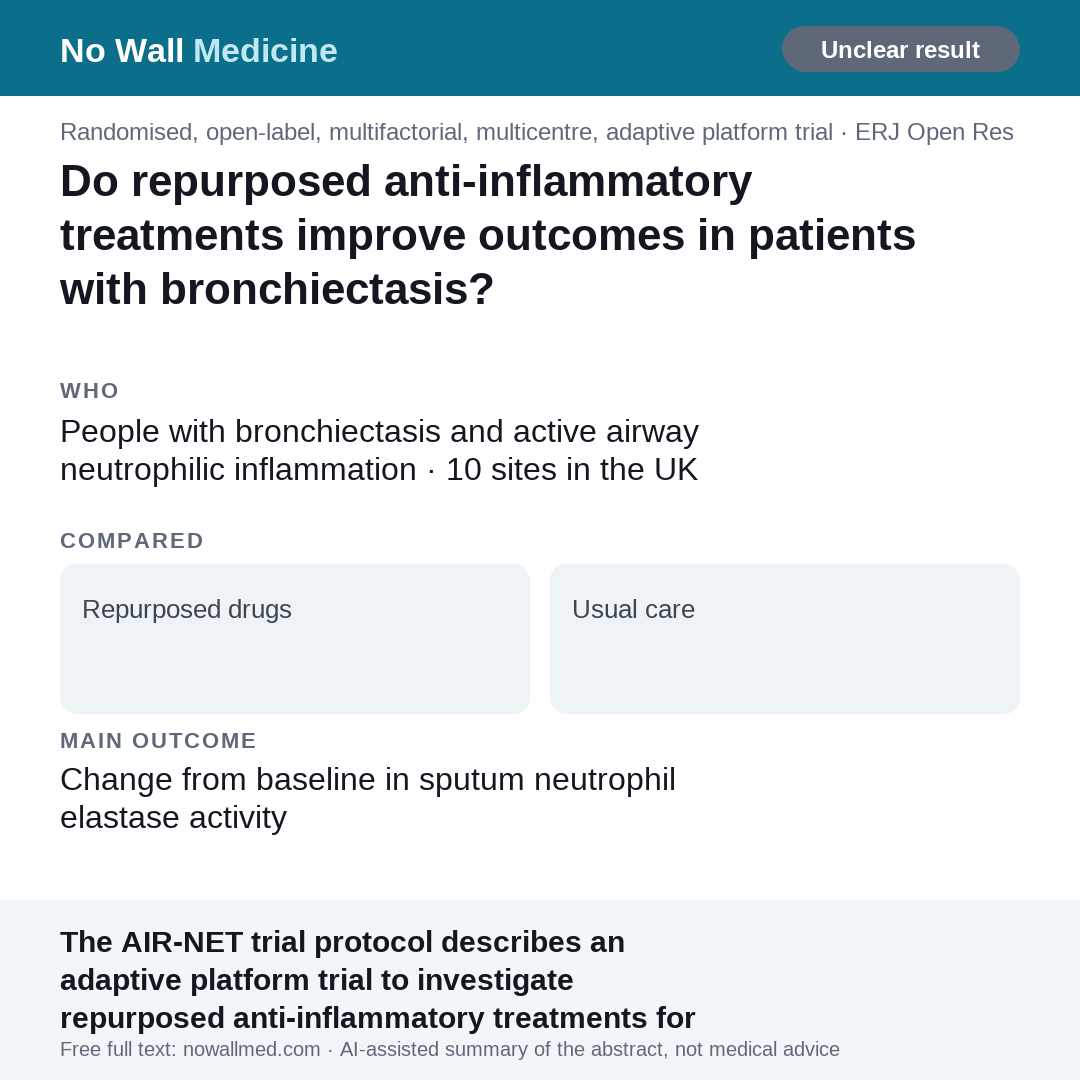
Do repurposed anti-inflammatory treatments improve outcomes in patients with bronchiectasis?
Who
People with bronchiectasis and active airway neutrophilic inflammation · 10 sites in the UK
Compared
Repurposed drugs
Usual care
Main outcome
Change from baseline in sputum neutrophil elastase activity
Bottom line: The AIR-NET trial protocol describes an adaptive platform trial to investigate repurposed anti-inflammatory treatments for bronchiectasis.
ERJ Open Res · 2026-03-09Download image
Clinical question: Do repurposed anti-inflammatory treatments improve outcomes in patients with bronchiectasis?
Why it matters: Additional neutrophil targeting therapeutics are needed to reduce the disease burden because neutrophilic airway inflammation is linked to disease severity and exacerbation frequency.
Key points
- The study will involve participants with bronchiectasis and active airway neutrophilic inflammation, randomized to receive usual care or one of three repurposed drugs.
- The trial compares oral doses of disulfiram 400 mg once daily, dipyridamole 200 mg twice daily, or doxycycline 100 mg once daily with 42 participants per arm.
- Researchers will measure the change from baseline in sputum neutrophil elastase activity, a marker of inflammation and risk for exacerbations, at day 28.
Headline and key points written with AI from the paper’s abstract, with every number checked against it. Read the paper before relying on them.
Was this summary helpful?
Headline, design, result, key points, caveat and citation as plain text.
Cite this article
Long MB, New JM, Stobo J, et al. Design and rationale of the AIR-NET trial: a randomised, open-label, multifactorial, multicentre, adaptive platform trial using a range of repurposed anti-inflammatory treatments to improve outcomes in patients with bronchiectasis within the EMBARC clinical research network. ERJ Open Res. 2026. doi:10.1183/23120541.00719-2025
Spotted a mistake? Suggest a correction