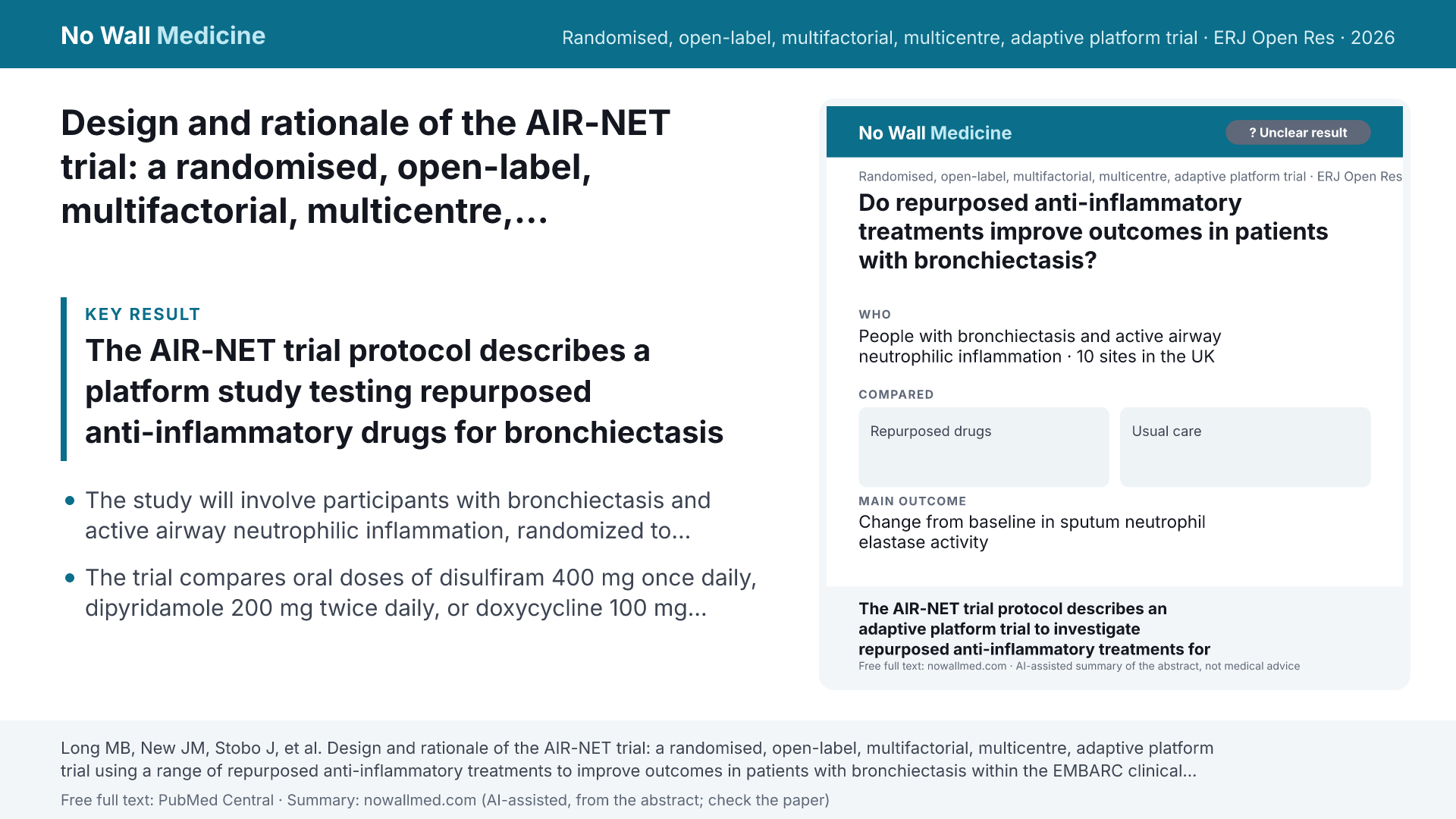
Design and rationale of the AIR-NET trial: a randomised, open-label, multifactorial, multicentre, adaptive platform trial using a range of repurposed anti-inflammatory treatments to improve outcomes in patients with bronchiectasis within the EMBARC clinical research network
Key result: The AIR-NET trial protocol describes a platform study testing repurposed anti-inflammatory drugs for bronchiectasis
Key points
- The study will involve participants with bronchiectasis and active airway neutrophilic inflammation, randomized to receive usual care or one of three repurposed drugs.
- The trial compares oral doses of disulfiram 400 mg once daily, dipyridamole 200 mg twice daily, or doxycycline 100 mg once daily with 42 participants per arm.
- Researchers will measure the change from baseline in sputum neutrophil elastase activity, a marker of inflammation and risk for exacerbations, at day 28.
Why it matters: Additional neutrophil targeting therapeutics are needed to reduce the disease burden because neutrophilic airway inflammation is linked to disease severity and exacerbation frequency.
Discussion prompts
- Would these patients look like yours? Who was left out?
- Is the main outcome one that matters to patients?
- Is the difference large enough to change what you do?
Cite: Long MB, New JM, Stobo J, et al. Design and rationale of the AIR-NET trial: a randomised, open-label, multifactorial, multicentre, adaptive platform trial using a range of repurposed anti-inflammatory treatments to improve outcomes in patients with bronchiectasis within the EMBARC clinical research network. ERJ Open Res. 2026;12(2). doi:10.1183/23120541.00719-2025
Free full text: PubMed Central · Summary and visual abstract: nowallmed.com/a/design-and-rationale-of-the-air-net-trial-a-randomised-open-label-gtuy2x/ (AI-assisted from the abstract; check the paper before relying on it).