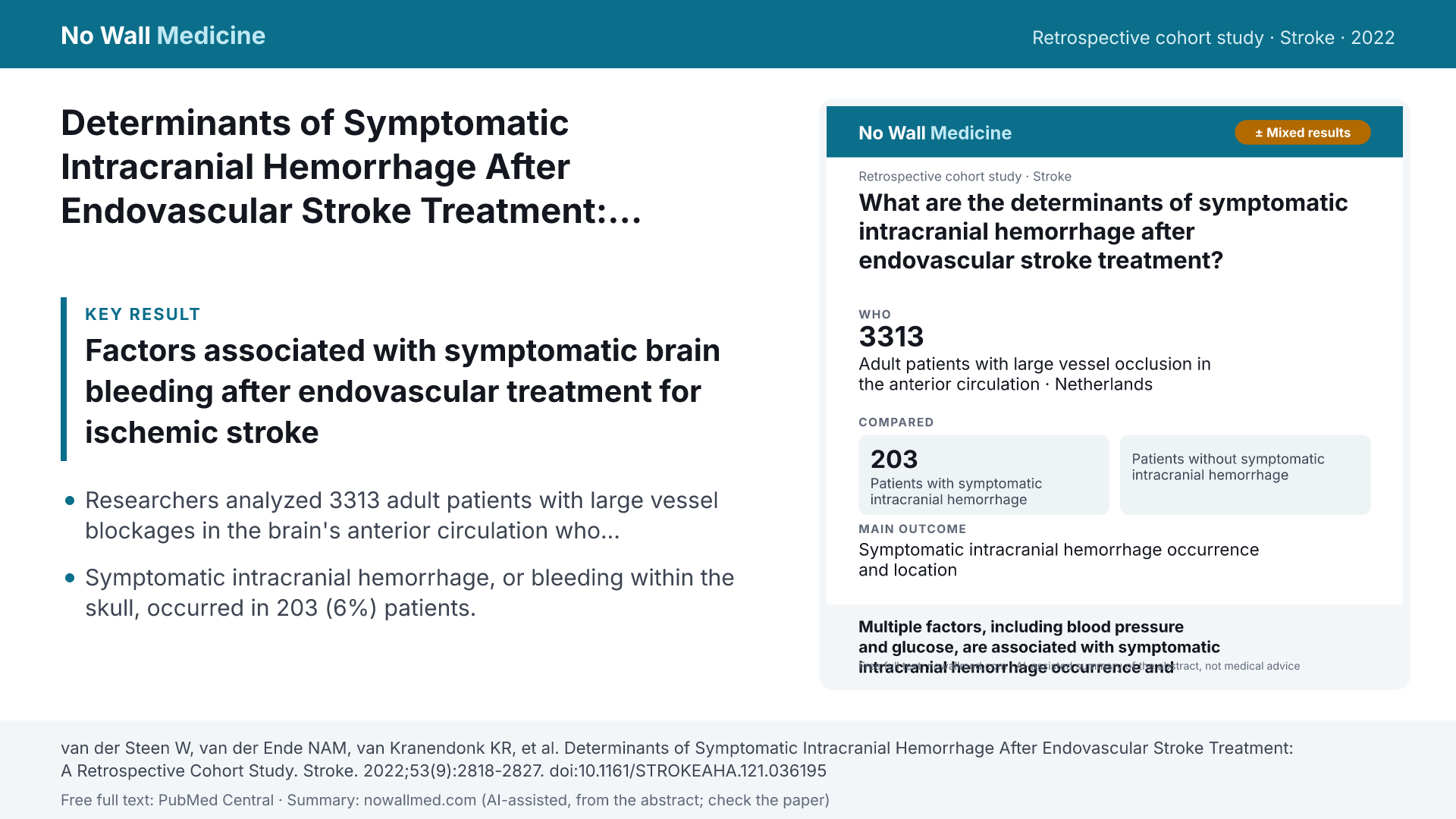
Factors associated with symptomatic brain bleeding after endovascular treatment for ischemic stroke
Determinants of Symptomatic Intracranial Hemorrhage After Endovascular Stroke Treatment: A Retrospective Cohort Study
Retrospective cohort studyMixed results
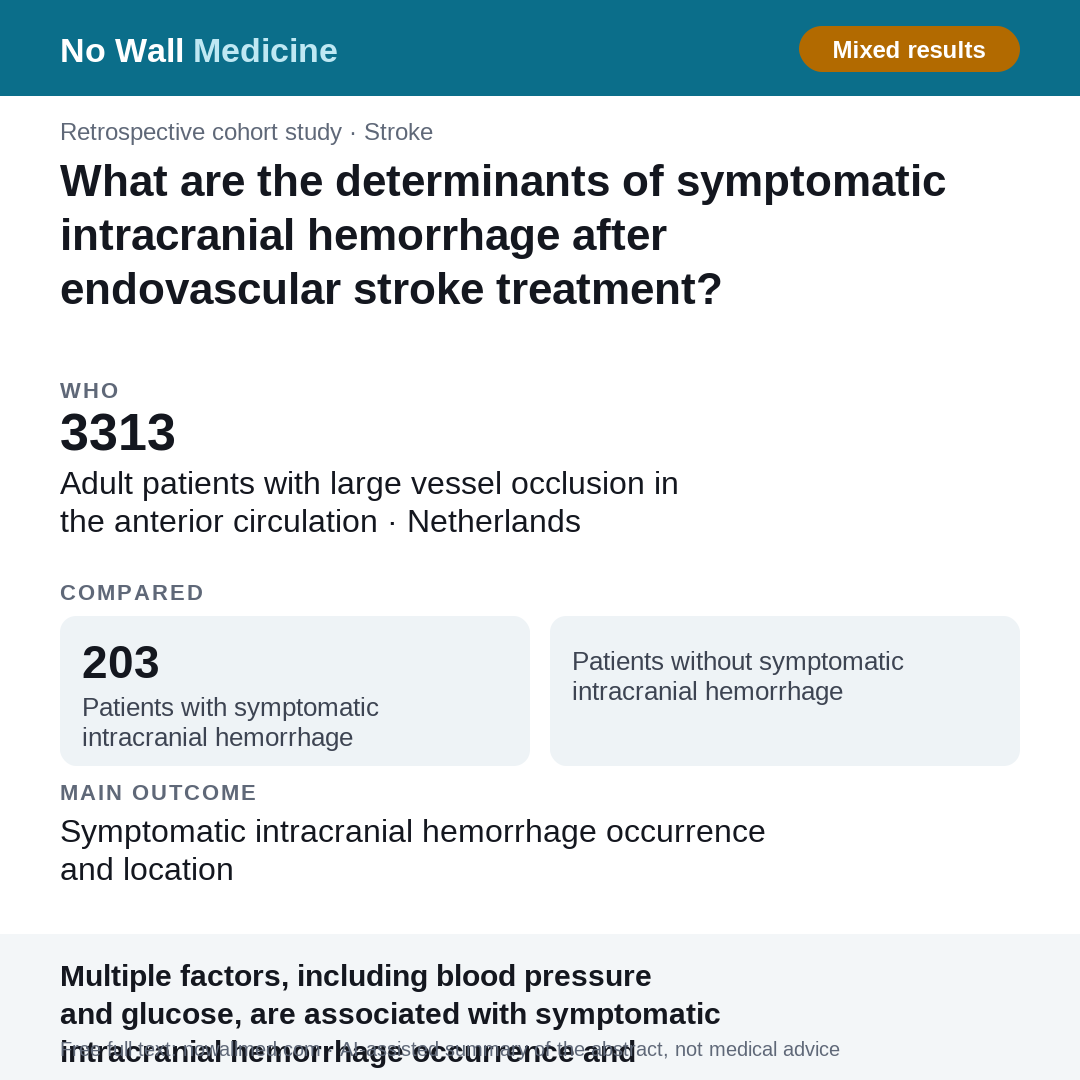
What are the determinants of symptomatic intracranial hemorrhage after endovascular stroke treatment?
Who
3313
Adult patients with large vessel occlusion in the anterior circulation · Netherlands
Compared
203Patients with symptomatic intracranial hemorrhage (6%)
Patients without symptomatic intracranial hemorrhage
Main outcome
Symptomatic intracranial hemorrhage occurrence and location
Bottom line: Multiple factors, including blood pressure and glucose, are associated with symptomatic intracranial hemorrhage occurrence and location.
Stroke · 2022-06-08Download image
Same trial (ISRCTN10888758)
Papers we list that report this registered trial, oldest first. Read a secondary analysis alongside the main results.
- Main results
Intraarterial treatment improved functional outcomes for acute ischemic stroke patients NEJM 2014-12 - Secondary analysis No clear difference
Blinded outcome committees provided limited added value in a randomized stroke treatment trial Stroke 2021-10 - Related analysis Mixed results
This paper Stroke 2022-06
Clinical question: What are the determinants of symptomatic intracranial hemorrhage after endovascular stroke treatment?
Key points
- Researchers analyzed 3313 adult patients with large vessel blockages in the brain's anterior circulation who received endovascular treatment within 6.5 hours of stroke onset.
- Symptomatic intracranial hemorrhage, or bleeding within the skull, occurred in 203 (6%) patients.
- Prior antiplatelet use, baseline blood pressure, glucose levels, and procedure duration were associated with the occurrence and location of bleeding.
Headline and key points written with AI from the paper’s abstract, with every number checked against it. Read the paper before relying on them.
Was this summary helpful?
Subject terms
Headline, design, result, key points, caveat and citation as plain text.
Cite this article
van der Steen W, van der Ende NAM, van Kranendonk KR, et al. Determinants of Symptomatic Intracranial Hemorrhage After Endovascular Stroke Treatment: A Retrospective Cohort Study. Stroke. 2022. doi:10.1161/STROKEAHA.121.036195
Spotted a mistake? Suggest a correction