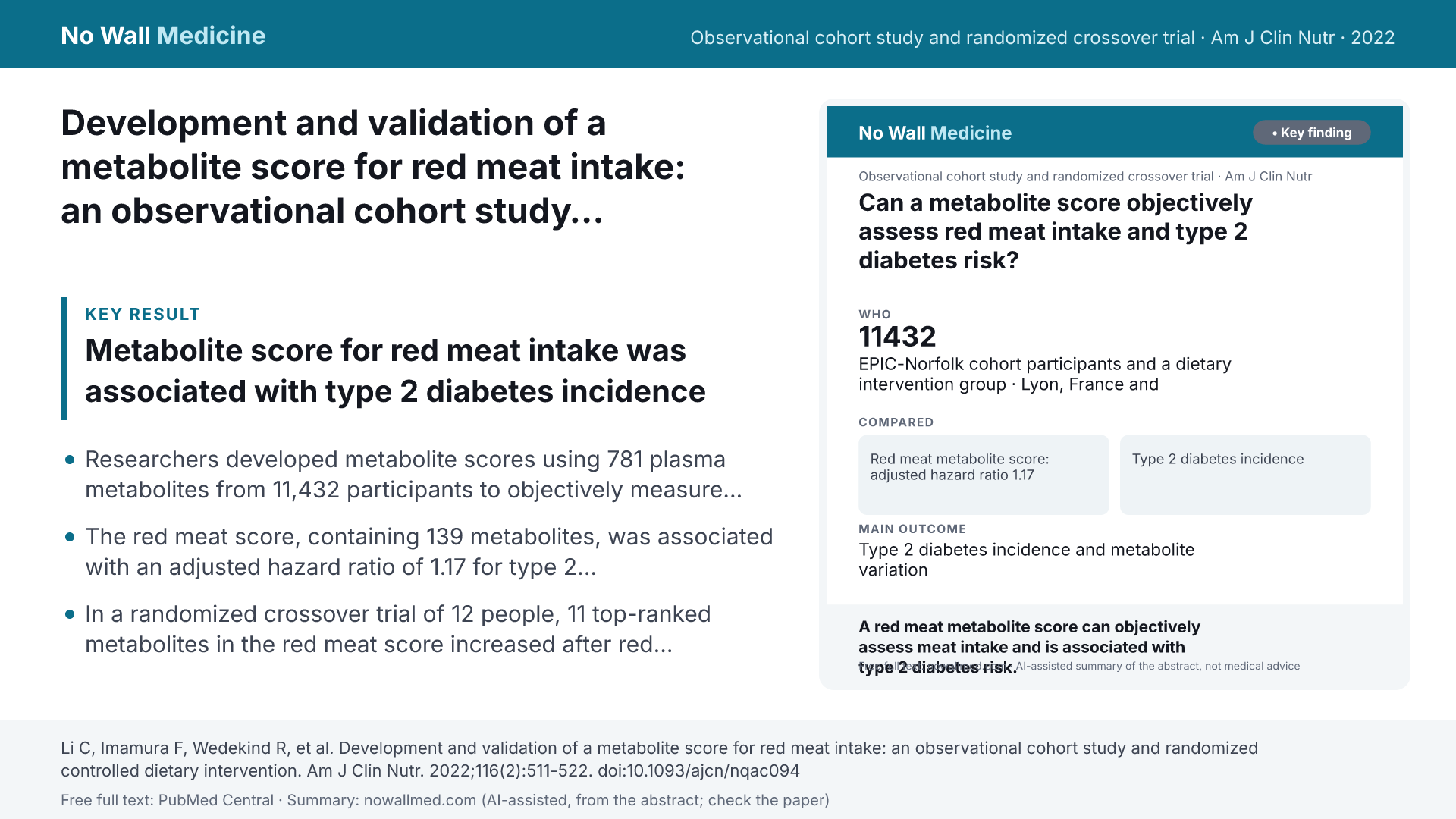
Metabolite score for red meat intake was associated with type 2 diabetes incidence
Development and validation of a metabolite score for red meat intake: an observational cohort study and randomized controlled dietary intervention
Observational cohort study and randomized crossover trialKey finding
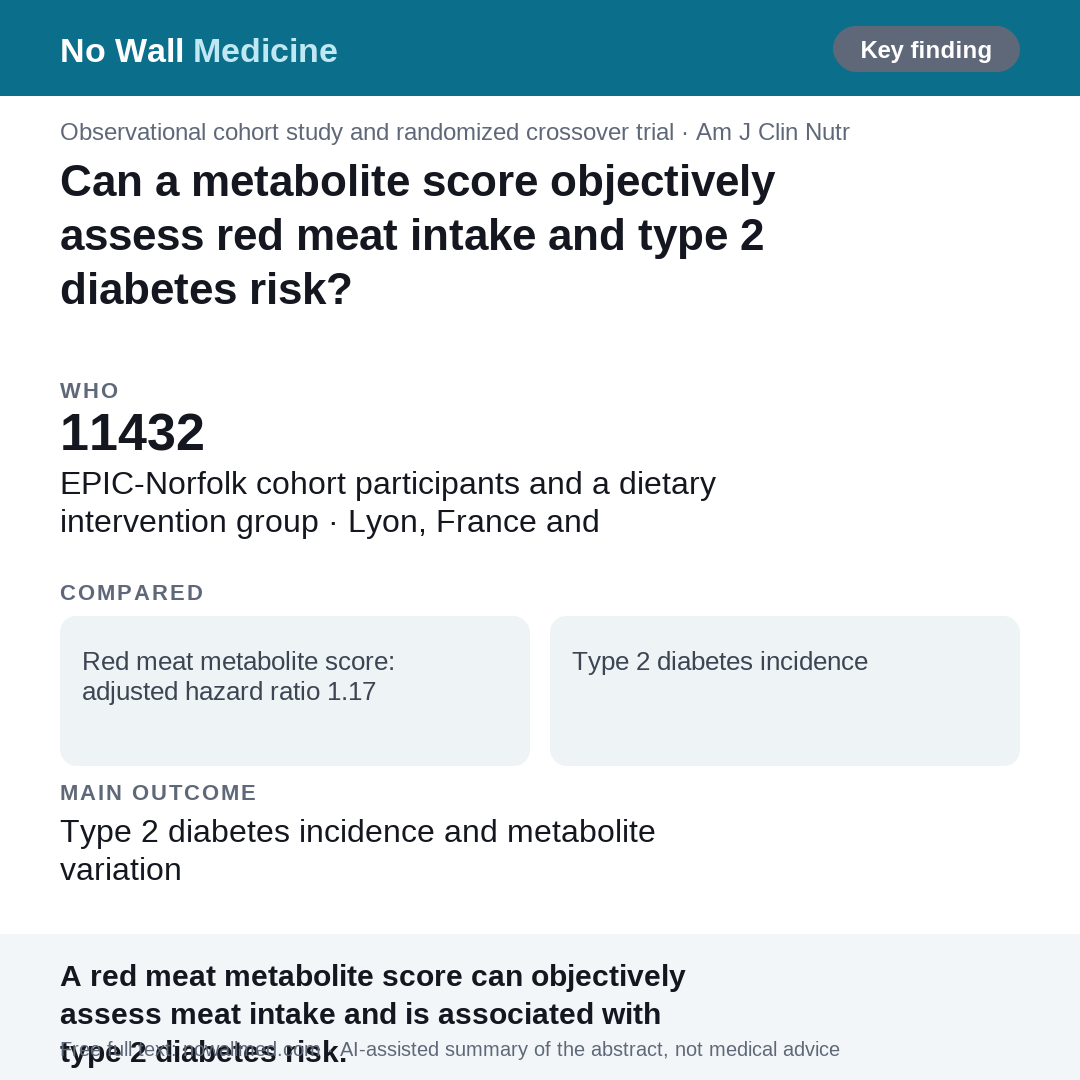
Can a metabolite score objectively assess red meat intake and type 2 diabetes risk?
Who
11432
EPIC-Norfolk cohort participants and a dietary intervention group · Lyon, France and EPIC-Norfolk cohort
Compared
Red meat metabolite score: adjusted hazard ratio 1.17
Type 2 diabetes incidence
Main outcome
Type 2 diabetes incidence and metabolite variation
Result: adjusted hazard ratio 1.17 (95% CI 1.10, 1.24)
Bottom line: A red meat metabolite score can objectively assess meat intake and is associated with type 2 diabetes risk.
Am J Clin Nutr · 2022-06-28Download image
Clinical question: Can a metabolite score objectively assess red meat intake and type 2 diabetes risk?
Why it matters: Self-reported meat consumption is difficult to assess objectively in observational and interventional studies.
Key points
- Researchers developed metabolite scores using 781 plasma metabolites from 11,432 participants to objectively measure red meat, processed meat, and poultry consumption.
- The red meat score, containing 139 metabolites, was associated with an adjusted hazard ratio of 1.17 for type 2 diabetes incidence.
- In a randomized crossover trial of 12 people, 11 top-ranked metabolites in the red meat score increased after red meat consumption.
Headline and key points written with AI from the paper’s abstract, with every number checked against it. Read the paper before relying on them.
Was this summary helpful?
Subject terms
Cite this article
Li C, Imamura F, Wedekind R, et al. Development and validation of a metabolite score for red meat intake: an observational cohort study and randomized controlled dietary intervention. Am J Clin Nutr. 2022. doi:10.1093/ajcn/nqac094
Spotted a mistake? Suggest a correction