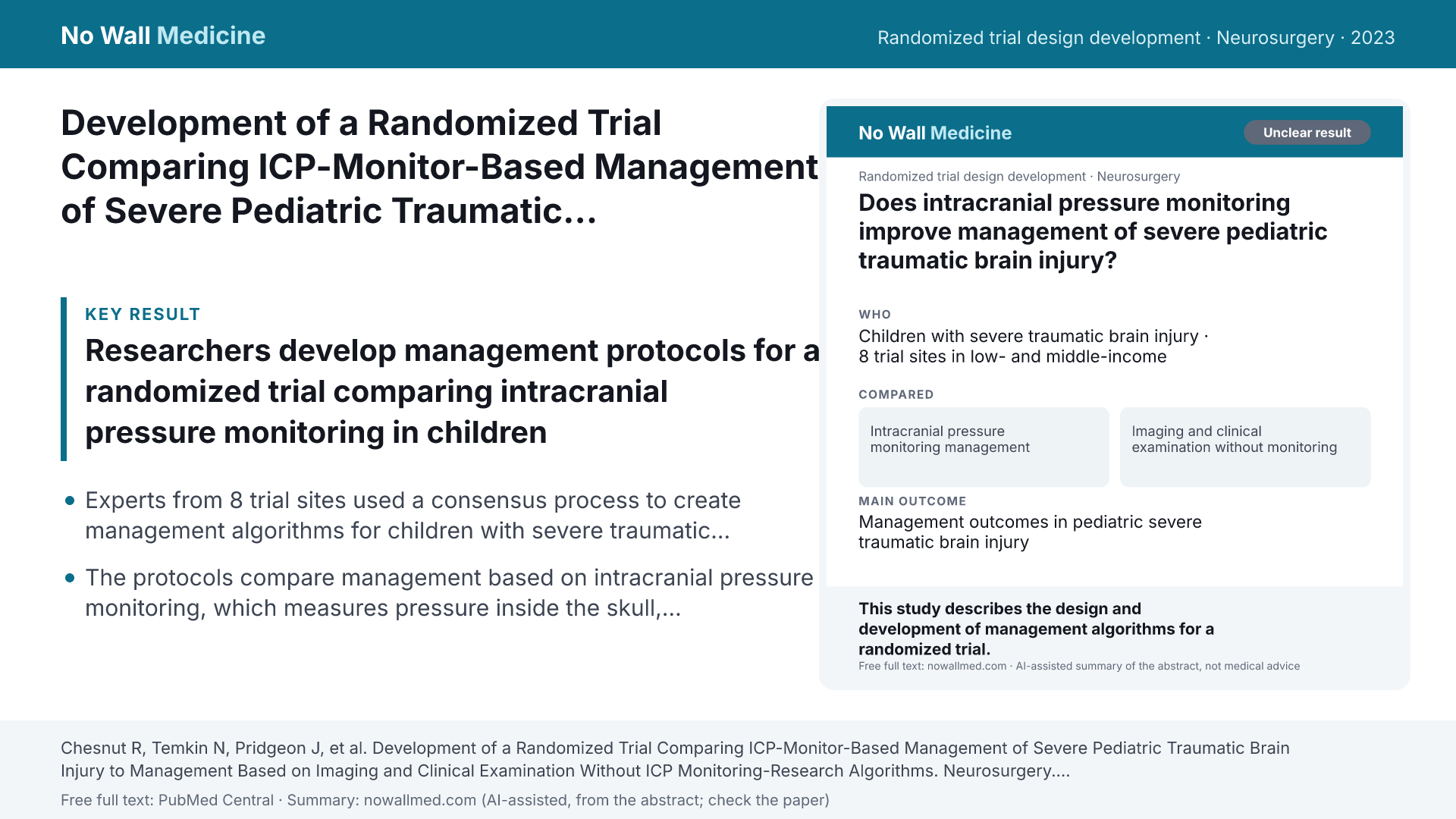
Researchers develop management protocols for a randomized trial comparing intracranial pressure monitoring in children
Development of a Randomized Trial Comparing ICP-Monitor-Based Management of Severe Pediatric Traumatic Brain Injury to Management Based on Imaging and Clinical Examination Without ICP Monitoring-Research Algorithms
Randomized trial design developmentUnclear result
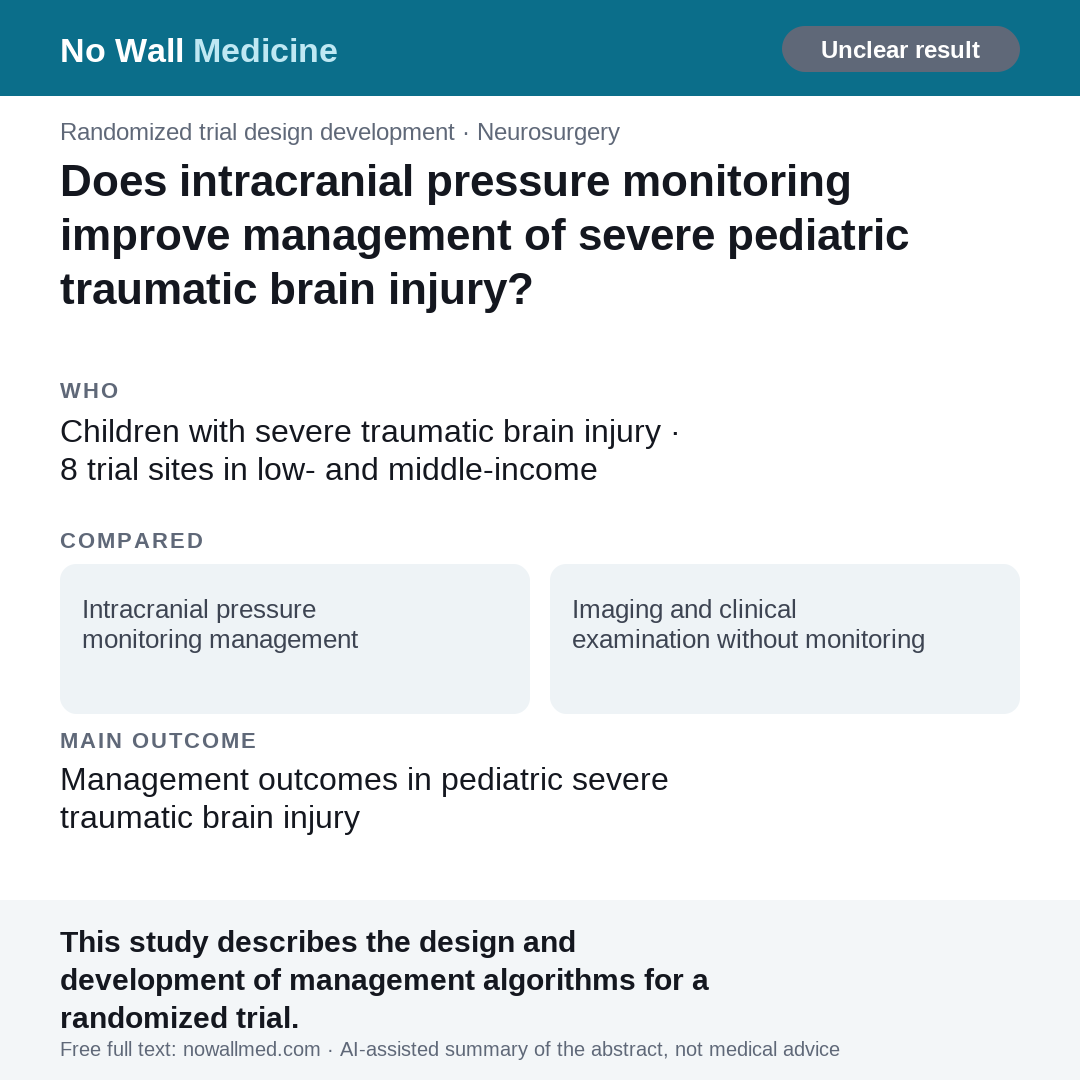
Does intracranial pressure monitoring improve management of severe pediatric traumatic brain injury?
Who
Children with severe traumatic brain injury · 8 trial sites in low- and middle-income countries
Compared
Intracranial pressure monitoring management
Imaging and clinical examination without monitoring
Main outcome
Management outcomes in pediatric severe traumatic brain injury
Bottom line: This study describes the design and development of management algorithms for a randomized trial.
Limitation: The management algorithms have limited evidentiary status.
Neurosurgery · 2023-11-13Download image
Clinical question: Does intracranial pressure monitoring improve management of severe pediatric traumatic brain injury?
Why it matters: It is unknown if managing pediatric severe traumatic brain injury using intracranial pressure monitoring data is more effective than using only clinical examination and imaging.
Key points
- Experts from 8 trial sites used a consensus process to create management algorithms for children with severe traumatic brain injury.
- The protocols compare management based on intracranial pressure monitoring, which measures pressure inside the skull, to management using only imaging and clinical examination.
- The developed algorithms include specific targets for blood pressure and cerebral perfusion pressure, which is the pressure required to deliver blood to the brain.
Limitation the authors note: The authors acknowledge that these management algorithms have limited evidentiary status.
Headline and key points written with AI from the paper’s abstract, with every number checked against it. Read the paper before relying on them.
Was this summary helpful?
Subject terms
Cite this article
Chesnut R, Temkin N, Pridgeon J, Sulzbacher S, Lujan S, Videtta W. Development of a Randomized Trial Comparing ICP-Monitor-Based Management of Severe Pediatric Traumatic Brain Injury to Management Based on Imaging and Clinical Examination Without ICP Monitoring-Research Algorithms. Neurosurgery. 2023. doi:10.1227/neu.0000000000002760
Spotted a mistake? Suggest a correction
Top studies every Monday
The week’s key trials and guidelines in your specialties, plus any topics you follow. By email, free.
Get the weekly digest