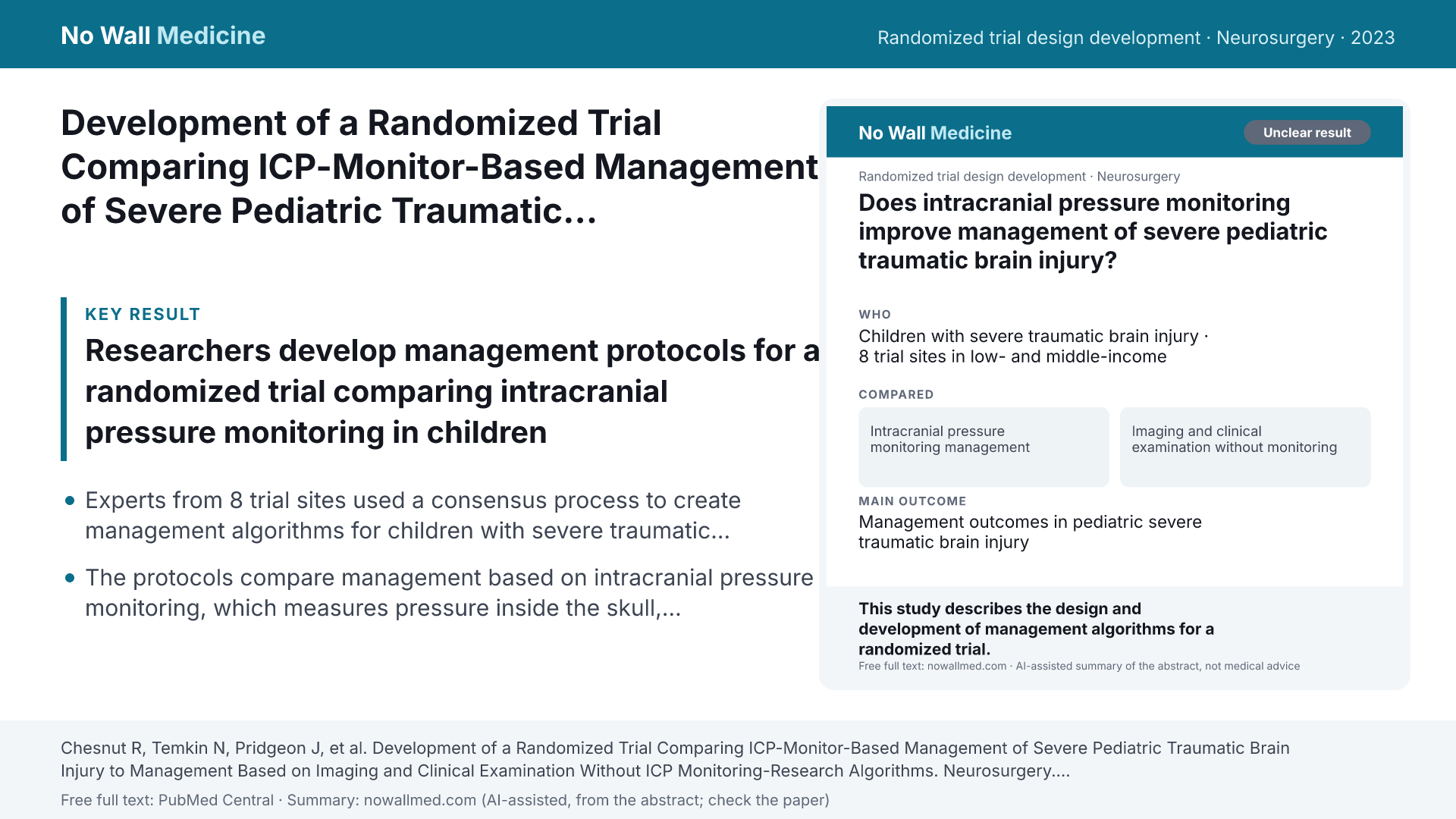
Development of a Randomized Trial Comparing ICP-Monitor-Based Management of Severe Pediatric Traumatic Brain Injury to Management Based on Imaging and Clinical Examination Without ICP Monitoring-Research Algorithms
Key result: Researchers develop management protocols for a randomized trial comparing intracranial pressure monitoring in children
Key points
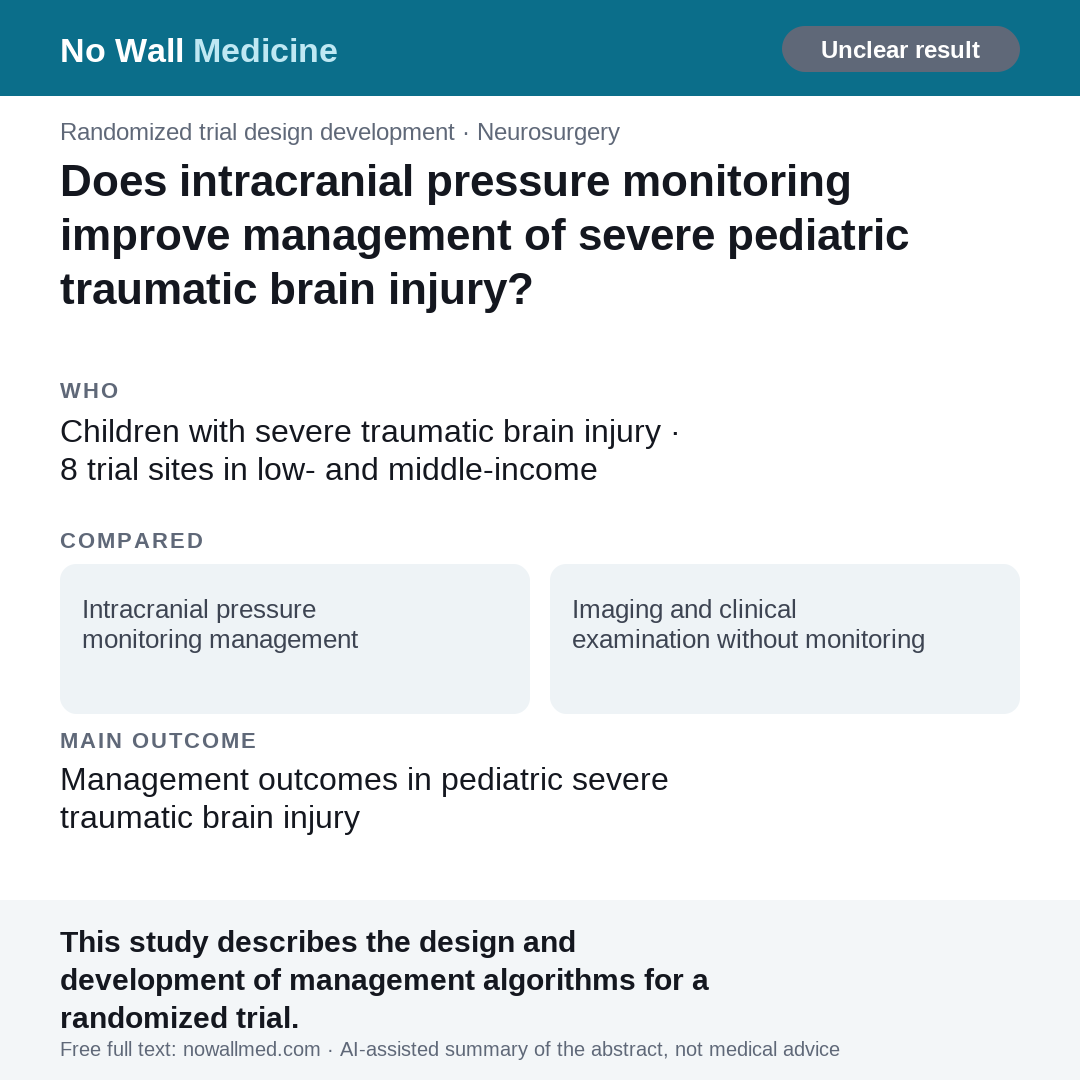
- Experts from 8 trial sites used a consensus process to create management algorithms for children with severe traumatic brain injury.
- The protocols compare management based on intracranial pressure monitoring, which measures pressure inside the skull, to management using only imaging and clinical examination.
- The developed algorithms include specific targets for blood pressure and cerebral perfusion pressure, which is the pressure required to deliver blood to the brain.
Why it matters: It is unknown if managing pediatric severe traumatic brain injury using intracranial pressure monitoring data is more effective than using only clinical examination and imaging.
Limitation the authors note: The authors acknowledge that these management algorithms have limited evidentiary status.
Discussion prompts
- Would these patients look like yours? Who was left out?
- Is the main outcome one that matters to patients?
- Is the difference large enough to change what you do?
Cite: Chesnut R, Temkin N, Pridgeon J, et al. Development of a Randomized Trial Comparing ICP-Monitor-Based Management of Severe Pediatric Traumatic Brain Injury to Management Based on Imaging and Clinical Examination Without ICP Monitoring-Research Algorithms. Neurosurgery. 2023. doi:10.1227/neu.0000000000002760
Free full text: PubMed Central · Summary and visual abstract: nowallmed.com/a/development-of-a-randomized-trial-comparing-icp-monitor-based-153kif4/ (AI-assisted from the abstract; check the paper before relying on it).