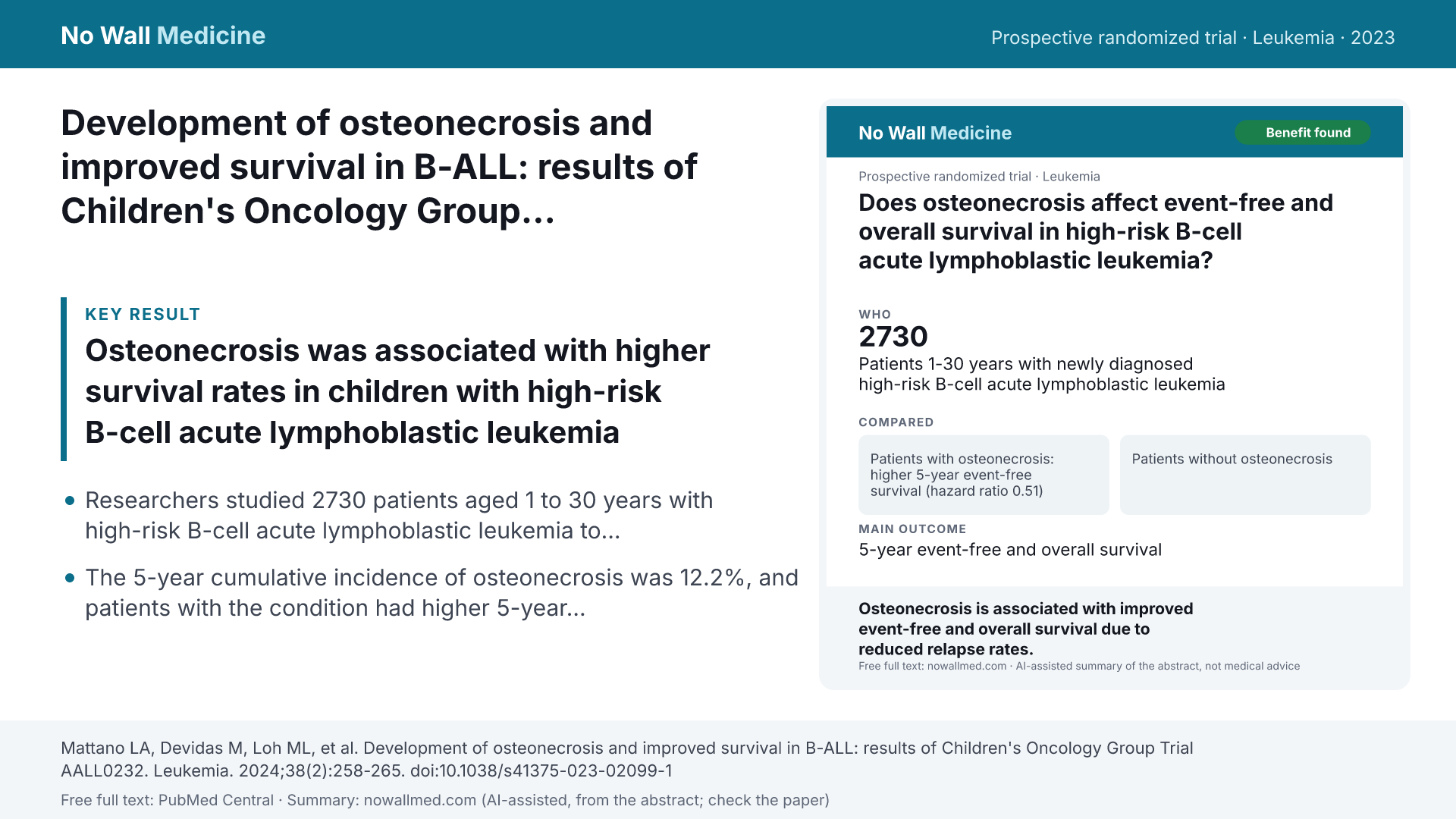
Osteonecrosis was associated with higher survival rates in children with high-risk B-cell acute lymphoblastic leukemia
Development of osteonecrosis and improved survival in B-ALL: results of Children's Oncology Group Trial AALL0232
Prospective randomized trialBenefit found
Does osteonecrosis affect event-free and overall survival in high-risk B-cell acute lymphoblastic leukemia?
Who
2730
Patients 1-30 years with newly diagnosed high-risk B-cell acute lymphoblastic leukemia
Compared
Patients with osteonecrosis: higher 5-year event-free survival (hazard ratio 0.51)
Patients without osteonecrosis
Main outcome
5-year event-free and overall survival
Result: hazard ratio 0.51 (P < 0.0001) for event-free survival
Bottom line: Osteonecrosis is associated with improved event-free and overall survival due to reduced relapse rates.
Leukemia · 2023-12-07Download image
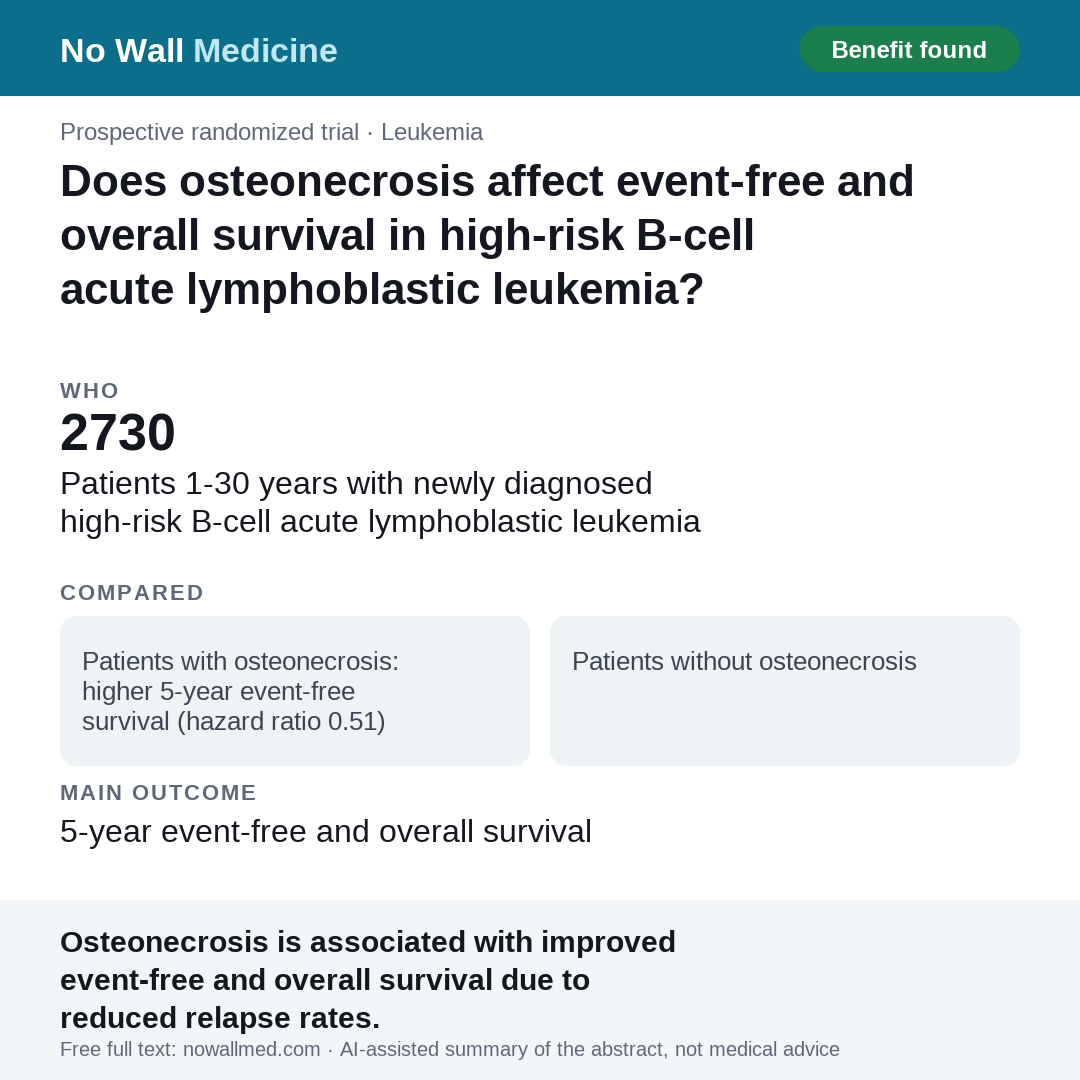
Clinical question: Does osteonecrosis affect event-free and overall survival in high-risk B-cell acute lymphoblastic leukemia?
Key points
- Researchers studied 2730 patients aged 1 to 30 years with high-risk B-cell acute lymphoblastic leukemia to assess osteonecrosis, which is bone tissue death.
- The 5-year cumulative incidence of osteonecrosis was 12.2%, and patients with the condition had higher 5-year event-free survival (HR, 0.51) and overall survival (HR, 0.42).
- Higher risk of osteonecrosis was associated with being aged ≥10 years (HR, 7.23) and being female (HR, 1.37).
Headline and key points written with AI from the paper’s abstract, with every number checked against it. Read the paper before relying on them.
Was this summary helpful?
Subject terms
Headline, design, result, key points, caveat and citation as plain text.
Cite this article
Mattano LA, Devidas M, Loh ML, et al. Development of osteonecrosis and improved survival in B-ALL: results of Children's Oncology Group Trial AALL0232. Leukemia. 2024;38(2):258-265. doi:10.1038/s41375-023-02099-1
Spotted a mistake? Suggest a correction