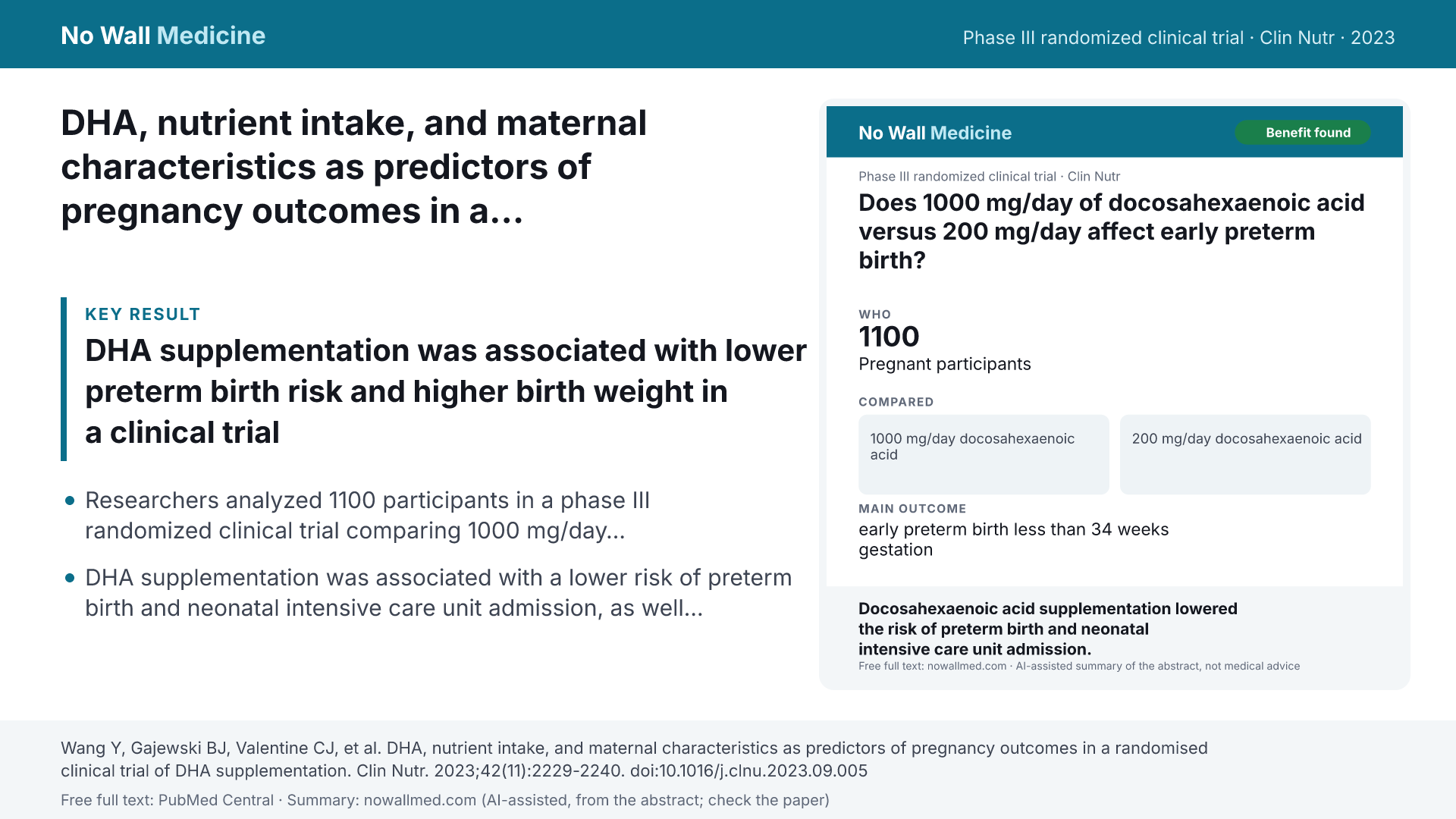
DHA supplementation was associated with lower preterm birth risk and higher birth weight in a clinical trial
DHA, nutrient intake, and maternal characteristics as predictors of pregnancy outcomes in a randomised clinical trial of DHA supplementation
Phase III randomized clinical trialBenefit found
Does 1000 mg/day of docosahexaenoic acid versus 200 mg/day affect early preterm birth?
Who
1100
Pregnant participants
Compared
1000 mg/day docosahexaenoic acid
200 mg/day docosahexaenoic acid
Main outcome
early preterm birth less than 34 weeks gestation
Bottom line: Docosahexaenoic acid supplementation lowered the risk of preterm birth and neonatal intensive care unit admission.
Clin Nutr · 2023-09-20Download image
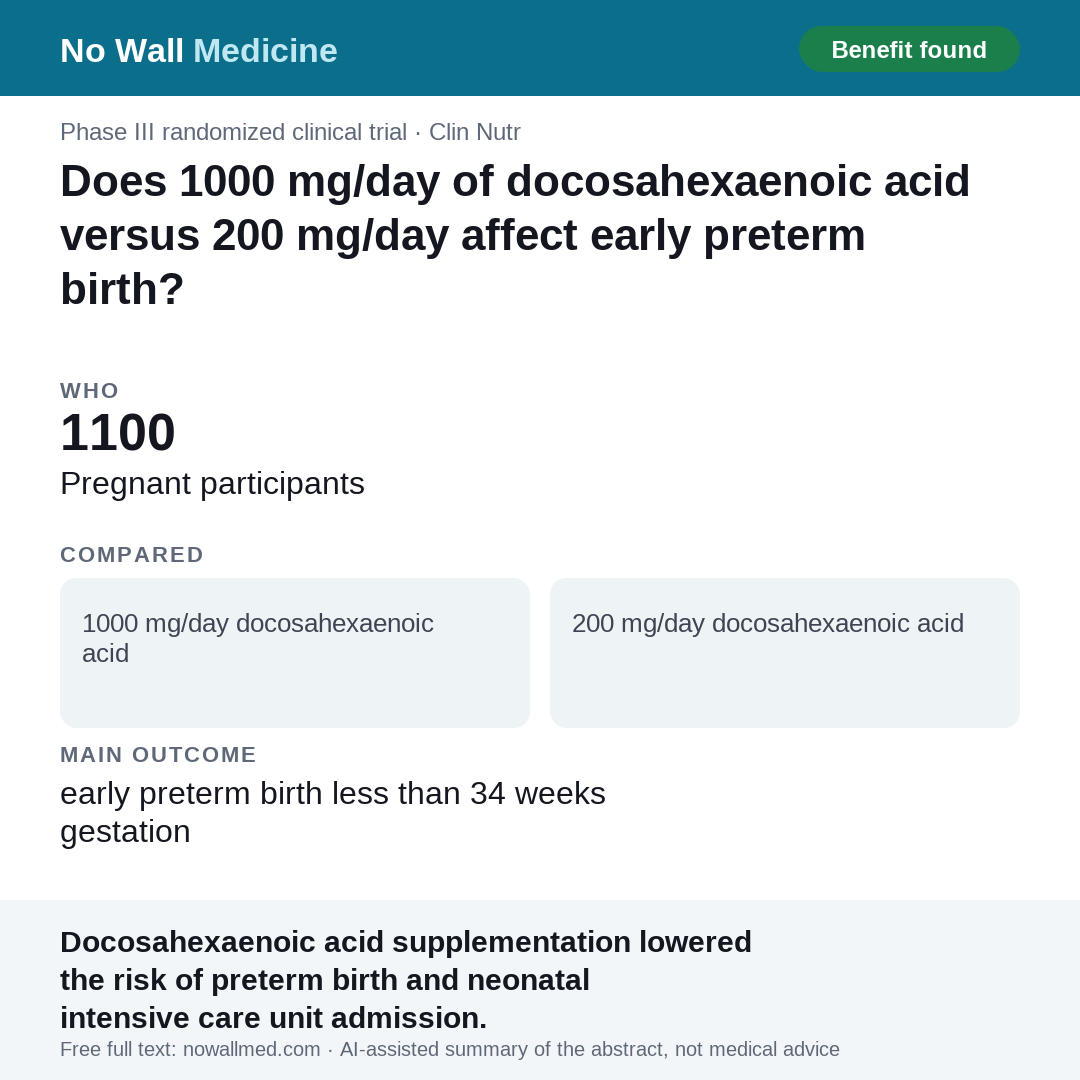
Clinical question: Does 1000 mg/day of docosahexaenoic acid versus 200 mg/day affect early preterm birth?
Why it matters: The relationship between DHA intake, other nutrients, and maternal characteristics on various pregnancy outcomes was not fully explored in the primary trial analysis.
Key points
- Researchers analyzed 1100 participants in a phase III randomized clinical trial comparing 1000 mg/day of docosahexaenoic acid (DHA) to 200 mg/day.
- DHA supplementation was associated with a lower risk of preterm birth and neonatal intensive care unit admission, as well as increased gestation and birth weight.
- Higher maternal red blood cell phospholipid DHA at delivery was associated with DHA supplementation and having a bachelor's degree or higher.
Headline and key points written with AI from the paper’s abstract, with every number checked against it. Read the paper before relying on them.
Was this summary helpful?
Subject terms
Cite this article
Wang Y, Gajewski BJ, Valentine CJ, Crawford SA, Brown AR, Mudaranthakam DP. DHA, nutrient intake, and maternal characteristics as predictors of pregnancy outcomes in a randomised clinical trial of DHA supplementation. Clin Nutr. 2023. doi:10.1016/j.clnu.2023.09.005
Spotted a mistake? Suggest a correction