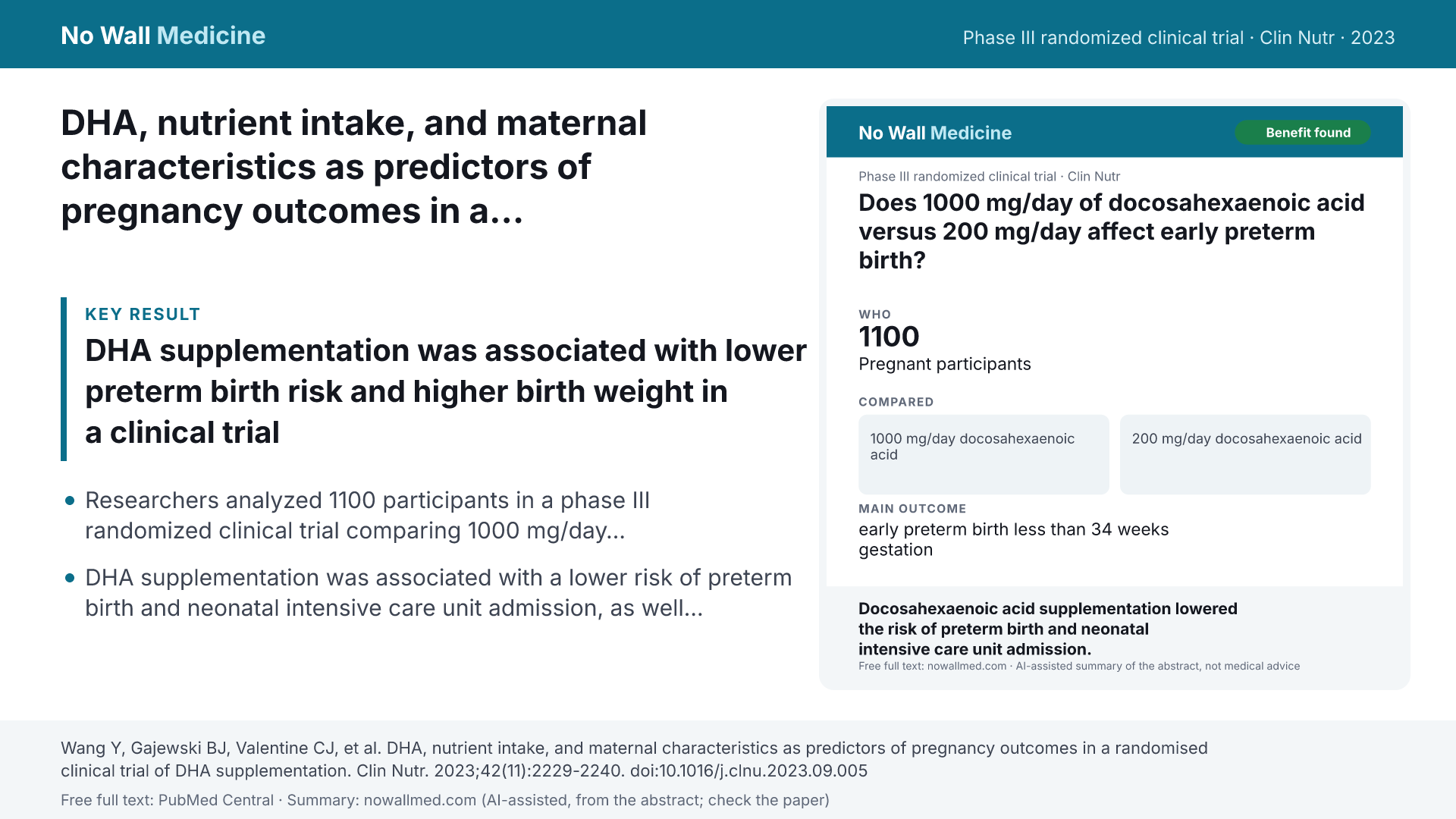
DHA, nutrient intake, and maternal characteristics as predictors of pregnancy outcomes in a randomised clinical trial of DHA supplementation
Key result: DHA supplementation was associated with lower preterm birth risk and higher birth weight in a clinical trial
Key points
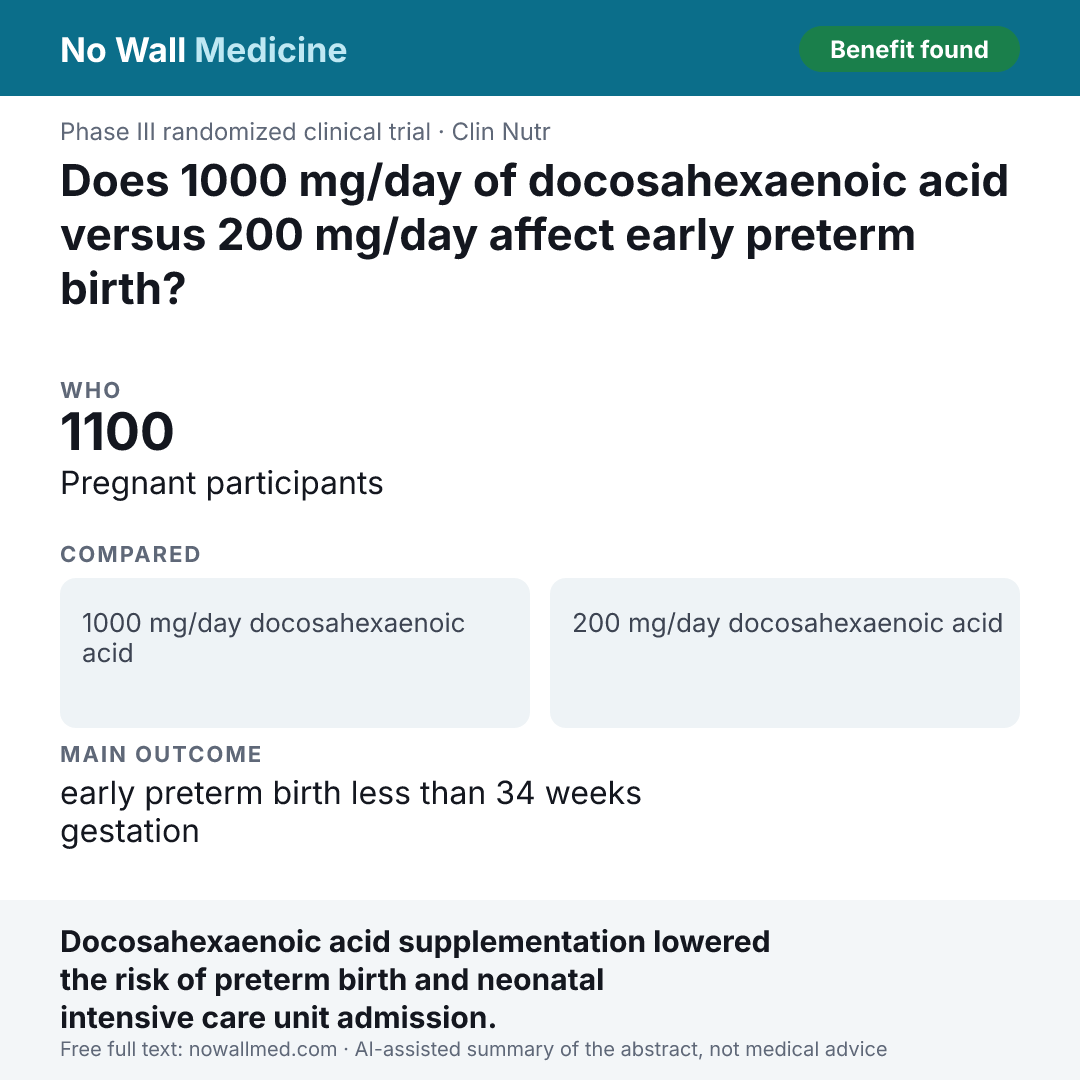
- Researchers analyzed 1100 participants in a phase III randomized clinical trial comparing 1000 mg/day of docosahexaenoic acid (DHA) to 200 mg/day.
- DHA supplementation was associated with a lower risk of preterm birth and neonatal intensive care unit admission, as well as increased gestation and birth weight.
- Higher maternal red blood cell phospholipid DHA at delivery was associated with DHA supplementation and having a bachelor's degree or higher.
Why it matters: The relationship between DHA intake, other nutrients, and maternal characteristics on various pregnancy outcomes was not fully explored in the primary trial analysis.
Discussion prompts
- Would these patients look like yours? Who was left out?
- Is the main outcome one that matters to patients?
- Is the difference large enough to change what you do?
Cite: Wang Y, Gajewski BJ, Valentine CJ, et al. DHA, nutrient intake, and maternal characteristics as predictors of pregnancy outcomes in a randomised clinical trial of DHA supplementation. Clin Nutr. 2023;42(11):2229-2240. doi:10.1016/j.clnu.2023.09.005
Free full text: PubMed Central · Summary and visual abstract: nowallmed.com/a/dha-nutrient-intake-and-maternal-characteristics-as-predictors-of-sdll2y/ (AI-assisted from the abstract; check the paper before relying on it).