DiaBetter Together: Outcomes of a Randomized Controlled Trial Evaluating a Peer Mentor Behavioral Intervention for Young Adults With Type 1 Diabetes During the Transfer From Pediatric to Adult Care
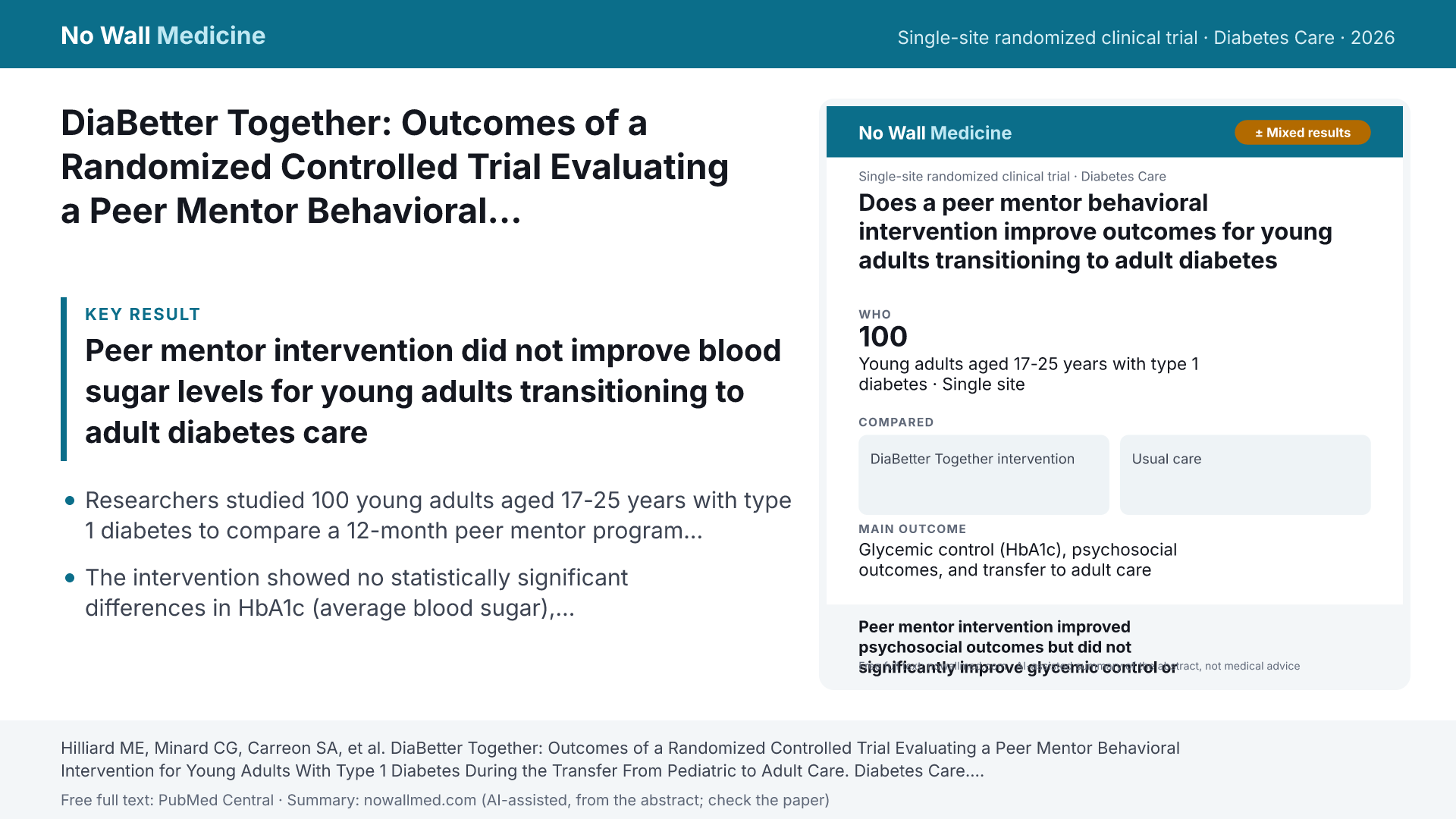
Key result: Peer mentor intervention did not improve blood sugar levels for young adults transitioning to adult diabetes care
Key points
- Researchers studied 100 young adults aged 17-25 years with type 1 diabetes to compare a 12-month peer mentor program against usual care.
- The intervention showed no statistically significant differences in HbA1c (average blood sugar), self-management behaviors, or time to adult care follow-up.
- At 12 months, the peer mentor group showed significant improvements in diabetes-specific quality of life and diabetes distress compared to the usual care group.
Why it matters: The transition from pediatric to adult healthcare is complex and carries a high risk for loss to follow-up and poor health outcomes for young adults with type 1 diabetes.
Limitation the authors note: The authors stated that a reduced sample size due to the coronavirus disease 2019 pandemic may have limited the power to detect significant outcomes.
Discussion prompts
- Would these patients look like yours? Who was left out?
- Is the main outcome one that matters to patients?
- Is the difference large enough to change what you do?
Cite: Hilliard ME, Minard CG, Carreon SA, et al. DiaBetter Together: Outcomes of a Randomized Controlled Trial Evaluating a Peer Mentor Behavioral Intervention for Young Adults With Type 1 Diabetes During the Transfer From Pediatric to Adult Care. Diabetes Care. 2026;49(8):1357-1365. doi:10.2337/dc26-0395
Free full text: PubMed Central · Summary and visual abstract: nowallmed.com/a/diabetter-together-outcomes-of-a-randomized-controlled-trial-wrmol7/ (AI-assisted from the abstract; check the paper before relying on it).