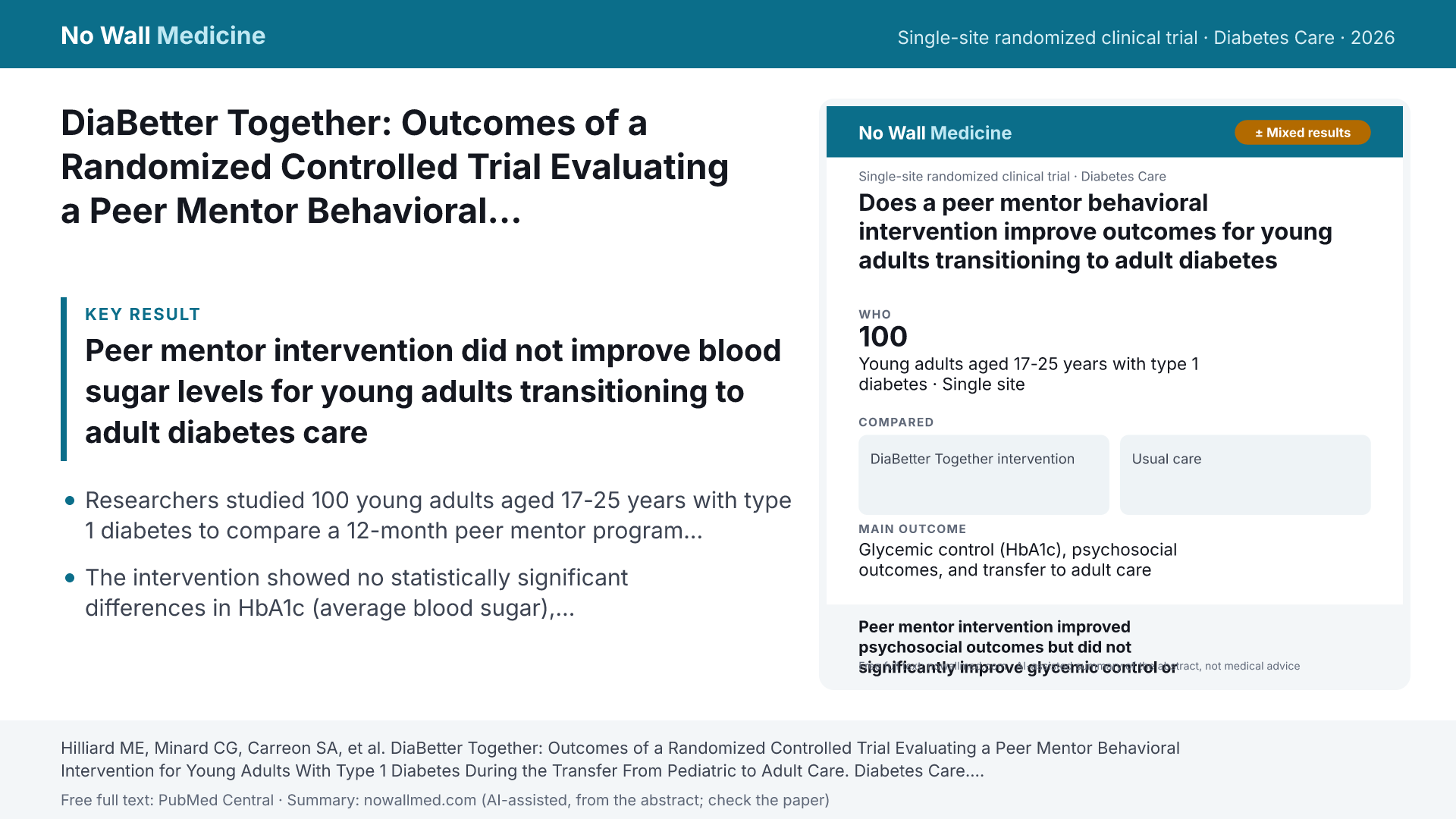
Peer mentor intervention did not improve blood sugar levels for young adults transitioning to adult diabetes care
DiaBetter Together: Outcomes of a Randomized Controlled Trial Evaluating a Peer Mentor Behavioral Intervention for Young Adults With Type 1 Diabetes During the Transfer From Pediatric to Adult Care
Single-site randomized clinical trialMixed results
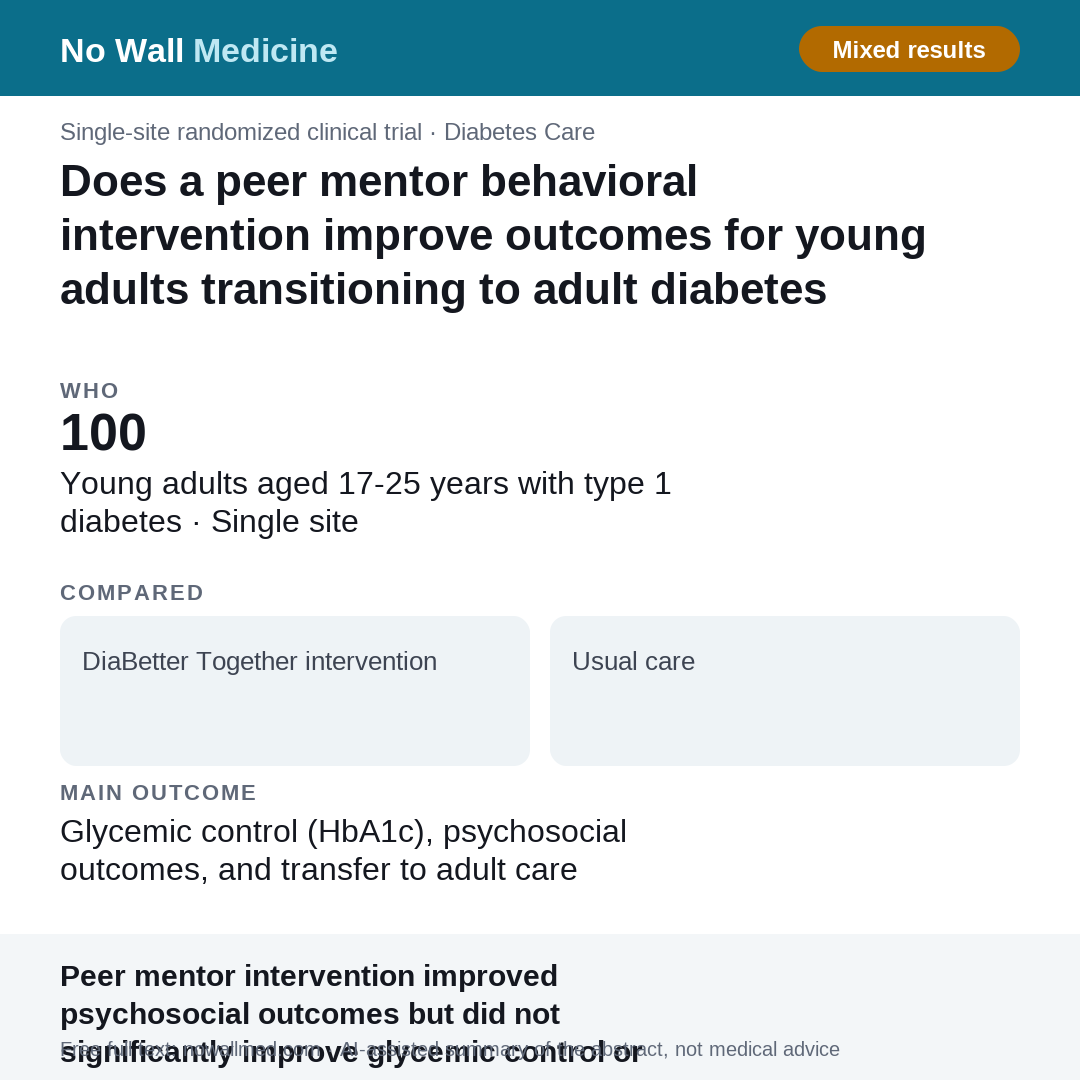
Does a peer mentor behavioral intervention improve outcomes for young adults transitioning to adult diabetes care?
Who
100
Young adults aged 17-25 years with type 1 diabetes · Single site
Compared
DiaBetter Together intervention
Usual care
Main outcome
Glycemic control (HbA1c), psychosocial outcomes, and transfer to adult care
Bottom line: Peer mentor intervention improved psychosocial outcomes but did not significantly improve glycemic control or transfer to adult care.
Limitation: Reduced sample size due to the coronavirus disease 2019 pandemic may have limited power.
Diabetes Care · 2026-05-27Download image
Clinical question: Does a peer mentor behavioral intervention improve outcomes for young adults transitioning to adult diabetes care?
Why it matters: The transition from pediatric to adult healthcare is complex and carries a high risk for loss to follow-up and poor health outcomes for young adults with type 1 diabetes.
Key points
- Researchers studied 100 young adults aged 17-25 years with type 1 diabetes to compare a 12-month peer mentor program against usual care.
- The intervention showed no statistically significant differences in HbA1c (average blood sugar), self-management behaviors, or time to adult care follow-up.
- At 12 months, the peer mentor group showed significant improvements in diabetes-specific quality of life and diabetes distress compared to the usual care group.
Limitation the authors note: The authors stated that a reduced sample size due to the coronavirus disease 2019 pandemic may have limited the power to detect significant outcomes.
Headline and key points written with AI from the paper’s abstract, with every number checked against it. Read the paper before relying on them.
Was this summary helpful?
Subject terms
Cite this article
Hilliard ME, Minard CG, Carreon SA, et al. DiaBetter Together: Outcomes of a Randomized Controlled Trial Evaluating a Peer Mentor Behavioral Intervention for Young Adults With Type 1 Diabetes During the Transfer From Pediatric to Adult Care. Diabetes Care. 2026. doi:10.2337/dc26-0395
Spotted a mistake? Suggest a correction