Diagnostic Accuracy of Artificial Intelligence and Computer-Aided Diagnosis for the Detection and Characterization of Colorectal Polyps: Systematic Review and Meta-analysis
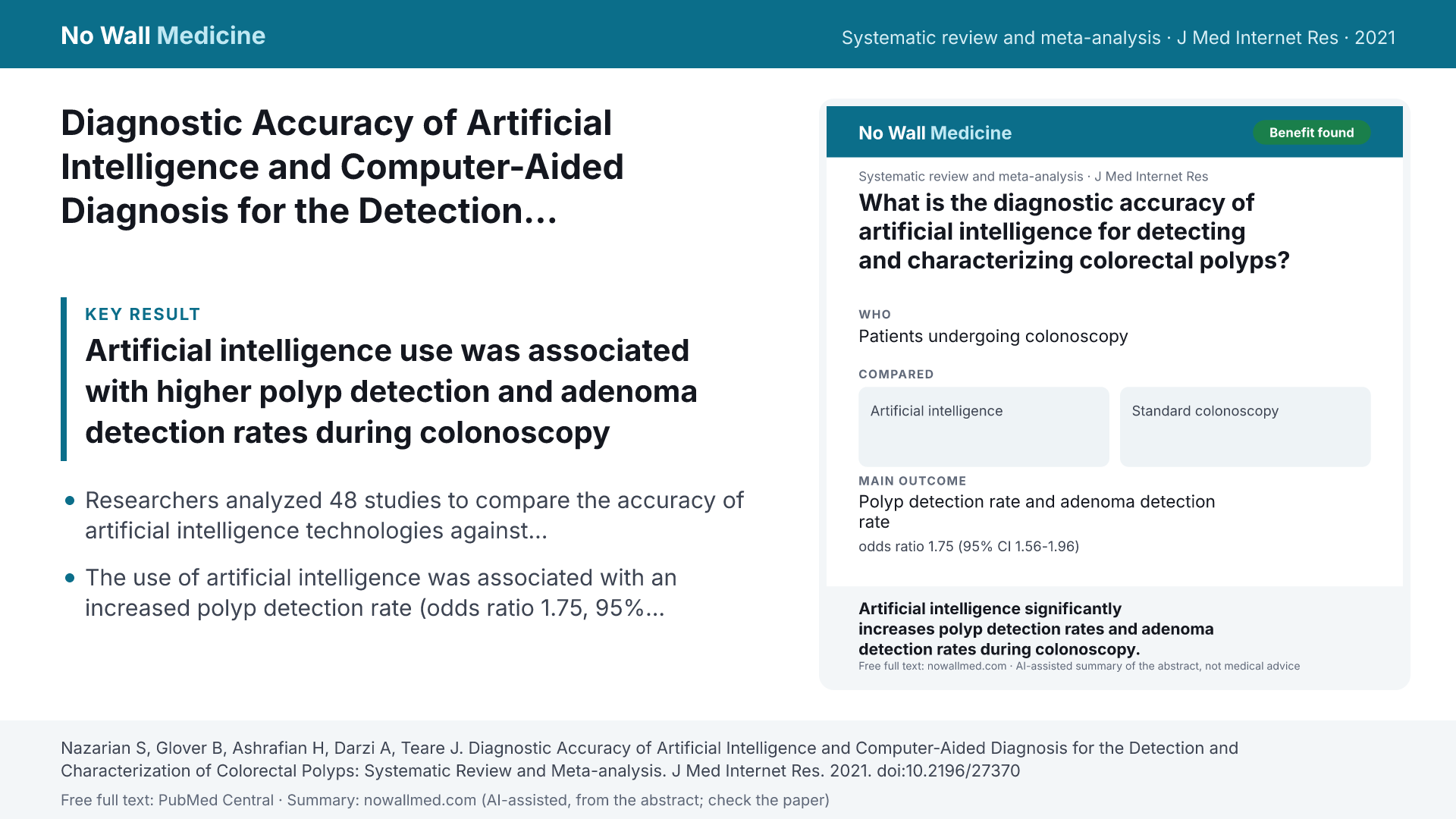
Key result: Artificial intelligence use was associated with higher polyp detection and adenoma detection rates during colonoscopy
Key points
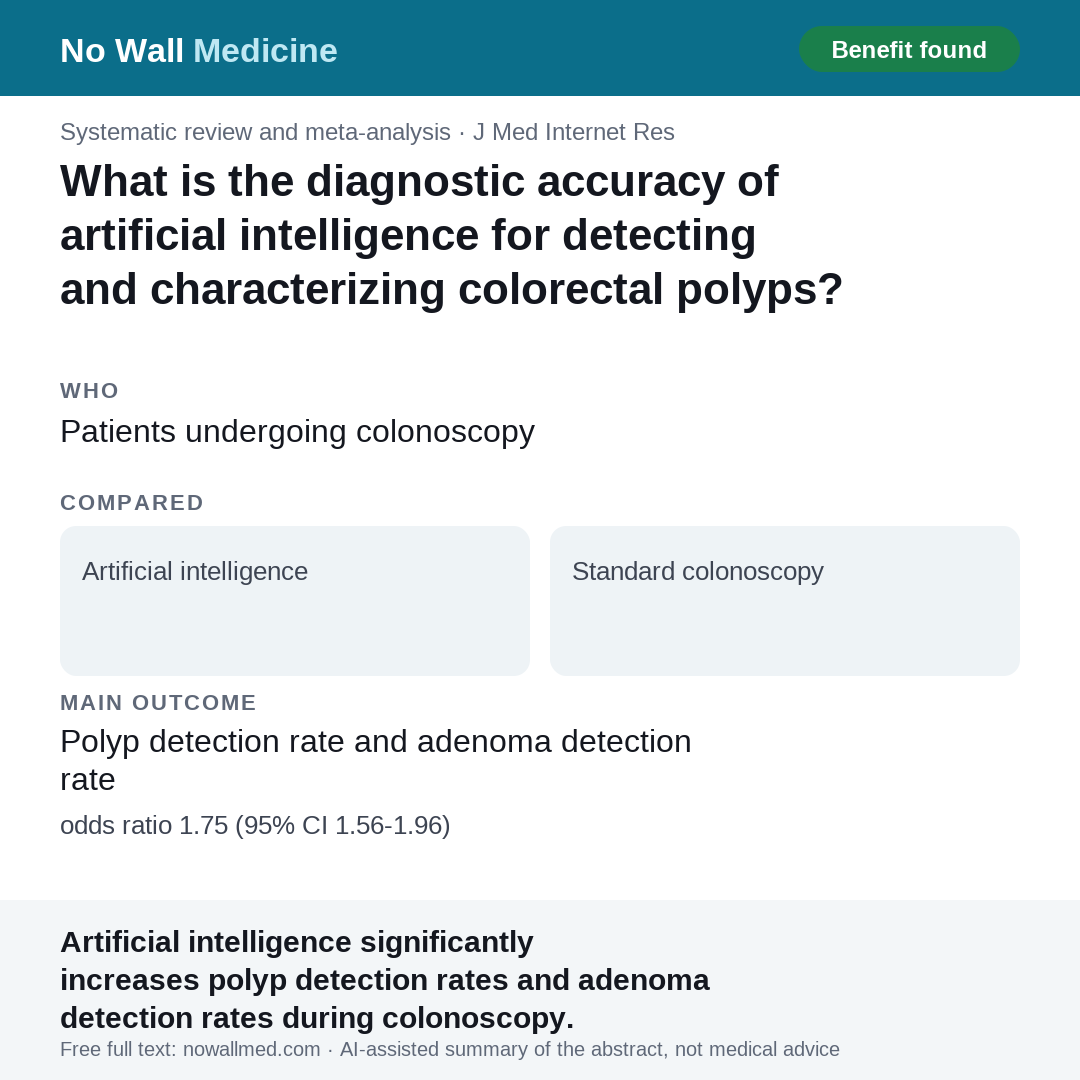
- Researchers analyzed 48 studies to compare the accuracy of artificial intelligence technologies against standard colonoscopy for finding and identifying colorectal polyps.
- The use of artificial intelligence was associated with an increased polyp detection rate (odds ratio 1.75, 95% CI 1.56-1.96) and an increased adenoma detection rate (odds ratio 1.53, 95% CI 1.32-1.77).
- Adenoma detection rate refers to the frequency at which doctors find adenomas, which are precancerous growths in the colon.
Why it matters: Many small polyps are missed during a single colonoscopy, and it is unclear how much artificial intelligence can improve detection accuracy.
Discussion prompts
- Would these patients look like yours? Who was left out?
- Is the main outcome one that matters to patients?
- Is the difference large enough to change what you do?
Cite: Nazarian S, Glover B, Ashrafian H, Darzi A, Teare J. Diagnostic Accuracy of Artificial Intelligence and Computer-Aided Diagnosis for the Detection and Characterization of Colorectal Polyps: Systematic Review and Meta-analysis. J Med Internet Res. 2021. doi:10.2196/27370
Free full text: PubMed Central · Summary and visual abstract: nowallmed.com/a/diagnostic-accuracy-of-artificial-intelligence-and-computer-aided-86s6p0/ (AI-assisted from the abstract; check the paper before relying on it).