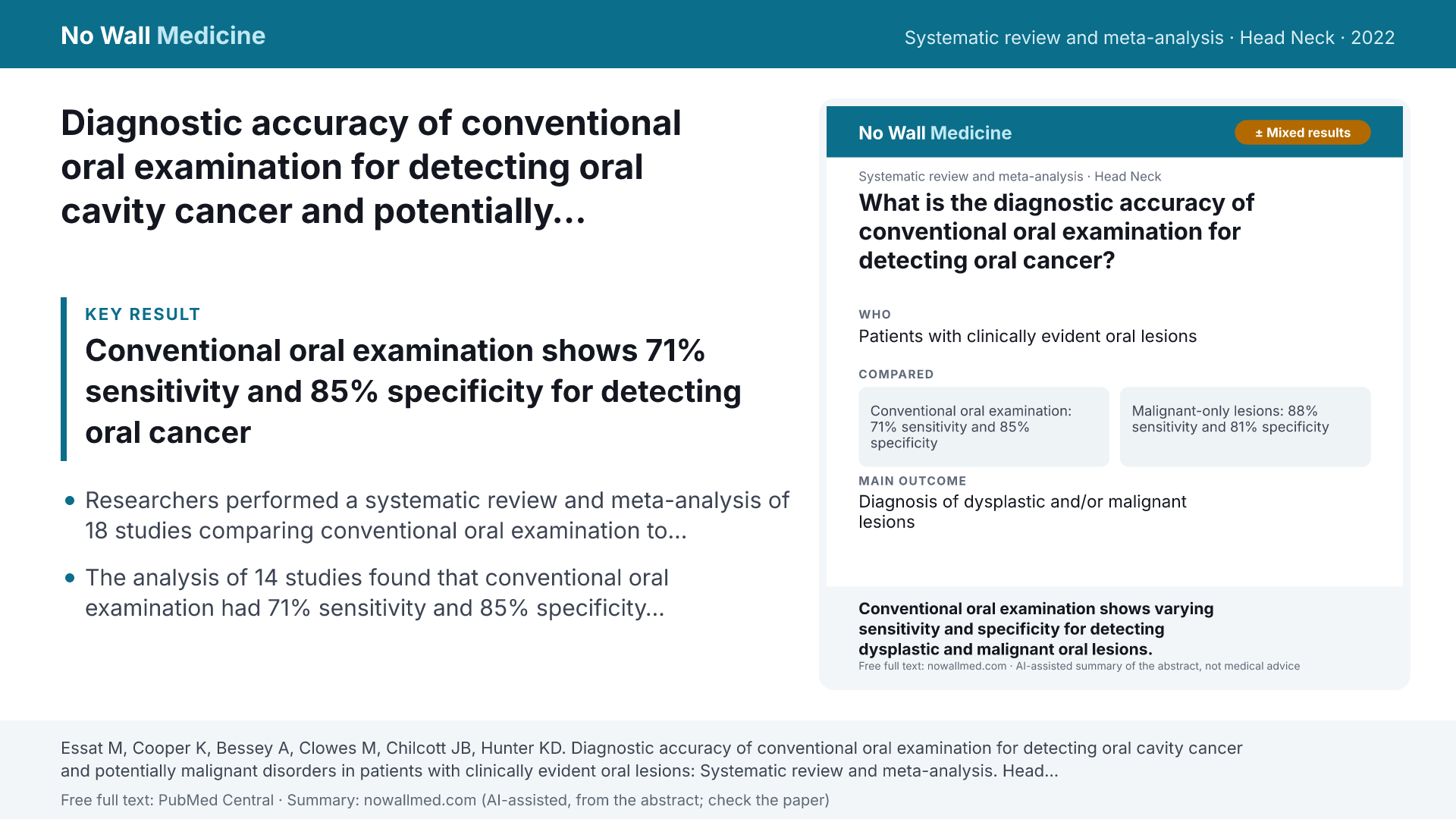
Conventional oral examination shows 71% sensitivity and 85% specificity for detecting oral cancer
Diagnostic accuracy of conventional oral examination for detecting oral cavity cancer and potentially malignant disorders in patients with clinically evident oral lesions: Systematic review and meta-analysis
Systematic review and meta-analysisMixed results
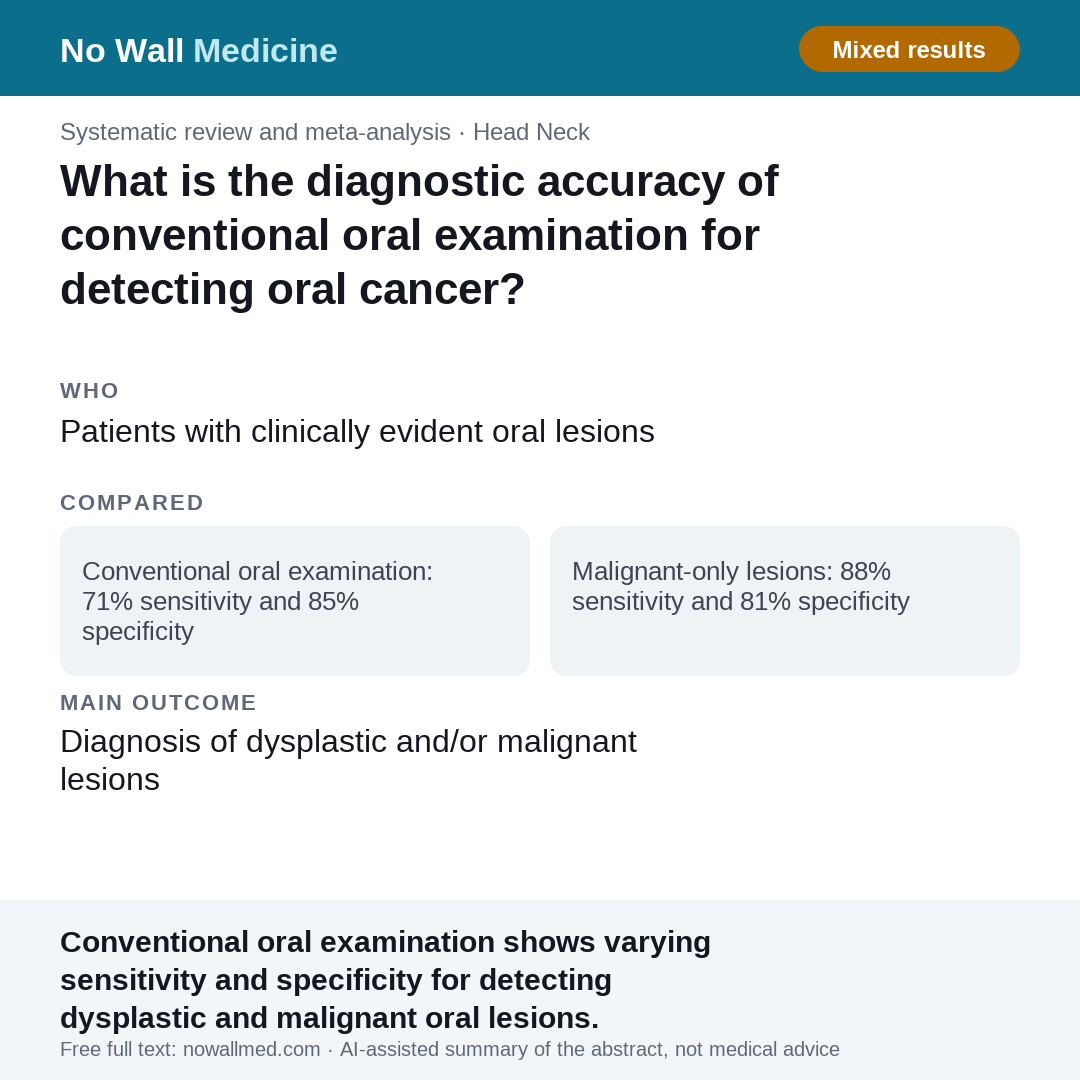
What is the diagnostic accuracy of conventional oral examination for detecting oral cancer?
Who
Patients with clinically evident oral lesions
Compared
Conventional oral examination: 71% sensitivity and 85% specificity
Malignant-only lesions: 88% sensitivity and 81% specificity
Main outcome
Diagnosis of dysplastic and/or malignant lesions
Bottom line: Conventional oral examination shows varying sensitivity and specificity for detecting dysplastic and malignant oral lesions.
Head Neck · 2022-01-29Download image
Clinical question: What is the diagnostic accuracy of conventional oral examination for detecting oral cancer?
Why it matters: The diagnostic accuracy of conventional oral examination compared to tissue biopsies for identifying malignant and dysplastic oral lesions was not clearly established.
Key points
- Researchers performed a systematic review and meta-analysis of 18 studies comparing conventional oral examination to tissue biopsies for diagnosing oral cancer or precancerous lesions.
- The analysis of 14 studies found that conventional oral examination had 71% sensitivity and 85% specificity for diagnosing dysplastic or malignant lesions.
- For identifying lesions that were only malignant, the pooled estimate was 88% sensitivity and 81% specificity.
Headline and key points written with AI from the paper’s abstract, with every number checked against it. Read the paper before relying on them.
Was this summary helpful?
Subject terms
Headline, design, result, key points, caveat and citation as plain text.
Cite this article
Essat M, Cooper K, Bessey A, Clowes M, Chilcott JB, Hunter KD. Diagnostic accuracy of conventional oral examination for detecting oral cavity cancer and potentially malignant disorders in patients with clinically evident oral lesions: Systematic review and meta-analysis. Head Neck. 2022. doi:10.1002/hed.26992
Spotted a mistake? Suggest a correction