Diagnostic Performance of Electronic Noses in Cancer Diagnoses Using Exhaled Breath: A Systematic Review and Meta-analysis
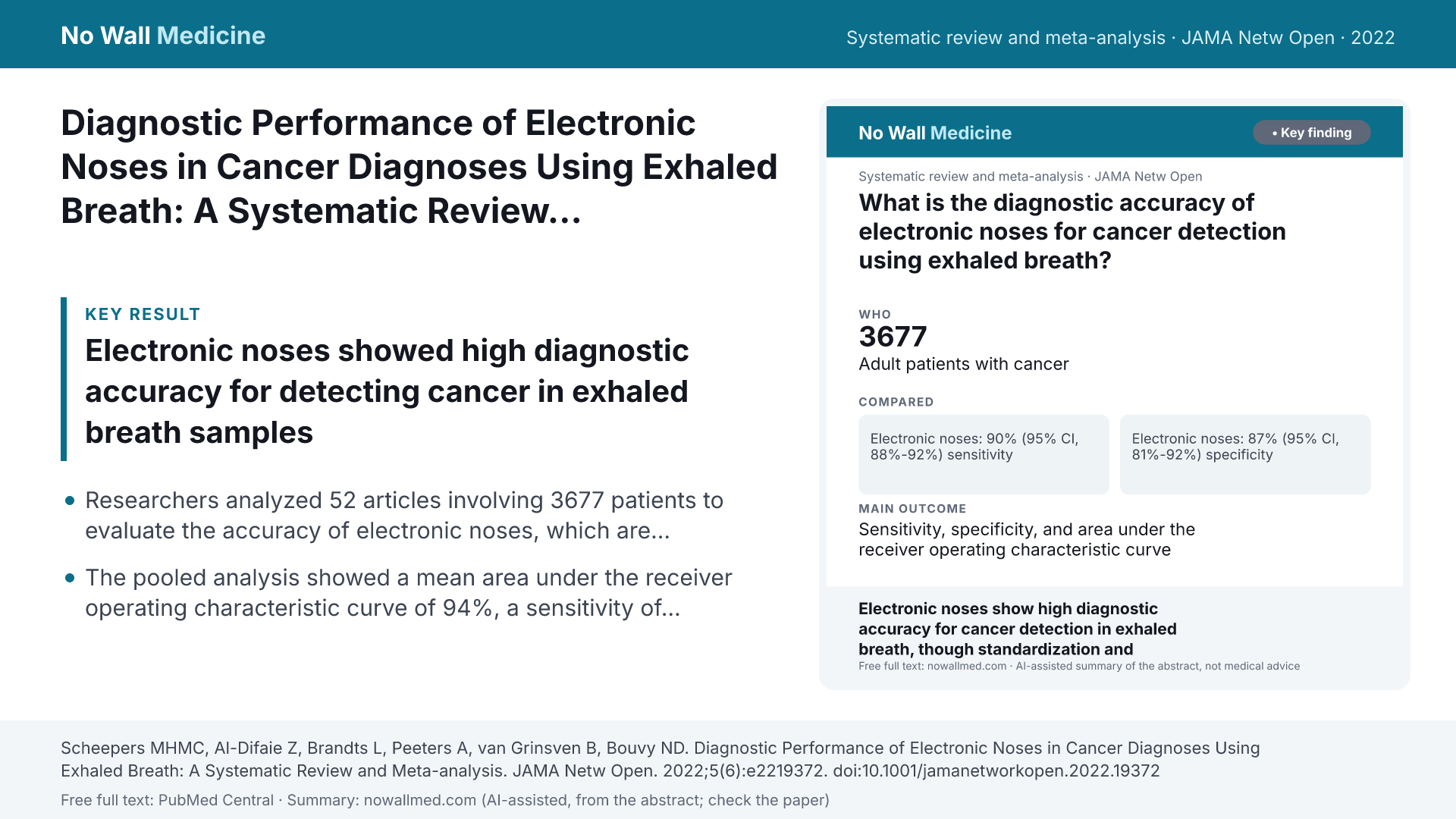
Key result: Electronic noses showed high diagnostic accuracy for detecting cancer in exhaled breath samples
Key points
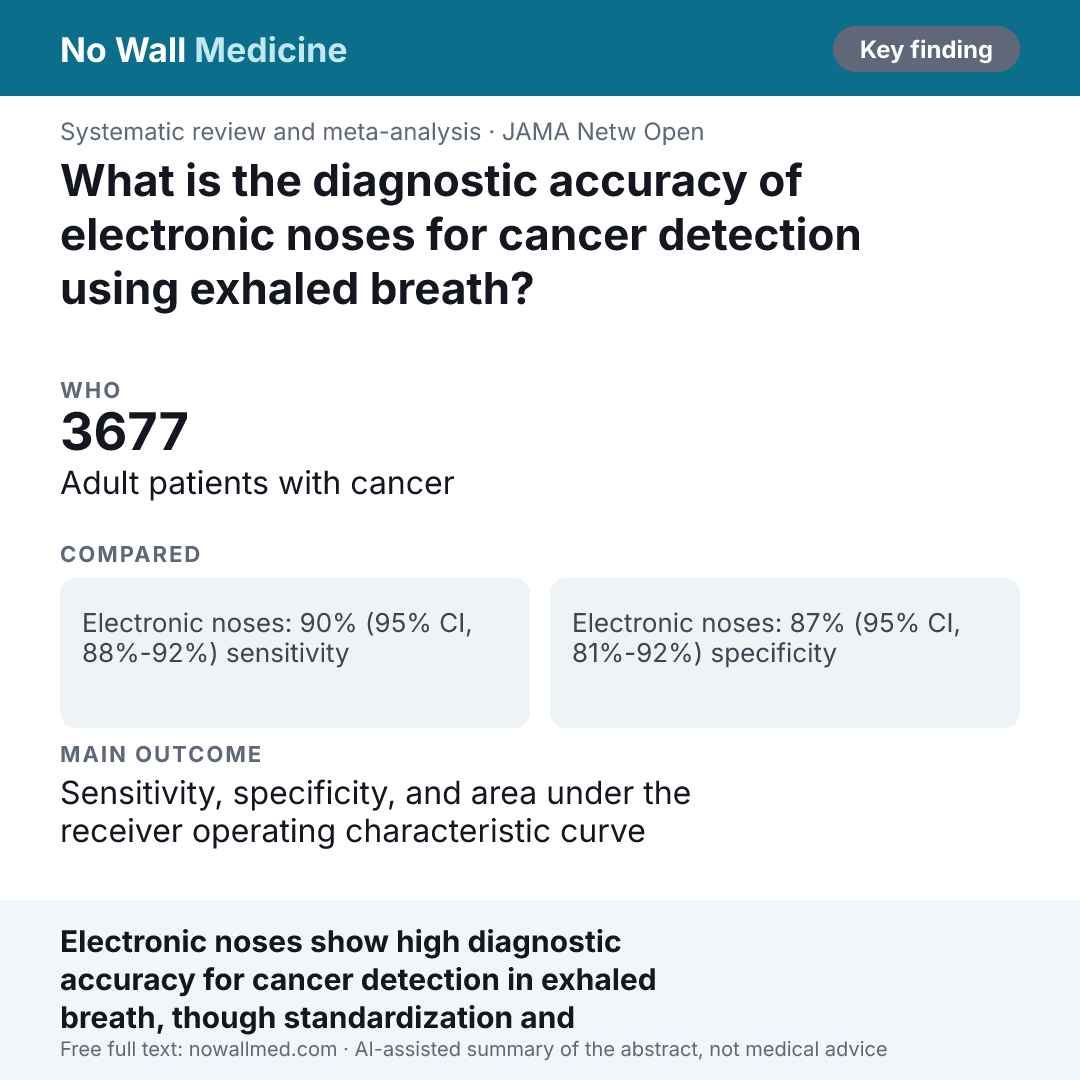
- Researchers analyzed 52 articles involving 3677 patients to evaluate the accuracy of electronic noses, which are devices that detect chemical compounds in breath.
- The pooled analysis showed a mean area under the receiver operating characteristic curve of 94%, a sensitivity of 90%, and a specificity of 87%.
- Individual study sensitivity ranged from 48.3% to 95.8%, while specificity ranged from 10.0% to 100.0%.
Limitation the authors note: Most included studies were feasibility studies with small sample sizes, a lack of standardization, and a high risk of bias.
Discussion prompts
- Would these patients look like yours? Who was left out?
- Is the main outcome one that matters to patients?
- Is the difference large enough to change what you do?
Cite: Scheepers MHMC, Al-Difaie Z, Brandts L, Peeters A, van Grinsven B, Bouvy ND. Diagnostic Performance of Electronic Noses in Cancer Diagnoses Using Exhaled Breath: A Systematic Review and Meta-analysis. JAMA Netw Open. 2022;5(6):e2219372. doi:10.1001/jamanetworkopen.2022.19372
Free full text: PubMed Central · Summary and visual abstract: nowallmed.com/a/diagnostic-performance-of-electronic-noses-in-cancer-diagnoses-using-1oli1no/ (AI-assisted from the abstract; check the paper before relying on it).